Having gone off on content farms, I should probably explain why, despite cranking out a ton of videos What Culture is actually one of the good guys, but it's late so, for now, you'll just have to take my word on it.
The following is a prime example, a great list of obscure and unfairly forgotten horror films ranging from recent releases to Universal (Son of Dracula) and Hammer (Captain Kronos). These guys genuinely know their stuff.
Friday, October 31, 2025

Thursday, October 30, 2025
"Back in my day, the internet was really something."
The fundamental challenge of the internet has always been a variation on the old Steven Wright line: “You can’t have everything. Where would you put it?” Or, in this case—how would you find it? Given the vast quantity of content, how do you connect users with what they're looking for?
Even when things were working as they were supposed to, this was an increasingly daunting problem: ever-growing content, link rot, and even before AI slop, content farms flooding algorithms with SEO-optimized garbage. Add Sora and ChatGPT to the mix, and you have a scenario where the good new content (and yes, it’s still flowing in) is lost in a tidal wave of crap.
This might not be so bad if the gatekeepers were stepping up to the moment, but instead we’re seeing the opposite. Alphabet’s Google—and in particular YouTube—turn a blind eye to content farms that violate their standards and even endanger their audience (such as recommending a fun kids' activity involving using plastic straws to blow bubbles in molten sugar).
[Even if you have no interest in cooking, you should check out all of food scientist Ann Reardon’s debunking videos.]
5-min crafts DESTROYED my microwave!
They aggressively push AI slop even when no one seems to be clicking. (I have no idea why the algorithm thinks I would be interested in any of these but my feed is full of them.)

Worse yet, search functions on major platforms are declining in both functionality and quality.
From Matthew Hughes’ highly recommended What We Lost
Allow me to confess something that will, for many of the readers of this newsletter, make me seem immediately uncool. I like hashtags.
I like hashtags because they act as an informal taxonomy of the Internet, making it easier to aggregate and identify content pertaining to specific moments or themes. In a world where billions of people are posting and uploading, hashtags act as a useful tool for researchers and journalists alike. And that’s without mentioning the other non-media uses of hashtags — like events, activism, or simply as a tool for small businesses to reach out to potential customers.
You see where this is going. A few years ago, Instagram killed the hashtag by preventing users from sorting them by date. In its place, Instagram would show an algorithmically-curated selection of posts that weren’t rooted in any given moment in time. It might put a post from 2017 next to one from the previous day.
What happens if you just scroll through and try to look at every post with the hashtag, hoping to see the most recent posts through sheer brute force? Ha, no.
Instagram will, eventually, stop showing new posts. On any hashtag with tens of thousands of posts, you’ll likely only see a small fraction of them — and that’s by design. Or, said another way, Instagram is directly burying content that users explicitly state that they wish to see. Essentially, your visibility into a particular hashtag is limited to what Instagram will allow.
Additionally, users can’t refine their search by adding an additional term to a hashtag. If you type in “#EvertonFC Goodison Park,” it’ll reply with “no results found.”
Premier League, and Goodison Park is the stadium it used until this year. There should be thousands of posts that include these terms. It’s like searching for “#NYYankees Yankee Stadium” — something that you’d assume, with good reason, to have mountains of photos and videos attached to it.
Additionally, when you search for a hashtag on Instagram, the app will show you content that doesn’t include the hashtag as exactly written, but has terms that resemble that hashtag. As a result, hashtags are effectively useless as a tool for creating taxonomies of content, or for discoverability.
Most of the points I’ve raised haven’t been covered anywhere — save for the initial announcement that Instagram would be discontinuing the ability to organize hashtags by date. And even when that point was mentioned, it was reported as straight news, with no questioning as to whether Instagram might have an incentive to destroy hashtags, or whether the points that Instagram CEO Adam Mosseri would later make (that hashtags were a major vector for “problematic” content) were true.
When Moseri would later say that hashtags didn’t actually help drive discoverability or engagement, that too was repeated unquestionably by a media that, when it comes to the tech industry, is all too content to act as stenographers rather than inquisitors. It’s a point that’s easily challenged by looking at the Instagram subreddit, where there are no shortage of people saying that the changes to hashtags had an adverse impact on their businesses, or their ability to find content from smaller creators.

We should probably talk about the decline of Google search at this point but that needs a post of its own.
Wednesday, October 29, 2025
It's important to note these Doctor Tarr and Professor Fether moments
One of these days, we’ll have to have a serious, extended discussion about the complex dynamics and interlocking ecosystems of conspiracy theorists and the world of pseudoscience — about how fundamentalists, MAGA types, and techno-optimists find common ground, and how the feelings of paranoia and persecution rampant in these groups create such a fertile breeding ground for all this craziness.
For now, though, we just need to stop and acknowledge how far things have gone.
According to the federal government, AM radio talk-show theories about toxic contrails and secret hurricane-making machines merit serious inquiry while vaccines and global warming are now dangerous fringe science.
For now, though, we just need to stop and acknowledge how far things have gone.
According to the federal government, AM radio talk-show theories about toxic contrails and secret hurricane-making machines merit serious inquiry while vaccines and global warming are now dangerous fringe science.
EPA Commissioner Lee Zeldin announces his agency is launching a major investigation into the right-wing conspiracies about chemtrails and weather manipulation to get to the bottom of it.
— Ron Filipkowski (@ronfilipkowski.bsky.social) October 23, 2025 at 9:24 AM
[image or embed]
Tuesday, October 28, 2025
Notes on Mr. Arkadin
[The world's second richest man may be buying yet another storied Hollywood studio so I've been working through the Warners catalog, particularly their Janus/Criterion collection in case I need to cut ties with another streaming service. I thought I'd jot down some impressions along the way. -- MP 10/8/25]
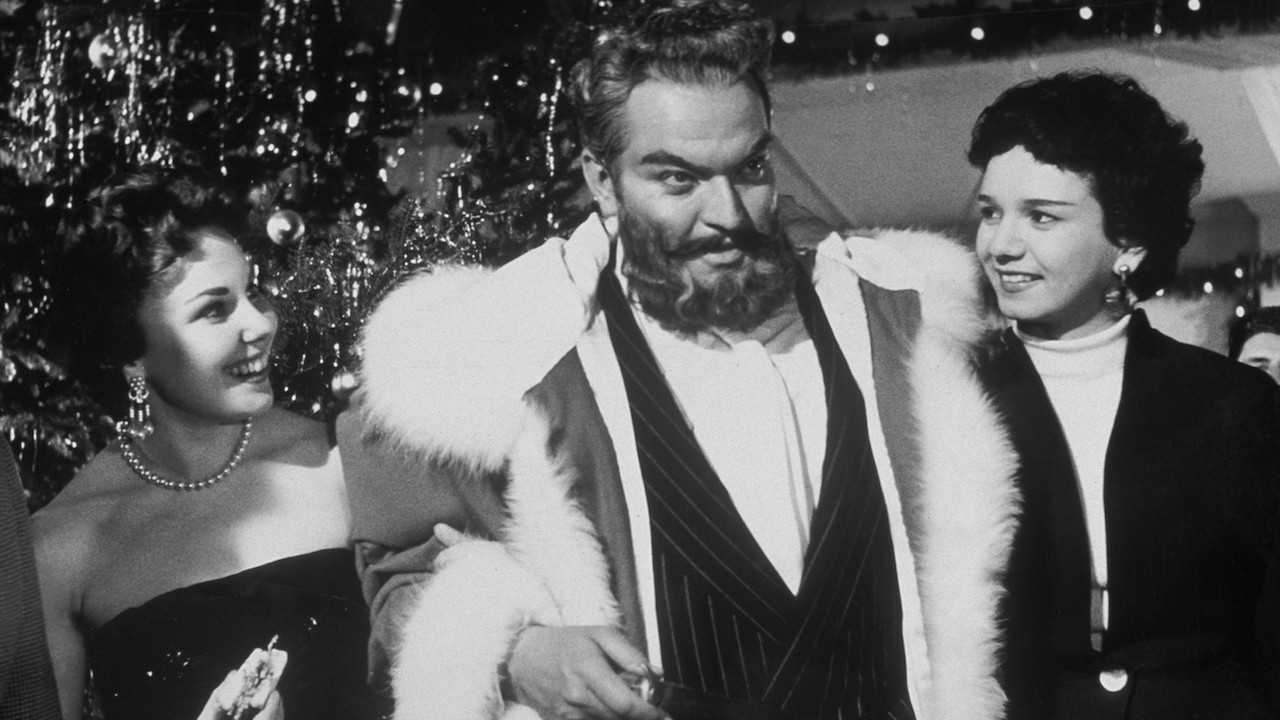
Clearly a low-budget effort with a few notable character actors but no name stars other than Welles himself. In what I assume was an effort to save money, Welles apparently hired only cameramen under 4 ft tall, which explains why most of the interior scenes that aren’t full-face close-ups were filmed from waist height.
In general, the direction feels almost like a parody of Orson Welles, with dutched cameras, scenes shot through latticework, expressionistic shadows cast on the walls, etc. A contemporary review of Dumbo said that it had more camera angles than Citizen Kane. Mr. Arkadin has more camera angles than Dumbo.
The main problem with the movie isn’t the budget; it’s the script. Pretty much everyone agrees Welles actually wrote this one, and his limitations definitely show through. That’s not to say there isn’t a great deal of good stuff here — scenes, bits of dialogue, ideas that could have been first-rate had he worked with a collaborator who was sharp enough to see what was worth saving and strong enough not to be pushed around.
The result is absolutely essential for a true Orson Welles fan, a sharp pass for the general public, and somewhere in the middle for the rest of us.
Monday, October 27, 2025
Boyle's slightly less pessimistic take on the Gen AI bubble.
We've been beating the AI bubble quite a bit lately, partially because the widespread belief that there's a bubble is a story in itself and partially because I find most of the argument from the nothing-to-worry-about crowd unconvincing and motivated (they mainly come from AI true believers).
That said, there is a bit of gray area between the two extremes and we haven't done a very good job capturing that part of the debate. To address that, here's a more nuanced take from Patrick Boyle.
Remember that quote from Citizen Kane?
"You're right, I did lose a million dollars last year. I expect to lose a million dollars this year. I expect to lose a million dollars *next* year. You know, Mr. Thatcher, at the rate of a million dollars a year, I'll have to close this place in... sixty years." *
Microsoft, Meta, and Alphabet have lots of money and can keep this rate of spending for a long time. There’s some question as to whether even they can maintain the growth rates being projected by some in the industry, but as long as the big guys remain reasonably committed, the bubble has at least some protection from implosion—if not from deflation.
The current situation is not sustainable. At some point in the near to nearish future, unless these products and services go from losing money to being enormously profitable, the major players will cut their losses and it's going to be ugly whether it happens fast or slow.
* This line was taken almost verbatim from George Hearst's response to people telling him about his publisher son's profligate spending.
Friday, October 24, 2025
"Did you hear the one about the huge bubble threatening to take down the economy?"
Normally, you would expect investors to be more easily spooked as talk of a bubble became increasingly ubiquitous, but whatever the investors of 2025 are, it is certainly not skittish. Even the worst economic or political news only chases them away for, at best, a day.
Of course, this is not a normal bubble in any sense. Its magnitude dwarfs even the dot-com bubble. It was preceded by a level of gods-or-ashes hype unlike anything I've ever seen. The people behind it have unprecedented wealth and power. It is hitting a market that has run out of “next big things” and is desperate for the next one. Perhaps most important, the executives running the world's largest companies have decided to pump trillions of dollars into the technology.
Whatever the reason, we have now reached the point where the idea that OpenAI, Nvidia, etc. are a bubble has become so widespread that you can see it everywhere—from stories in The Wall Street Journal and The Financial Times to segments on late-night talk shows.
For fans of Adam Ruins Everything, Adam Conover also covers much of the same material bu in greater depth.
In the late 1920s, having your doorman offer stock tips was famously an indicator that it was time to get out of the market. Perhaps in the 2020s it's having comics use the bubble as a punchline.
Thursday, October 23, 2025
A bubble story that's not about AI.
First, the obligatory disclaimers:
Nothing I'm about to say or have ever said about housing should be taken as a blanket condemnation of YIMBY ideas and proposals. I happen to agree with most of them, even the overly simplistic ones featured in The New York Times.
If this were just a question of being right — or at least being directionally right — the majority of the time, I wouldn't have wasted all this time writing a seemingly endless series of posts on the subject. Unfortunately there's more to it..
The housing discourse is embarrassingly dysfunctional even by the abysmal standards of the 2020s. The standard narrative is presented without question as absolute truth, despite being simplistic, often monocausal, heavily reliant on outliers and unrepresentative data, and unforgivably slow to acknowledge conflicting data even when it seriously threatens the major tenets of the arguments.
Case in point, the fixation on zoning along with hypocritical liberals as the primary big bads of the story. In case you think I'm misrepresenting their case.

Here's Krugman with an early and less shrill) version of the zoning argument. [Emphasis added.]
Many bubble deniers point to average prices for the country as a whole, which look worrisome but not totally crazy. When it comes to housing, however, the United States is really two countries, Flatland and the Zoned Zone.
In Flatland, which occupies the middle of the country, it’s easy to build houses. When the demand for houses rises, Flatland metropolitan areas, which don’t really have traditional downtowns, just sprawl some more. As a result, housing prices are basically determined by the cost of construction. In Flatland, a housing bubble can’t even get started.
But in the Zoned Zone, which lies along the coasts, a combination of high population density and land-use restrictions – hence “zoned” – makes it hard to build new houses. So when people become willing to spend more on houses, say because of a fall in mortgage rates, some houses get built, but the prices of existing houses also go up. And if people think that prices will continue to rise, they become willing to spend even more, driving prices still higher, and so on. In other words, the Zoned Zone is prone to housing bubbles.
Don't get me wrong, there are certainly some horrible zoning laws out there and there's no question that they make the housing crisis worse, perhaps much worse, but when you try to make tearing them down your panacea, you run into data like this.
A new real estate report confirms something that Houstonians pretty much already knew: The city of Houston saw a significant increase in housing prices among U.S. cities within the last decade, with median home prices skyrocketing up to 86 percent.
The report by online real estate database PropertyShark analyzed median home sale prices in 41 of the most populous U.S. cities and locales in 2014 and 2023. According to the study, the median sale price of a home in Houston in 2014 was $142,000. A decade later, median housing prices in the city nearly doubled, landing at $264,000 in 2023.
So is Houston one of those few heavily zoned red state cities? Not just "no," but "Hell, No."
Why doesn’t Houston have zoning?
Unlike other cities, Houston never successfully voted to put zoning restrictions in place.
“The lack of zoning started at the Big Bang, the creation of the universe,” joked Matthew Festa, South Houston College of Law professor and land use attorney. “…We’ve never had zoning, so it didn’t really start. It just never happened.”
The city charter requires a binding referendum vote from residents or a six-month waiting period for public comment and debate of a zoning ordinance. Houston officials brought it to the ballot in 1948, 1962 and 1993. Voters rejected it each time.
For Christian Menefee, the county attorney, the lack of zoning makes his work more difficult. Just this year, the Harris County Attorney’s Office – led by Menefee – sued the Texas Commission on Environmental Quality for approving a permit for a concrete batch plant across from a hospital in Kashmere Gardens. A move that would be far more difficult or impossible with zoning laws.
“We have numerous concrete batch plants in Fifth Ward and Near North Side,” said Menefee. “(No zoning) makes our lives fighting these situations difficult because then we have to go and try and seek every legal remedy at the state level.”
Just to reiterate, lots of zoning laws are bad. Just like lots of simplistic narratives about housing.
Wednesday, October 22, 2025
Cheering for fire trucks and crossing with the light- - notes on a Portlandia/Spirit Halloween protest.
As promised, here's how I spent my Saturday afternoon.
LA is huge, and I didn’t feel like dealing with the traffic or parking that would come with one of the really big demonstrations, so I opted for one here in Burbank, next to my local library. I’m not going to try to guesstimate crowd sizes — there’s more than enough of that available elsewhere — but it was a good turnout, with the small park fairly full.
Rather than focusing on numbers, here are some more subjective and anecdotal observations.
I’ve seen the mood of the demonstrations described elsewhere as a big block party, and that about perfectly captures it. It felt festive and cheerful. Though anger was what brought people out, I don’t recall seeing anyone actually angry. You saw cheerful seniors in wheelchairs, elementary school kids timidly asking if they could have their pictures taken with a dinosaur (the answer was always yes), funny signs, and elaborate costumes being compared. Just a bunch of folks from the neighborhood having a good time defending democracy.
The Portlandia / Spirit Halloween aesthetic has proven to be an ideal response to the administration’s push toward fascism. With the possible exception of misinformed economic concerns, Trump’s return to power was mainly the result of his success at playing on fears of social upheaval — fears rooted largely in racism. Inflatable frogs and dancing grandmas completely undercut that. It’s not surprising that Republican frustration with these images has been palpable.
The administration’s messaging is further undercut by the fact that, like the Burbank protest, so much of the No Kings movement has been, if anything, slightly disproportionately white. The Republicans’ attempts to portray the protests as collections of militant Islamists and other “scary” types engaging in violent insurrection have pretty much collapsed. It’s impossible to frighten white suburbanites with middle-aged wine moms and Barney the Dinosaur. It’s no coincidence that Fox News has gone from warning its viewers about Marxist revolutionaries to mocking No Kings for having “too many old people.” (Side note: given the network’s own demographics, perhaps not the best strategy.)
From what I’ve seen both online and in person, protesters seem to grasp the importance of not giving the administration or conservative media anything that could be depicted as threatening. One thing that struck me was that, while large groups would march from one side of Buena Vista and Verdugo to the other, they always did it with the light and were careful not to actually impede traffic.
On a probably related note, for the entire two hours — or at least the hour and forty-five minutes that I was there — there was a constant cacophony of honking horns from passing motorists, most smiling and giving the protesters a thumbs-up, which was met with cheers and waves in return. It would be interesting to get a count of those showing approval, but I can say it had to be a large number.
The biggest cheer of the day came when a hook-and-ladder truck from the Burbank Fire Department drove past the demonstration, honking and waving with an American flag flying from the back.
One comment I made to a friend at the rally — and have since seen echoed online — was that there were an awful lot of American flags for what was supposed to be a “hate America” rally. That was combined with a great deal of patriotic imagery: a protester dressed as Abraham Lincoln, countless references to the Founding Fathers, the Constitution, and the Declaration of Independence. Many signs referenced 1776. Much of what I saw would not have been out of place at a Fourth of July parade.
Tuesday, October 21, 2025
Tweet-posting History
In a day or two, I’ll have a first-hand account from one of the Los
Angeles No Kings protests, but for today I thought I’d do a big-picture
post on the demonstrations.
When you are geolocating at the protest based on inflatable animals
— Asha Rangappa (@asharangappa.bsky.social) October 18, 2025 at 12:50 PM
[image or embed]
First off, the numbers were huge.
After adding new data to our spreadsheet, our central estimate of turnout for the No Kings Day protests yesterday has risen to 5.5 million, with an upper bound of 8.7 www.gelliottmorris.com/p/second-no-...
— G Elliott Morris (@gelliottmorris.com) October 19, 2025 at 6:15 AM
[image or embed]
Somewhere around 2% of the population of the the United States showed up for a peaceful Saturday afternoon.


Among
the many remarkable things about the turnout, perhaps the most notable
is the fact that the number is growing when, by most standards, it
should have shrunk. The first No Kings Day was, in large part, a
counter-protest prompted by anger and embarrassment over Trump
attempting to throw himself a North Korean–style military parade for his
birthday.
This was just a generic Saturday afternoon in October of 2025.
As before, the where was often even more surprising
Take note of all these people turning out for protests in small towns in red states. Remember them the next time you’re inclined to write an area off because “they voted for this.”
— Kevin M. Kruse (@kevinmkruse.bsky.social) October 18, 2025 at 9:29 AM
Dothan, AL, voted for Trump by almost two to one.

In Missoula, Montana, the Missoulian features a sweeping aerial shot of the rally:
— Brian Stelter (@brianstelter.bsky.social) October 19, 2025 at 7:28 AM
[image or embed]
OKC was just one of 19 cities in OK to have a No Kings rally. These are the others: Tulsa, Norman, Lawton, Stillwater, Ardmore, Durant, Idabel, Pauls Valley, Ada, McAlester, Chandler, Guthrie, Enid, Ponca City, Bartlesville, Tahlequah, Muskogee, and Miami. www.newson6.com/story/68f39d...
— Ian Carrillo (@iansociologo.bsky.social) October 18, 2025 at 12:21 PM
[image or embed]
This is Idaho 💙
— ✨🦋𝓢𝓗𝓔𝓘𝓛𝓐 🦋✨ (@sheilaharris.bsky.social) October 18, 2025 at 4:26 PM
[image or embed]
Perhaps by this point, we should not be surprised that the NYT didn't live up to the journalistic standards of the Dothan Eagle.
Apparently nothing big happened today since the top story on the NYT website is Friday's release of George Santos.
— markpalko.bsky.social (@markpalko.bsky.social) October 18, 2025 at 10:11 PM
[image or embed]
Those with sharp eyes might detect a subtle difference in NYT play last month of an event in one city, w 100,000+ attendees, versus play this morning of some 2500+ events w many millions of attendees, in all 50 states. See if you can spot it! /s Then you can find today's story on p A23
— James Fallows (@jfallows.bsky.social) October 19, 2025 at 7:35 AM
[image or embed]


Here's a gift link to the New York Times' coverage of the initial Tea Party rallies in April 2009 which inspired the media to treat it like a massive movement. Check out how tiny the crowds were: Philly: 200 DC: "several hundred" Boston: 500 Austin: 1,000 Houston: 2,000
— Kevin M. Kruse (@kevinmkruse.bsky.social) October 20, 2025 at 5:55 AM
[image or embed]
It's not just that the NYT chose to ignore the massive protests -- 300,000 in their city alone! -- but that the piece they *did* run on the front page about Democrats is almost cartoonishly bad in how much it whines that they're just not doing what A.G. Sulzberger LXVII wants them to do.
— Kevin M. Kruse (@kevinmkruse.bsky.social) October 19, 2025 at 7:27 AM
[image or embed]
To their credit, the NYT wasn't the worst.
Across all the major outlets — NYT, WSJ, WaPo, LAT, CNN, ABC, CBS, Fox News, NBC, CNBC, NPR, Bloomberg — the only outlet without a No Kings story on its home page is CBS News. For every other outlet, it's near the top. Even Fox News is running with "Nationwide unrest looms as thousands mobilize"
— ◥◤CDFI, Frankenstein (@kristoncapps.bsky.social) October 18, 2025 at 10:39 AM
[image or embed]
The Republican reaction ranged from whiny...

Have to admit, being called rhythm-less by a Republican senator from Utah is a bit of an accomplishment.
— markpalko.bsky.social (@markpalko.bsky.social) October 19, 2025 at 5:14 PM
[image or embed]
Seriously though, not being hip in this context is kinda the point and Lee is kinda an idiot for playing into it. Old, uncool, white people waving American flags completely undercut the Republican narrative.
— markpalko.bsky.social (@markpalko.bsky.social) October 19, 2025 at 5:35 PM
[image or embed]
With the help of a sensationalistic, compliant, and in some cases racist mainstream press, the Republicans were able to portray the broad-based, overwhelmingly peaceful BLM demonstrations as violent riots. The Portlandia/Spirit Halloween protest aesthetic makes that virtually impossible.
— markpalko.bsky.social (@markpalko.bsky.social) October 19, 2025 at 5:54 PM
Trump on No Kings: "It's a joke. I looked at the people. They are not representative of this country. And I looked at all the brand new signs I guess paid for by Soros and other radical left lunatics. We're checking it out. The demonstrations were very small. And the people were whacked out."
— Aaron Rupar (@atrupar.com) October 19, 2025 at 6:09 PM
[image or embed]
We’ve known for a while but this makes it official: Trump is a shit-poster.
— George Takei (@georgetakei.bsky.social) October 20, 2025 at 2:30
[image or embed]
Monday, October 20, 2025
Corollary: when comics started printing "Collector's Edition" on the cover, they ceased being financially worth collecting.

If you look up a copy of the Overstreet Price Guide from 1990 on the Internet Archive, you will find a large number of 25- to 35-year-old titles that were selling at the time for more than $1,000. If you did the same thing today, you would find only two. Add to that 35 years of inflation and the fact that comics in the Silver Age ranged from 10 to 15 cents, while in the 90s, the titles were more likely to cost two or three dollars.
So, what changed? There were cultural shifts in the '70s and '80s, particularly around comic books as a medium. Boomers hit their prime earning years and decided that they didn’t have to put aside childish things. Most of all, though, people realized that old comic books in mint condition could be worth serious money.
In the '40s, '50s, and '60s, comics were a fragile and disposable medium. They grew brittle with time. They faded in the light. Even relatively careful reading would leave them creased and torn. A few fans did keep their comics in pristine condition, but it was strictly a labor of love. No one was treating that first appearance of Spider-Man as an investment.
In the '70s, known to comic book fans as the Bronze Age, the collector's market started to emerge, and people began paying more and more for that limited supply. Particularly with the so-called Golden Age titles, the numbers were tiny. It has been suggested that there are fewer than 100 collectible-quality copies of Action Comics #1 featuring the first appearance of Superman.
It was around this point that people started thinking of comic books as something of tremendous potential value, which ironically guaranteed that no comic book would ever shoot up to tremendous values again.
By the 1980s, many, if not most, comic book buyers were to some degree treating their purchases as potential investments. As a result, a large share of virtually every title published by DC or Marvel remained in mint or near-mint condition. It became almost impossible to get the supply low enough to bring in astronomical returns.

A partial exception, which actually proves the rule, would be the most valuable comic book published in the '90s ($2,000). Bone is one of the most beloved comics of the past 40 years, but it started out as a tiny self-published venture. Over the years, it would grow through word of mouth and glowing reviews, eventually becoming one of the best-selling titles of the past few decades. However, very few people bought that first issue, and even with that extremely limited supply, the growth and value were nothing compared to what we saw with the titles of the Silver Age. Once everyone started putting their comics in bags, the gold rush was over.
Friday, October 17, 2025
There's an ongoing war against the very concepts of public domain and fair use and it's something we should be talking about.
I realize you've got a lot on your plate and I'm constantly coming up with more things to worry about, but major media companies such as Universal Music Group, with the help of companies like Alphabet, are using questionable and often out-and-out fraudulent copyright claims to harass creators while ignoring legitimate copyrights when it suits their purposes.
Thought you ought to know.
Engineering prof uses a computer to play Bach's Prelude no 1. YouTube goes after him for copyright infringement.
If Beato's clips don't qualify as fair use, the term has no meaning.
Thursday, October 16, 2025
And you thought consultants were overpaid before...

“Deloitte was forced to investigate the report after University of Sydney academic Dr Christopher Rudge highlighted multiple errors in the document.” www.afr.com/companies/pr...
— bianca wylie (@biancawylie.com) October 5, 2025 at 4:58 PM
[image or embed]
"Deloitte Australia will issue a partial refund to the federal government after admitting that artificial intelligence had been used in the creation of a $440,000 report littered with errors including three nonexistent academic references and a made-up quote from a Federal Court judgement."
One of— and probably the— central problems with LLM-based tools is that you need to find that sweet spot where the flexibility adds real value but the results are easily checked.
I’ve found I can get pretty good value out of something like ChatGPT as long as I work in manageable chunks and keep the process as transparent as possible. With coding, that usually comes down to reasonably sized macros, functions, and queries that I can quickly test for errors. With proofreading, it means only looking at a few paragraphs at a time and instructing the chatbot to make minimal corrections and list all changes.
Using the tool to come up with actual information is very seldom worthwhile. It almost always comes down to one of two extreme cases: either the answers are something I could find in a more usable form with a couple of minutes of searching or by just hitting Wikipedia; or confirming the information would take longer (and always be less informative) than doing the research myself. Google’s AI is somewhat more useful, but only because it provides relevant links — which I inevitably need to follow to make sure the information is good.
For bigger jobs, you almost always run into the same underlying problem that makes autonomous driving so dangerous in most situations. Though it seems paradoxical, humans generally find it easier to focus on doing a task than to focus on making sure a task is being done properly. There’s been a ton of research on this in areas like aeronautics. It turns out that not only is it difficult to maintain your attention on an autonomous system; it’s more difficult the better the system works. The more miles your “self-driving” car goes without an incident, the less likely you are to be ready to grab the wheel when it does.
LLMs also play to two great temptations: the desire to get that first draft out of the way and the promise we make ourselves to fix something later. First steps can be daunting — often nearly to the point of paralysis — but they can very seldom be outsourced. It’s easy to see the appeal of letting an AI-based tool grind out that initial work, but the trouble is twofold. First, the dreary and time-consuming process of research does more than simply compile information; it builds understanding on the part of the researcher. Second, while it is beyond easy to tell ourselves that we will diligently check what we’re given, that often turns out to be more dreary and time-consuming than it would have been to simply do the work ourselves in the first place. After a while, attention wavers and our fact-checking grows more cursory. Add to that the looming deadlines that govern the life of a consultant, and you virtually guarantee AI-generated nonsense will make its way into important and expensive reports.
Given the incentives, I guarantee you that Australian report is not an isolated incident. It is remarkable only because it was detected.
_____________________________
Wednesday, October 15, 2025
Fourteen years ago at the blog: the "a pervasive fetish" line actually holds up better today than it did then
From "The Rot-Com Bubble" by Ed Zitron.
The noxious growth-at-all-costs mindset of the Rot Economy sits at the core of every issue that I've ever written about. It’s the force that drives businesses to grow bigger rather than better, making more products to conquer more markets rather than making products or services that people need or improving products they already like.
...
This belief — that exponential growth is not just a reasonable expectation, but a requirement — is central to the core rot in the tech industry, and as these rapacious demands run into reality, the Rot-Com bubble has begun to deflate. As we speak, the tech industry is grappling with a mid-life crisis where it desperately searches for the next hyper-growth market, eagerly pushing customers and businesses to adopt technology that nobody asked for in the hopes that they can keep the Rot Economy alive.
The Rot Economy and tech's growth-lust isn't new. Venture capital has been incentivizing and monetizing the rot for over a decade, with Marc Andreessen advocating in 2011 that we should look to "expand the number of innovative new software companies created" rather than "constantly questioning their valuations." Yet, just one year earlier in March 2010, his partner Ben Horowitz advocated for "fat startups," saying that you "can't save your way to winning the market," and that "startup purgatory" is when you "don't go bankrupt, but you fail to build the number one product in the space" and have "zero chance of becoming a high-growth company," which Horowitz describes as "worse than startup hell" because you're "stuck with the small company," even if it's cash-flow positive.
At the time, it made sense — even if there’s something inherently abnormal about describing a stable, profitable company as being in a state that’s “worse than hell.”
Speaking of 2011...
Thursday, September 15, 2011
The Growth Fetish
[This is a big topic so I'm just going to lay out the bare bones for now
and flesh things out later, hopefully with a little help.]
It's obvious that our economy is suffering from a lack of growth but for a while now I've come to suspect that in a more limited but still dangerous sense we also overvalue growth and that this bias has distorted the market and sometimes encouraged executives to pursue suboptimal strategies (such as Border's attempt to expand into the British market).
Think of it this way, if we ignore all those questions about stakeholders and the larger impact of a company, you can boil the value of a business down to a single scalar: just take the profits over the lifetime of a company and apply an appropriate discount function (not trivial but certainly doable). The goal of a company's management is to maximize this number and the goal of the market is to assign a price to the company that accurately reflects that number.
The first part of the hypothesis is that there are different possible growth curves associated with a business and, ignoring the unlikely possibility of a tie, there is a particular curve that optimizes profits for a particular business. In other words, some companies are better off growing rapidly; some are better off with slow or deferred growth; some are better off simply staying at the same level; and some are better off being allowed to slowly contract.
It's not difficult to come up with examples of ill-conceived expansions. Growth almost always entails numerous risks for an established company. Costs increase and generally debt does as well. Scalability is usually a concern. And perhaps most importantly, growth usually entails moving into an area where you probably don't know what the hell you're doing. I recall Peter Lynch (certainly a fan of growth stocks) warning investors to put off buying into chains until the businesses had demonstrated the ability to set up successful operations in other cities.
But the idea of getting in on a fast-growing company is still tremendously attractive, appealing enough to unduly influence people's judgement (and no, I don't see any reason to mangle a sentence just to keep an infinitive in one piece). For reasons that merit a post of their own (GE will be mentioned), that natural bias toward growth companies has metastasized into a pervasive fetish.
This bias does more than inflate the prices of certain stocks; it pressures people running companies to make all sorts of bad decisions from moving into markets where you don't belong (Borders) to pumping up market share with unprofitable customers (Groupon) to overpaying for acquisitions (too many examples to mention).
As mentioned before we need to speed up the growth of our economy, but those pro-growth policies have to start with a realistic vision of how business works and a reasonable expectation of what we can expect growth to do (not, for example, to alleviate the need for more saving and a good social safety net). Fantasies of easy and unlimited wealth are part of what got us into this mess. They certainly aren't going to help us get out of it.
It's obvious that our economy is suffering from a lack of growth but for a while now I've come to suspect that in a more limited but still dangerous sense we also overvalue growth and that this bias has distorted the market and sometimes encouraged executives to pursue suboptimal strategies (such as Border's attempt to expand into the British market).
Think of it this way, if we ignore all those questions about stakeholders and the larger impact of a company, you can boil the value of a business down to a single scalar: just take the profits over the lifetime of a company and apply an appropriate discount function (not trivial but certainly doable). The goal of a company's management is to maximize this number and the goal of the market is to assign a price to the company that accurately reflects that number.
The first part of the hypothesis is that there are different possible growth curves associated with a business and, ignoring the unlikely possibility of a tie, there is a particular curve that optimizes profits for a particular business. In other words, some companies are better off growing rapidly; some are better off with slow or deferred growth; some are better off simply staying at the same level; and some are better off being allowed to slowly contract.
It's not difficult to come up with examples of ill-conceived expansions. Growth almost always entails numerous risks for an established company. Costs increase and generally debt does as well. Scalability is usually a concern. And perhaps most importantly, growth usually entails moving into an area where you probably don't know what the hell you're doing. I recall Peter Lynch (certainly a fan of growth stocks) warning investors to put off buying into chains until the businesses had demonstrated the ability to set up successful operations in other cities.
But the idea of getting in on a fast-growing company is still tremendously attractive, appealing enough to unduly influence people's judgement (and no, I don't see any reason to mangle a sentence just to keep an infinitive in one piece). For reasons that merit a post of their own (GE will be mentioned), that natural bias toward growth companies has metastasized into a pervasive fetish.
This bias does more than inflate the prices of certain stocks; it pressures people running companies to make all sorts of bad decisions from moving into markets where you don't belong (Borders) to pumping up market share with unprofitable customers (Groupon) to overpaying for acquisitions (too many examples to mention).
As mentioned before we need to speed up the growth of our economy, but those pro-growth policies have to start with a realistic vision of how business works and a reasonable expectation of what we can expect growth to do (not, for example, to alleviate the need for more saving and a good social safety net). Fantasies of easy and unlimited wealth are part of what got us into this mess. They certainly aren't going to help us get out of it.
Tuesday, October 14, 2025
Eleven years ago at the blog: This one had legs
This recent post by Andrew Gelman about billionaire Bill Ackman got me thinking about an exchange we had a little over 11 years ago, which has since become even more relevant.
For those of you who don’t follow these things, Ackman has recently surged from the back of the pack to become a real contender for “most clueless rich guy.” His most recent stunt—trying to pass himself off as a professional tennis player—is indicative of the exceptional effort he’s been putting in to distinguish himself from the competition. But I’m bringing him up now because he’s also a second-generation nepo baby.
That reminded me of this post from 2014 and of Gelman's response in the late, lamented Monkey Cage. Looking back, I had no idea how much worse things could get.

Monday, January 20, 2014
Are we becoming more tolerant of nepotism (and other perks of privilege)?
The New Republic has a very good profile
by Julia Iofee of Michael Needham of the Heritage Foundation. The
whole thing is worth reading, but there's one paragraph I'd like to
single out both because of its content and its placement deep in the
article.
My question is: would this angle have been handled differently a few years ago? Obviously nepotism and advancement through connection have always been with us, but until recently I get the impression that this career path was seen as somewhat suspect; people who obviously got their positions thanks to string-pulling were put on a kind of public probation until they had proven themselves.
Now, the public (or at least the press) seems to me much less likely to discount the accomplishments of the well-connected children of the rich and powerful. Along similar lines, though you can certainly still find jokes about the boss's son/nephew/brother-in-law, but they don't seem nearly as pervasive as they were through most of the 20th Century. Anyone else see a trend here?
After [Michael] Needham graduated from Williams in 2004, Bill Simon Jr., a former California Republican gubernatorial candidate and fellow Williams alum, helped Needham secure the introductions that got him a job at the foundation. Ambitious and hard-working, he was promoted, in six months, to be Feulner’s chief of staff. According to a former veteran Heritage staffer, Needham is intelligent but “very aggressive”: “He is the bull in the china closet, and he feels very comfortable doing that.” (“I consider him a friend,” says the college classmate, “but he’s a huge asshole.”) In 2007, Needham, whose father has given generous donations to both Rudy Giuliani and the Heritage Foundation, went to work for Giuliani’s presidential campaign. When the campaign folded, Needham followed his father’s footsteps to Stanford Business School and then came back, at Feulner’s bequest, to run Heritage Action.You'll notice Iofee goes out of her way to suggest that Needham got his first rapid promotion by being "ambitious and hard-working," and there is, no doubt, some truth in that, but pretty much everybody who goes to work for a big-time D.C. think tank is ambitious and hard-working. These are not traits that would have set Needham apart while being the socially well-connected son of a major donor very well might have.
My question is: would this angle have been handled differently a few years ago? Obviously nepotism and advancement through connection have always been with us, but until recently I get the impression that this career path was seen as somewhat suspect; people who obviously got their positions thanks to string-pulling were put on a kind of public probation until they had proven themselves.
Now, the public (or at least the press) seems to me much less likely to discount the accomplishments of the well-connected children of the rich and powerful. Along similar lines, though you can certainly still find jokes about the boss's son/nephew/brother-in-law, but they don't seem nearly as pervasive as they were through most of the 20th Century. Anyone else see a trend here?
Monday, October 13, 2025
NYT on the SAT -- then and now


The New York Times was very much at the forefront of this war in 2014, and as you can see, we were there taking extensive notes. Other than their getting the math wrong on the penalties for guessing/not guessing (as far as I know, that remains uncorrected to this day), they have pretty much come around to all the arguments we were making 11 years ago. This is nowhere better illustrated than in the first-person accounts they gave of two women’s memories of the SAT—one from 2014 annoyingly entitled, the other from 2024 incredibly inspiring.
This isn't a complete list of our SAT posts or even of our SAT/NYT posts, but it does give you a sense of what the discussion looked like.
Friday, March 14, 2014
Friday, March 21, 2014
Sometimes, the SAT you read about in the news doesn't look much like the actual SAT
Monday, March 24, 2014
Wednesday, March 26, 2014
The SAT and the penalty for NOT guessing
Thursday, March 27, 2014
On SAT changes, The New York Times gets the effect right but the direction wrong
Thursday, May 15, 2014
The SAT probably is unfair to the disadvantaged but not for the reasons you've been hearing
Subscribe to:
Comments (Atom)