Friday, September 3, 2021

Where we ended, where we started

A policy of undermining trust in scientific institutions (like medical authorities) may have unintended consequences. 


SUNDAY, NOVEMBER 4, 2012

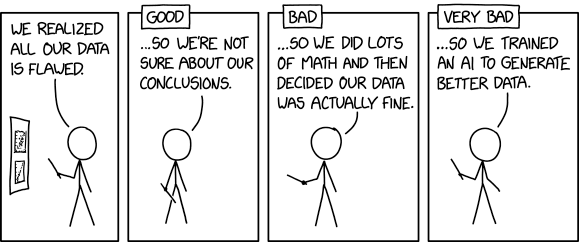
Strauss and the war on data

The most important aspect of Randianism as currently practiced is the lies its adherents tell themselves. "When you're successful, it's because other people are inferior to you." "When you fail, it's because inferior people persecute you (call it going Roark)." "One of these days you're going to run away and everyone who's been mean to you will be sorry."

The most important aspect of Straussianism as currently practiced is the lies its adherents tell others. Having started from the assumption that traditional democracy can't work because most people aren't smart enough to handle the role of voter, the Straussians conclude that superior minds must, for the good of society, lie to and manipulate the masses.

Joseph and I have an ongoing argument about which school is worse, a question greatly complicated by the compatibility of the two systems and the overlap of believers and their tactics and objectives. Joseph generally argues that Rand is worse (without, of course, defending Strauss) while I generally take the opposite position.

This week brought news that I think bolsters my case (though I suspect Joseph could easily turn it around to support his): one of the logical consequences of assuming typical voters can't evaluate information on their own is that data sources that are recognized as reliable are a threat to society. They can't be spun and they encourage people to make their own decisions.

To coin a phrase, if the masses can't handle the truth and need instead to be fed a version crafted by the elite to keep the people happy and doing what's best for them, the public's access to accurate, objective information has to be tightly controlled. With that in mind, consider the following from Jared Bernstein:
[D]ue to pressure from Republicans, the Congressional Research Service is withdrawing a report that showed the lack of correlation between high end tax cuts and economic growth.

The study, by economist Tom Hungerford, is of high quality, and is one I’ve cited here at OTE. Its findings are fairly common in the economics literature and the concerns raised by that noted econometrician Mitch McConnell are trumped up and bogus. He and his colleagues don’t like the findings because they strike at the supply-side arguments that they hold so dear.
And with Sandy still on everyone's mind, here's something from Menzie Chinn:
NOAA's programs are in function 300, Natural Resources and Environment, along with the U.S. Geological Survey (USGS) and a range of conservation and natural resources programs. In the near term, function 300 would be 14.6 percent lower in 2014 in the Ryan budget according to the Washington Post. It quotes David Kendall of The Third Way as warning about the potential impact on weather forecasting: "'Our weather forecasts would be only half as accurate for four to eight years until another polar satellite is launched,' estimates Kendall. 'For many people planning a weekend outdoors, they may have to wait until Thursday for a forecast as accurate as one they now get on Monday. … Perhaps most affected would be hurricane response. Governors and mayors would have to order evacuations for areas twice as large or wait twice as long for an accurate forecast.'"
There are also attempts from prominent conservatives to delegitimize objective data:
Apparently, Jack Welch, former chairman and CEO of General Electric, is accusing the Bureau of Labor Statistics of manipulating the jobs report to help President Obama. Others seem to be adding their voices to this slanderous lie. It is simply outrageous to make such a claim and echoes the worrying general distrust of facts that seems to have swept segments of our nation. The BLS employment report draws on two surveys, one (the establishment survey) of 141,000 businesses and government agencies and the other (the household survey) of 60,000 households. The household survey is done by the Census Bureau on behalf of BLS. It’s important to note that large single-month divergences between the employment numbers in these two surveys (like the divergence in September) are just not that rare. EPI’s Elise Gould has a great paper on the differences between these two surveys.

BLS is a highly professional agency with dozens of people involved in the tabulation and analysis of these data. The idea that the data are manipulated is just completely implausible. Moreover, the data trends reported are clearly in line with previous monthly reports and other economic indicators (such as GDP). The key result was the 114,000 increase in payroll employment from the establishment survey, which was right in line with what forecasters were expecting. This was a positive growth in jobs but roughly the amount to absorb a growing labor force and maintain a stable, not falling, unemployment rate. If someone wanted to help the president, they should have doubled the job growth the report showed. The household survey was much more positive, showing unemployment falling from 8.1 percent to 7.8 percent. These numbers are more volatile month to month and it wouldn’t be surprising to see unemployment rise a bit next month. Nevertheless, there’s nothing implausible about the reported data. The household survey has shown greater job growth in the recovery than the establishment survey throughout the recovery. The labor force participation rate (the share of adults who are working or unemployed) increased to 63.6 percent, which is an improvement from the prior month but still below the 63.7 percent reported for July. All in all, there was nothing particularly strange about this month’s jobs reports—and certainly nothing to spur accusations of outright fraud.
We can also put many of the attacks against Nate Silver in this category.

Going back a few months, we had this from Businessweek:
The House Committee on Appropriations recently proposed cutting the Census budget to $878 million, $10 million below its current budget and $91 million less than the bureau’s request for the next fiscal year. Included in the committee number is a $20 million cut in funding for this year’s Economic Census, considered the foundation of U.S. economic statistics.
And Bruce Bartlett had a whole set of examples involving Newt Gingrich:
On Nov. 21, Newt Gingrich, who is leading the race for the Republican presidential nomination in some polls, attacked the Congressional Budget Office. In a speech in New Hampshire, Mr. Gingrich said the C.B.O. "is a reactionary socialist institution which does not believe in economic growth, does not believe in innovation and does not believe in data that it has not internally generated."

Mr. Gingrich's charge is complete nonsense. The former C.B.O. director Douglas Holtz-Eakin, now a Republican policy adviser, labeled the description "ludicrous." Most policy analysts from both sides of the aisle would say the C.B.O. is one of the very few analytical institutions left in government that one can trust implicitly.

It's precisely its deep reservoir of respect that makes Mr. Gingrich hate the C.B.O., because it has long stood in the way of allowing Republicans to make up numbers to justify whatever they feel like doing.

...

Mr. Gingrich has long had special ire for the C.B.O. because it has consistently thrown cold water on his pet health schemes, from which he enriched himself after being forced out as speaker of the House in 1998. In 2005, he wrote an op-ed article in The Washington Times berating the C.B.O., then under the direction of Mr. Holtz-Eakin, saying it had improperly scored some Gingrich-backed proposals. At a debate on Nov. 5, Mr. Gingrich said, "If you are serious about real health reform, you must abolish the Congressional Budget Office because it lies."
...                                                                                                                                                                                                                                                                                                                                                            

Because Mr. Gingrich does know more than most politicians, the main obstacles to his grandiose schemes have always been Congress's professional staff members, many among the leading authorities anywhere in their areas of expertise.                                                                                                                                                                                                

To remove this obstacle, Mr. Gingrich did everything in his power to dismantle Congressional institutions that employed people with the knowledge, training and experience to know a harebrained idea when they saw it. When he became speaker in 1995, Mr. Gingrich moved quickly to slash the budgets and staff of the House committees, which employed thousands of professionals with long and deep institutional memories.

Of course, when party control in Congress changes, many of those employed by the previous majority party expect to lose their jobs. But the Democratic committee staff members that Mr. Gingrich fired in 1995 weren't replaced by Republicans. In essence, the positions were simply abolished, permanently crippling the committee system and depriving members of Congress of competent and informed advice on issues that they are responsible for overseeing.

Mr. Gingrich sold his committee-neutering as a money-saving measure. How could Congress cut the budgets of federal agencies if it wasn't willing to cut its own budget, he asked. In the heady days of the first Republican House since 1954, Mr. Gingrich pretty much got whatever he asked for.

In addition to decimating committee budgets, he also abolished two really useful Congressional agencies, the Office of Technology Assessment and the Advisory Commission on Intergovernmental Relations. The former brought high-level scientific expertise to bear on legislative issues and the latter gave state and local governments an important voice in Congressional deliberations.

The amount of money involved was trivial even in terms of Congress's budget. Mr. Gingrich's real purpose was to centralize power in the speaker's office, which was staffed with young right-wing zealots who followed his orders without question. Lacking the staff resources to challenge Mr. Gingrich, the committees could offer no resistance and his agenda was simply rubber-stamped.

Unfortunately, Gingrichism lives on. Republican Congressional leaders continually criticize every Congressional agency that stands in their way. In addition to the C.B.O., one often hears attacks on the Congressional Research Service, the Joint Committee on Taxation and the Government Accountability Office.

Lately, the G.A.O. has been the prime target. Appropriators are cutting its budget by $42 million, forcing furloughs and cutbacks in investigations that identify billions of dollars in savings yearly. So misguided is this effort that Senator Tom Coburn, Republican of Oklahoma and one of the most conservative members of Congress, came to the agency's defense.

In a report issued by his office on Nov. 16, Senator Coburn pointed out that the G.A.O.'s budget has been cut by 13 percent in real terms since 1992 and its work force reduced by 40 percent -- more than 2,000 people. By contrast, Congress's budget has risen at twice the rate of inflation and nearly doubled to $2.3 billion from $1.2 billion over the last decade.

Mr. Coburn's report is replete with examples of budget savings recommended by G.A.O. He estimated that cutting its budget would add $3.3 billion a year to government waste, fraud, abuse and inefficiency that will go unidentified.

For good measure, Mr. Coburn included a chapter in his report on how Congressional committees have fallen down in their responsibility to exercise oversight. The number of hearings has fallen sharply in both the House and Senate. Since the beginning of the Gingrich era, they have fallen almost in half, with the biggest decline coming in the 104th Congress (1995-96), his first as speaker.

In short, Mr. Gingrich's unprovoked attack on the C.B.O. is part of a pattern. He disdains the expertise of anyone other than himself and is willing to undercut any institution that stands in his way. Unfortunately, we are still living with the consequences of his foolish actions as speaker.

We could really use the Office of Technology Assessment at a time when Congress desperately needs scientific expertise on a variety of issues in involving health, energy, climate change, homeland security and many others. And given the enormous stress suffered by state and local governments as they are forced by Washington to do more with less, an organization like the Advisory Commission on Intergovernmental Relations would be invaluable.


Thursday, September 2, 2021

Thursday Tweets

I've been meaning to do a post on the really terrible job the press (particularly in NYC) with rising sea levels and bigger storm surges. While you're waiting, try this exercise at home. Look up cities on the West, East and Gulf Coasts. Make a list of cities under 25' elevation. Add 15' to that if the region has been hit by a hurricane in the past twenty years. I'm betting you see a pattern.


"Interesting" but not unusual. You often hear successful conservatives who have gone through periods of financial hardship often cite their time on the dole as evidence of their status as self-made men.


Up till now with a handful of exceptions, the business model of the digital on-demand subscription services (Netflix, Spotify, and even SubStack) has been to cash in on fame and followings built in older, more open, and generally free media. If open media dies, will exclusive media have to change its model?


Ohio's legislature has the best writers.


Wednesday, September 1, 2021

A bit of historical context


Kulldorf's tweet is a little less surprising if you know a bit about his recent activities and affiliations. We could make this a discussion about the heavily subsidized anti-vax adjacent libertarian faction but it's been a long day and the thought of diving into this topic makes me feel even more tired. 

For now, here's another reminder that, despite all the talk about the opposition to mandates and passports reflecting traditional American emphasis on freedom and individuality, previous generations were a hell of a lot less concerned with personal liberty than we are when it came to infectious diseases. 


First quarantine (1907–1910)

Soper notified the New York City Health Department, whose investigators realized that Mallon was a typhoid carrier. Under sections 1169 and 1170 of the Greater New York Charter, Mallon was arrested as a public health threat. She was forced into an ambulance by five policemen and Dr. Josephine Baker, who at some point had to sit on Mallon to restrain her. Mallon was transported to the Willard Parker Hospital, where she was restrained and forced to give samples. For four days, she was not allowed to get up and use the bathroom on her own. The massive numbers of typhoid bacteria that were discovered in her stool samples indicated that the infection center was in her gallbladder. Under questioning, Mallon admitted that she almost never washed her hands. This was not unusual at the time; the germ theory of disease still was not fully accepted.

On March 19, 1907, Mallon was sentenced to quarantine on North Brother Island. While quarantined, she gave stool and urine samples three times per week. Authorities suggested removing her gallbladder, but she refused because she did not believe she carried the disease. At the time, gallbladder removal was dangerous, and people had died from the procedure. Mallon was also unwilling to stop working as a cook, a job that earned her more money than any other. Having no home of her own, she was always on the verge of poverty.

After the publication of Soper's article in the Journal of the American Medical Association, Mallon attracted extensive media attention and received the nickname "Typhoid Mary". Later, in a textbook that defined typhoid fever, she again was called "Typhoid Mary".

Soper visited Mallon in quarantine, telling her he would write a book and give her part of the royalties. She angrily rejected his proposal and locked herself in the bathroom until he left. She hated the nickname and wrote in a letter to her lawyer:

I wonder how the said Dr. William H. Park would like to be insulted and put in the Journal and call him or his wife Typhoid William Park.

Not all medical experts supported the decision to forcibly quarantine Mallon. For example, Milton J. Rosenau and Charles V. Chapin both argued that she just had to be taught to carefully treat her condition and ensure that she would not transmit the typhoid to others. Both considered isolation to be an unnecessary, overly strict punishment. Mallon suffered from a nervous breakdown after her arrest and forcible transportation to the hospital. In 1909, she tried to sue the New York Health Department, but her complaint was denied and the case closed by the New York Supreme Court. In a letter to her lawyer, she complained that she was treated like a "guinea pig". She was obliged to give samples for analysis three times a week, but for six months was not allowed to visit an eye doctor, even though her eyelid was paralyzed and she had to bandage it at night. Her medical treatment was hectic: she was given urotropin in three-month courses for a year, threatening to destroy her kidneys. That was changed to brewers yeast and hexamethylenamin in increasing doses. She was first told that she had typhoid in her intestinal tract, then in her bowel muscles, then in her gallbladder.

Mallon herself never believed that she was a carrier. With the help of a friend, she sent several samples to an independent New York laboratory. All came back negative for typhoid. On North Brother Island, almost a quarter of her analyses from March 1907 through June 1909 were also negative. After 2 years and 11 months of Mallon's quarantine, Eugene H. Porter, the New York State Commissioner of Health, decided that disease carriers should no longer be kept in isolation and that Mallon could be freed if she agreed to stop working as a cook and take reasonable steps to avoid transmitting typhoid to others. On February 19, 1910, Mallon said she was "prepared to change her occupation (that of a cook), and would give assurance by affidavit that she would upon her release take such hygienic precautions as would protect those with whom she came in contact, from infection." She was released from quarantine and returned to the mainland.

Release and second quarantine (1915–1938)

Upon her release, Mallon was given a job as a laundress, which paid less than cooking—$20 per month instead of $50. At some point, she wounded her arm and the wound became infected, meaning that she could not work at all for six months. After several unsuccessful years, she started cooking again. She used fake surnames like Breshof or Brown, and took jobs as a cook against the explicit instructions of health authorities. No agencies that hired servants for upscale families would offer her employment, so for the next five years, she moved to the mass sector. She worked in a number of kitchens in restaurants, hotels, and spa centers. Almost everywhere she worked, there were outbreaks of typhoid. However, she changed jobs frequently, and Soper was unable to find her.

In 1915, Mallon started working at Sloane Hospital for Women in New York City. Soon 25 people were infected, and two died. The head obstetrician, Dr. Edward B. Cragin, called Soper and asked him to help in the investigation. Soper identified Mallon from the servants' verbal descriptions and also by her handwriting.

Mallon again fled, but the police were able to find and arrest her when she took food to a friend on Long Island. Mallon was returned to quarantine on North Brother Island on March 27, 1915.

Little is known about her life during the second quarantine. She remained on North Brother for more than 23 years, and the authorities gave her a private one-story cottage. As of 1918, she was allowed to take day trips to the mainland. In 1925, Dr. Alexandra Plavska came to the island for an internship. She organized a laboratory on the second floor of the chapel and offered Mallon a job as a technician. Mallon washed bottles, did recordings, and prepared glasses for pathologists.

Death

Mallon spent the rest of her life in quarantine at Riverside Hospital on North Brother Island. Mallon was quite active until suffering a stroke in 1932; afterwards, she was confined to the hospital. She never completely recovered, and half of her body remained paralyzed. On November 11, 1938, she died of pneumonia at age 69. Mallon's body was cremated, and her ashes were buried at Saint Raymond's Cemetery in the Bronx. Nine people attended the funeral

Tuesday, August 31, 2021

More Baumol

 Another aspect of this story I should have mentioned, while spending on digital effects has exploded, it's still difficult for the effects houses to turn a profit.

FRIDAY, DECEMBER 4, 2015

Obscure comic book heroes battle (the idea of) cost disease

Before we get started, one big caveat: the piece I'm linking to seems to be based on rumors and speculation. Back in the Nineteenth Century, newspaper stories often started with the disclaimer "Important if true." For stories like this, we probably start with "interesting if true."

Fans of the DC Television Universe might have some reason to worry. While the creation of the first season of Legends of Tomorrow is underway, it has come out that the CW may have overextended themselves in regards to budget. It seems that the first season of the Legends of Tomorrow is more expensive than the network originally anticipated. Intel from Bleeding Cool is now claiming that the CW may be nixing the idea of a second season, knowing that show will likely continue to become more expensive as it grows. Yikes.

...

What is it about Legends of Tomorrow that makes it so much more expensive than its predecessor? I can only imagine the multitude of visual and special effects are what is taking such a toll on its budget. After all, in a show that revolves around time travel, and where each protagonist has a unique set of superpowers, the effects team must have their hands full. Maybe having one superpowered lead in both Arrow and The Flash allowed for a more budget-friendly production, rather than having to stretch funds across a baker's dozen worth of heroes.
Assuming both the rumor and the speculation are sound (and there's lots of other evidence that Hollywood has a growing problem with budget spirals), this raises some perplexing questions.

These days, the explanation de jour for cost spirals is...
Baumol's cost disease (also known as the Baumol Effect) is a phenomenon described by William J. Baumol and William G. Bowen in the 1960s. It involves a rise of salaries in jobs that have experienced no increase of labor productivity in response to rising salaries in other jobs which did experience such labor productivity growth. This seemingly goes against the theory in classical economics that wages are closely tied to labor productivity changes.
If there's an economist in house, I'd greatly appreciate a knowledgeable take on this, but it would seem we should a disproportionate amount of money going to the people who have had the smallest gains in productivity.

As mentioned before, technology has improved productivity in film and video by orders of magnitude. These changes have affected every part of the industry but the biggest jump has been in what used to be called special effects. Ray Harryhausen's standard answer to the question "can you do ______" was that he could do anything if given the time and the money, and that was largely true. What has changed is mainly speed and cost.

Here's the weird part, though. The budgets are usually spiraling out of control not because studios are spending that much more on people like writers (whose productivity hasn't grown that much), but because they are pouring money into those areas where productivity has exploded.

Monday, August 30, 2021

And then back to unsupported hypothesis?

We've frequently been told that what appears to the lay person to be a speculative economic theory is actually an established and uncontested scientific fact, as solid as the laws of thermodynamics. We'll have to see if Konczal gets any traction with this, but he has at the very least shown that the matter is still up for debate.


WEDNESDAY, APRIL 17, 2013

From unsupported hypothesis to conventional wisdom

I don't want to pick on Andrew Delblanco, who turned in an unusually well-balanced piece on MOOCs in a recent issue of the New Republic, but this passage bothered me quite a bit:
But the most persuasive account of the relentless rise in cost was made nearly 50 years ago by the economist William Baumol and his student William Bowen, who later became president of Princeton. A few months ago, Bowen delivered two lectures in which he revisited his theory of the “cost disease.” “In labor-intensive industries,” he explained, “such as the performing arts and education, there is less opportunity than in other sectors to increase productivity by, for example, substituting capital for labor.” Technological advances have allowed the auto industry, for instance, to produce more cars while using fewer workers. Professors, meanwhile, still do things more or less as they have for centuries: talking to, questioning, and evaluating students (ideally in relatively small groups). As the Ohio University economist Richard Vedder likes to joke, “With the possible exception of prostitution . . . teaching is the only profession that has had no productivity advance in the 2,400 years since Socrates.”
(for more along similar lines)

I'm not an economist, I haven't gone through Baumol and Bowen's research, and my college teaching experience is more than a decade out of date, so I'm certainly missing some salient points here, but if the hypothesis is true, I'd expect to see the following:

1. There should be a shortage of teachers

2. The percentage increase in wages for teaching should be greater than the percentage increase in overall tuition.

3. The share of tuition going to instructional costs should increase substantially relative to costs such as administration.

Rather than seeing all of these, it's not immediately obvious that we're seeing any. College teaching jobs are not easy to get, non-instructional costs seem to be more than holding their own and if you look at people who are paid solely to teach, their wages are increasing more slowly than tuition.

We have to be careful about treating informal observations as data, but with that caveat in mind, there are lots of reasons to question and not much evidence to support the hypothesis that a lack of technology-driven productivity gains by instructors are causing the sharp growth in tuition. Nonetheless, the idea has gone from interesting but unlikely theory to generally accepted fact.

Here's where I blame it all on Steven Levitt.

OK, not really, but this is an example of a journalistic fad that owes a lot to Freakonomics: propping up an argument with a semi-relevant economic allusion. This isn't the same as analyzing a problem using economic concepts (for example, trying to explain health care inflation as a principal agent problem). Instead, what we have here is the idea that explaining a concept is the same as arguing that it applies.

It is, of course, possible that cost disease really is driving the growth of tuition. This is an enormously complicated problem and complicated problems often look very different when examined in detail. Viewed from a distance, though, the idea that a lack of instructional productivity gains are driving the growth simply doesn't jibe with what we're seeing.

Friday, August 27, 2021

Isaacson knows how to nail a job interview

From Walter Isaacson's recent NYT review of two recent books on Elon Musk:

In his famous “Think Different” ad for Apple in 1997, Steve Jobs saluted people like himself: “Here’s to the crazy ones. The misfits. The rebels… Because the people who are crazy enough to think they can change the world, are the ones who do.” Musk is in some ways the current incarnation of Jobs. As these two books show in vivid detail, Musk can drive people hard. He can drive them to distraction. But he can also drive them to do things they never dreamed were possible. “Please prepare yourself for a level of intensity that is greater than anything most of you have experienced before,” he wrote in one staff memo. “Revolutionizing industries is not for the faint of heart.”

Like Jobs, Musk has a reality distortion field. “In meetings, Musk might ask his engineers to do something that, on the face of it, seemed absurd,” Berger writes. But unlike Jobs, Musk has an understanding of physics and thermodynamics that has helped him know what boundaries could be successfully pushed. “When they protested that it was impossible, Musk would respond with a question designed to open their minds to the problem, and potential solutions. He would ask, ‘What would it take?’”

By drilling down to fundamental principles and the underlying science, he has built the globally dominant private rocket company whose Starship vehicle might lead the way in bringing humans to Mars, and Tesla has become the world’s most valuable auto company, one that will help wean humanity from fossil-fuel cars.

Regular readers will know I disagree with quite a bit of this. While the talented engineers at SpaceX and Tesla have accomplished some remarkable things and Musk certainly has proposed things that most engineers consider impossible or at least ridiculously impractical, those two sets do not overlap. The first consists of accomplishments that were seen as ambitious but feasible at the time such as using controlled landings to recover rocket boosters. The second consists of really bad ideas (like using air-bearings in a high speed vactrain) that have all been allowed to die quietly when Musk unveiled the next big thing. (When firms started raising money on the vactrain buzz and realized they'd have to come up prototypes, every last one of them discarded Musk's concept but kept the name.) 

The idea Musk's success comes from his grasp of science is laughable. The man is a terrible engineer and whenever he goes off script, things go badly. He does have a tremendous talent for fundraising, generating PR, and creative accounting, but Isaacson lost me when he painted Musk as the next Steve Jobs, only smarter.

Of course, I'm not the target audience. 


Thursday, August 26, 2021

Self-driving cars and reverse centaurs -- are we approach autonomy backwards?


Jalopnik's Jason Torchinsky uses the embarrassing Tesla Bot debut as a stepping off point for a clever discussion of technology and autonomy.

Tesla’s big AI Day event just happened, and I’ve already told you about the humanoid robot Elon Musk says Tesla will be developing. You’d think that would have been the most eye-roll-inducing thing to come out of the event, but, surprisingly, that’s not the case. The part of the presentation that actually made me the most baffled was near the beginning, a straightforward demonstration of Tesla “Full Self-Driving.” I’ll explain.

...

What’s being solved, here? The demonstration of FSD shown in the video is doing absolutely nothing the human driver couldn’t do, and doesn’t free the human to do anything else. Nothing’s being gained!

It would be like if Tesla designed a humanoid dishwashing robot that worked fundamentally differently than the dishwashing robots many of us have tucked under our kitchen counters.

The Tesla Dishwasher would stand over the sink, like a human, washing dishes with human-like hands, but for safety reasons you would have to stand behind it, your hands lightly holding the robot’s hands, like a pair of young lovers in their first apartment.

Normally, the robot does the job just fine, but there’s a chance it could get confused and fling a dish at a wall or person, so for safety you need to be watching it, and have your hands on the robot’s at all times.

If you don’t, it beeps a warning, and then stops, mid-wash.

Would you want a dishwasher like that? You’re not really washing the dishes yourself, sure, but you’re also not not washing them, either. That’s what FSD is.

...

Now, if you want to argue that Tesla and other L2 systems offer a safety advantage (I’m not convinced they necessarily do, but whatever) then I think there’s a way to leverage all of this impressive R&D and keep the safety benefits of these L2 systems. How? By doing it the opposite way we do it now.

What I mean is that there should be a role-reversal: if safety is the goal, then the human should be the one driving, with the AI watching, always alert, and ready to take over in an emergency.

In this inverse-L2 model, the car is still doing all the complex AI things it would be doing in a system like FSD, but it will only take over in situations where it sees that the human driver is not responding to a potential problem.

This guardian angel-type approach provides all of the safety advantages of what a good L2 system could provide, and, because it’s a computer, will always be attentive and ready to take over if needed.

Driver monitoring systems won’t be necessary, because the car won’t drive unless the human is actually driving. And, if they get distracted or don’t see a person or car, then the AI steps in to help.

Wednesday, August 25, 2021

Repost: "A propaganda-fed base has no capacity to self correct, rather it continues follow unsustainable paths that only gain momentum"

 While the details have been unexpected, the general trends have been evident for a while.

THURSDAY, NOVEMBER 2, 2017

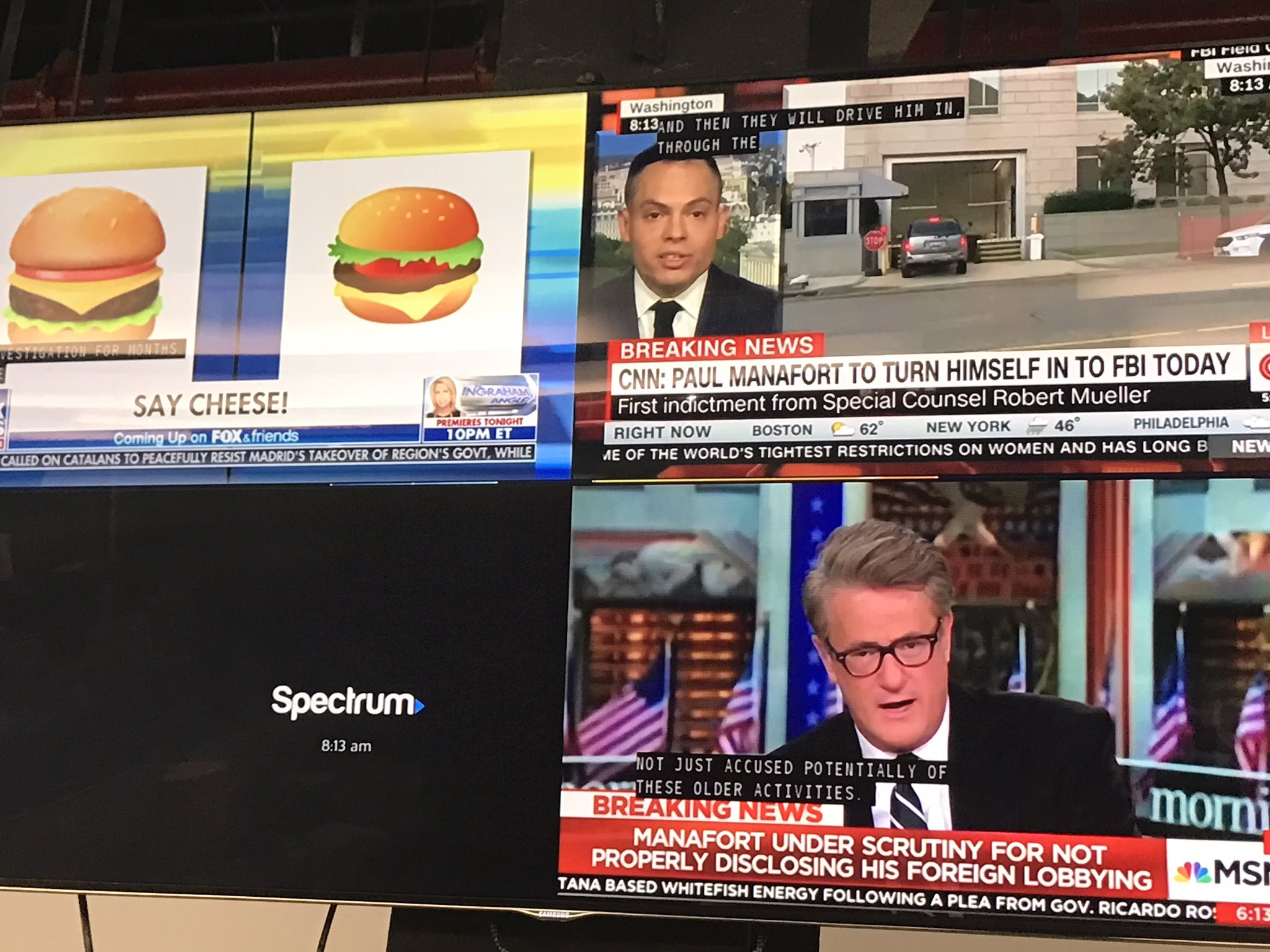
Russians, Straussians, soft landings, and hamburger emojis

Since February, we've been discussing the curiously stable dynamic that keeps the GOP aligned with Trump even as his poll numbers slip. We've also argued that, at this point in time, this alliance holds the danger of an extraordinarily hard landing for the party. At the risk of overextending the metaphor, the Republicans are desperately hoping for a soft landing but are, at the same time, doing everything they can to maintain altitude.
As many have observed, the GOP of the 70s was able to minimize the long-term damage of Watergate by distancing themselves from Nixon and very publicly refusing to impede the investigation. The response of the party now has been just the opposite. It is as if the Republicans had responded to Watergate by doubling down their defense of Nixon, insisting there was nothing to the accusations, and calling for hearings into the crimes of McGovern, Humphrey, and LBJ.

Obviously, the decision to go all in on Trump is partially motivated by a desire to achieve as many policy goals as possible while still firmly in control of all three branches of government, but there's another factor which might be as large and which is possibly doing even more to eliminate the possibility of a soft landing.


.

If some poli-sci PhD candidate out there is looking for a thesis topic, you could do worse than the breakdown of Straussian communication matrices, or as I've put it, "drinking from the wrong pipe." The conservative movement was essentially a three-legged stool built on money, prioritizing strategic offices and elections, and misinformation. This last one was arguably the most important; it is also the one that has proven the least stable.

The initial purpose of this "noble lie" approach was to use the propaganda to keep the base sending money and showing up for the polls through of a combination of rage and fear. As with all Straussian systems, it was assumed that those in power would be in on the joke while the people who believed the lies would simply serve as electoral cannon fodder.

At some point though (I suspect inevitably), a couple of things happen. First, the believers become leaders. This is become blindingly obvious with Trump, but the children of Fox News have been in control of the party since at least 2010 and the roots go back further. Remember how Dick Cheney insisted while traveling that all hotel televisions be tuned to Fox News?

The second, and possibly more dangerous problem is that a propaganda-fed base has no capacity to self correct, rather it continues follow unsustainable paths that only gain momentum, often exacerbated by ratcheting mechanisms. Soon you reach a point where, even if the leaders accurately perceive the situation and realize the best solution, they can no longer reconcile that reasonable course of action with what the vast majority of their supporters have been told to believe for decades.

One of the essential steps for achieving a soft landing is getting your core supporters to face just how dire the situation is. Fox News et al., however, has simply lost the capacity to do this.

Tuesday, August 24, 2021

Housing shortages

This is Joseph.

One place where Mark and I disagree is whether the YIMBY (yes in my backyard) movement can make arguments dumb enough to make the NIMBY (not in my back yard) group seem less dumb. So I thought I would lay out the essential piece of my argument.

Let us imagine that the government decided to tightly regulate farming. This isn't a ridiculous argument as these disasters have been attempted before. The result of bad policy could easily be a food shortage, which would cause prices to rise, and since the options are eat or die it isn't crazy to imagine food prices would rise quickly. Now imagine you needed permission in order to increase food production, from the people earning the excess profits. They would resist this at all costs, because everybody likes being rich.

Now consider housing, also a necessity (especially in climates where living outdoors is hazardous). In Canada we see a shortage of new construction to match population growth:
Now every pro-growth policy reduces housing prices (one might say that this is the point). Lack of affordable housing is a big deal. Similarly, there are many non-carbon emitting fuel technologies that have to be built somewhere. Ranging from nuclear plants (consider the zoning on this one) to windmills (where senior politicians have claimed health effects like cancer, even if these seem unfounded).

YIMBY can go wrong with too much unplanned, unrestricted growth with too little care for the consequences on the inhabitants. It is not the goal to replicate the squalor of London during the Victorian age. But the idea of stopping all development in the service of neighborhood character is also a clearly bad goal. In 1200 AD houses were very different -- do we really want to preserve the character of the medieval city? 

Finally, this really is a collective action problem. Allowing small blocks of residents to protect property values by blocking all development means that if any one block cracks then they take all of the consequences while preserving other people's wealth. The real question is the scale at which these right operate -- at the individual or city level it is probably ok, at the small neighborhood level you can see some real issues. 

Anyway, just a quick thought. 

Monday, August 23, 2021

It's not just we're going to have more fires; it's that we need more fires.

There is a tendency to treat global warming and Western megafires as one thing when they are two related but distinct crises requiring,  in a sense, opposite approaches. With the climate crisis, we need to do what it takes to reverse the trends toward higher temperatures and ocean acidification. In the West, we actually need more but better fires.  

As Elizabeth Weil explains in her Pulitzer-worthy Propublica piece (which we discussed earlier here). [emphasis added]

Yes, there’s been talk across the U.S. Forest Service and California state agencies about doing more prescribed burns and managed burns. The point of that “good fire” would be to create a black-and-green checkerboard across the state. The black burned parcels would then provide a series of dampers and dead ends to keep the fire intensity lower when flames spark in hot, dry conditions, as they did this past week. But we’ve had far too little “good fire,” as the Cassandras call it. Too little purposeful, healthy fire. Too few acres intentionally burned or corralled by certified “burn bosses” (yes, that’s the official term in the California Resources Code) to keep communities safe in weeks like this.

Academics believe that between 4.4 million and 11.8 million acres burned each year in prehistoric California. Between 1982 and 1998, California’s agency land managers burned, on average, about 30,000 acres a year. Between 1999 and 2017, that number dropped to an annual 13,000 acres. The state passed a few new laws in 2018 designed to facilitate more intentional burning. But few are optimistic this, alone, will lead to significant change. We live with a deathly backlog. In February 2020, Nature Sustainability published this terrifying conclusion: California would need to burn 20 million acres — an area about the size of Maine — to restabilize in terms of fire.

...

[Deputy fire chief of Yosemite National Park Mike] Beasley earned what he called his “red card,” or wildland firefighter qualification, in 1984. To him, California, today, resembles a rookie pyro Armageddon, its scorched battlefields studded with soldiers wielding fancy tools, executing foolhardy strategy. “Put the wet stuff on the red stuff,” Beasley summed up his assessment of the plan of attack by Cal Fire, the state’s behemoth “emergency response and resource protection” agency. Instead, Beasley believes, fire professionals should be considering ecology and picking their fights: letting fires that pose little risk burn through the stockpiles of fuels. Yet that’s not the mission. “They put fires out, full stop, end of story,” Beasley said of Cal Fire. “They like to keep it clean that way.”


Why is it so difficult to do the smart thing? People get in the way. From Marketplace.

Molly Wood: You spoke with all these experts who have been advocating for good fire for prescribed burns for decades. And nobody disagrees, right? You found that there is no scientific disagreement that this is the way to prevent megafires. So how come it never happens?

Elizabeth Weil: You know, that’s a really good question. I talked to a lot of scientists who have been talking about this, as you said, literally, for decades, and it’s been really painful to watch the West burn. It hasn’t been happening because people don’t like smoke. It hasn’t been happening, because of very well-intended environmental regulations like the Clean Air Act that make it harder to put particulate matter in the air from man-made causes. It hasn’t happened because of where we live. You don’t want to burn down people’s houses, obviously.

From this follows some equally obvious conclusions. If wildfires are both unavoidable and a natural part of the life-cycle of forests, if trying to suppress them only delays and compounds the problem and if people in the paths of these fires is one of, perhaps the, major obstacle to the solution, then we need to have a serious debate about where we encourage (or even allow) new housing and development.

I don't want to get sidetracked by discussions about fire-adapted communities and wildland–urban interfaces. These are important topics but not the conversation stoppers people seem to think they are. The first is roughly equivalent to social distancing, smart preventative steps but hardly absolute protection. The second brings up images of of isolated mountain villages suggesting developed areas don't need to worry about this sort of thing. The reality of WUIs is more U than you might expect. 

"The US Forest Service defines the wildland-urban interface qualitatively as a place where 'humans and their development meet or intermix with wildland fuel.' Communities that are within 0.5 miles (0.80 km) of the zone are included."

Here's a shot of L.A.

Lots of yellow here, particularly in areas noted for heated NIMBY/YIMBY debates, such as a big chunk of Santa Monica...


And pretty much all of La Cañada Flintridge.


 Western megafires are an incredibly complex topic, but there are a couple of simple but important points we can make here.

1. We need more good fire, either through controlled burns or by simply choosing not to fight certain wildfires.

2. The more people who live in an area, the more difficult it is to pull the trigger on those good fires.

Thursday, August 19, 2021

If ever the road to political hell was paved with reformers' good intentions...

Not  surprisingly,  Michael Hiltzik has the essential explanation of how we got here.

Herbert Croly, one of the nation’s leading progressive political commentators, cautioned that progressive electoral reforms such as the recall and ballot initiative would be “instruments of minority rule and usually of the rule of a very small minority.”

Enacted in response to the “flagrant betrayal of the popular interest” that took place under the traditional political system, Croly wrote, these measures “may succeed in abolishing one kind of abuse and oppression, but only at the price of its being succeeded by other kinds.”

...

The year was 1914. Only three years before Croly’s warning, California had established the recall, initiative and referendum as tools of “direct democracy” at the behest of its newly elected progressive governor, Hiram Johnson.

In his 1911 inaugural speech, Johnson asserted that the three measures would “place in the hands of the people the means by which they may protect themselves.”

He meant protecting themselves from the abuses of the dominant political force in California of that era, the Southern Pacific Railroad. The SP had suborned almost every other instrument of political action: It chose candidates for public office and manipulated the vote to make sure they were elected.

...

Johnson had won the governorship through a head-on attack on the SP in a statewide campaign; now that he was in office, he intended to break its political monopoly forever.

Those who counseled caution in reforming the political system were shouted down by reformers, who were in their ascendance and had the depredations of the SP to point to.

...

As historian Tom Sitton observed, [reformer John Randolph] Haynes was confident that the reforms would inspire voters to “become informed enough on political issues to cast a ballot” on specific issues. Haynes “saw in these instruments a method by which groups with little power could ... compete with a plutocracy that he believed had corrupted American politics at every level.” With Haynes’ backing, the reforms were enacted overwhelmingly in Los Angeles in 1902.

...

Croly saw that the initiative would play to the interests of the most determined camp and that a motivated and vocal minority would often have the advantage over an indifferent majority.

“The right to force a vote on specific legislative projects ... which must be approved or disapproved as a whole,” he wrote, “places an enormous power in the hands of a skillful and persistent minority.”


Wednesday, August 18, 2021

Self-cons and lies of obfuscation

Finally got around to reading the Big Short. (An actual physical-not-virtual book printed on paper, just like in the before times.) Lots to talk about here, but this section struck me as particularly relevant to some of our recent conversations.  


On one level, Lewis knows this isn't exactly true. Though the industry did its damnedest to confuse and conceal what was actually going on, the deception was never that effective. Despite all the repackaging and misdirection, the truth wasn't that hard to see, at least not for those who were interested in the truth.

The complexity of the instruments didn't lead the trader to deceive himself; they let him. While Burry and Eisman were extremely intelligent and diligent investors, but what really set them apart was, to steal one from Orwell, their willingness to see what was in front of their noses while almost everyone else refused to.

The meltdown of 2008 was perhaps the largest self-con ever with the financial sector losing something in the neighborhood of a quarter of a trillion dollars on the worthless securities it had created, but it was far from the first time a scam artist had bought his own spiel. 

Tuesday, August 17, 2021

“Teslas are running into stationary objects. They shouldn’t be.”

One of the keys to the success of Elon Musk has been his ability to work the regulators, bullying, playing the martyr, suggesting (directly or through proxies) that agencies like the SEC, the FAA, OSHA, the NHTSA et al. hate progress and are trying to stop him from saving the world (you think I’m exaggerating, but I’m not).

The tactics had been extraordinarily successful, perhaps in part due to the Trump administration’s lax attitudes toward regulation. It’s possible that the election made some kind of reckoning inevitable, particularly given the news about battery fires (not just a Tesla problem) and the misrepresentation of the “Full Self-Driving” option (very much a Tesla problem).

Russ Mitchell writing for the LA Times

In theory, identifying and avoiding stationary objects set off by hazard cones or flashing lights ought to be one of the easiest challenges for any autonomous-driving or driver-assist system.

Yet at least 11 times over the past seven years, cars made by Tesla Inc. and running its software have failed this test, slamming into emergency vehicles that were parked on roads and highways. Now the National Highway Traffic Safety Administration wants to know why.

A federal investigation announced Monday involves Tesla cars built between 2014 and 2021, including models S, X, 3 and Y. If the probe results in a recall, as many as 765,000 vehicles could be affected.

The 11 crashes at issue resulted in 17 injuries and one death. Three took place in Southern California.

The new investigation indicates that the safety agency, under President Biden and Transportation Secretary Pete Buttigieg, is paying more attention to automated driving safety than the more laissez-faire Trump administration. In June, NHTSA ordered automobile manufactures, including Tesla, to forward data on crashes involving automated systems to the agency.

It’s about time, said Alain Kornhauser, director of the self-driving car program at Princeton University. “Teslas are running into stationary objects,” he said. “They shouldn’t be.”

Tesla is also under review by the California Department of Motor Vehicles for its marketing of “Full Self-Driving” technology. That’s a significant enhancement to Autopilot that allows the car to be driven on city streets, with the claimed ability to handle traffic signals and make turns at intersections. The feature costs $10,000, which includes future enhancements, but Tesla has noted that its Full Self-Driving does not make the car self-driving. DMV regulations prevent auto manufacturers from making false claims about automated driving capabilities.


Monday, August 16, 2021

"Why does he mean more to you than us?”

I come from the buckle of the Bible belt and I stay in touch with friends from back home. Nothing here is that new to me, but even if you've heard this story before, this retelling is worth your time. 

What I want to single out here is the way that MAGA and other movements can use members' deeply held (and often reasonable) beliefs to bring them in and then, once they are completely immersed, indoctrinate them into a new worldview that often directly contradicts some of those initial beliefs. This is not a simple process. It happen slowly and stealthily and its effectiveness is not limited to the stupid or the gullible. I've seen smart, reasonable people -- the last ones you'd expect -- get sucked in.  

Of course, more often it is the first ones you'd expect, cruel and foolish people with longstanding reactionary tendencies. The closer to the door they start, the easier it is to get them in the temple, but even the most likely recruits are changed by the indoctrination, made less empathetic, more childish, more paranoid and yet more credulous.   

From the Washington Post:

Like other families with split political affiliations, they had some yelling matches after Trump took office, especially over the former president’s immigration policies. Claire was a Canadian-born Catholic drawn to the Republican Party by her fierce opposition to abortion, and Trump had won her over with promises to champion her position. Celina, Laurie and their three younger siblings skewed left despite their conservative upbringing in South Dakota. They had never felt such disdain for a politician before.

By the end of the Trump administration, the bounds of their political disagreements had shifted, Laurie recounted, becoming at once more intense and also less about policy and legislation in Washington. They had learned to live with their disagreements over abortion. Now it felt like they were occupying different realities altogether.

Over the course of 2020, amid a presidential election, racial justice protests and a pandemic, the five siblings began to trade increasingly worried text messages and emails about some of the things Claire was saying and posting on Facebook. There were comments they noticed about child trafficking and sacrifice, a key theme of the extremist QAnon ideology. There was her vitriol toward Pope Francis, whom she had referred to as “the anti-Pope.” After Election Day, they took turns pushing back on a stream of disinformation Claire posted online, including the unfounded claim that the CIA murdered U.S. soldiers abroad to help cover up voter fraud.

...

“Why is this important enough to compromise your relationships with your kids? Why does he mean more to you than us?”
This is a topic that could launch a thousand graduate theses, so we need to come back to it, particularly what happens to an area when conservative media reaches critical mass (we will cover this). In the mean time, one closing thought: cults and cons exist because people believe they would never fall for a cult or a con.

Friday, August 13, 2021

Ten years ago at the blog -- Conservation of Cynicism


It's all really the same thread. Back in 2011, we were talking about the consequences of the conservative movement cultivating craziness and manipulating the base through disinformation. We just have more examples now. 


SUNDAY, JULY 31, 2011

Overly-trusting Straussians

There is a strong strain of Straussianism in the conservative movement. Of course, not all prominent conservative intellectuals believe that you have to lie and oversimplify to move the masses in the best direction for society, but pretty much all have accepted and, more importantly, internalized the fact that many of their colleagues do believe in the need for these noble lies.

Once you've internalized the idea that people in your circle are smart and sane but occasionally make ludicrous statements for the benefit of the crowds (call it the Elsinore strategy -- feigning madness), it becomes easy to ignore craziness in your own party, particularly when there's a penalty for suggesting the alternative (see Bartlett and Frum).

In other words, we have something like conservation of cynicism. The Straussian assumes the worst about the masses, but has an excuse to assume the best about allies, even when they give every indication of being crazy and/or stupid. The result is that it has taken smart, sane conservatives far too long to acknowledge what's going on with House Republicans.

The consequences of this lack of cynicism is spelled out in detail in excellent posts by Jon Chait and Paul Krugman.

Thursday, August 12, 2021

To quote Robin Williams, "Does the name Custer mean anything to you?" -- more on feral disinformation and sane vampires

We've already done a couple of posts (here and here) on this, but a recent post at TPM got me to thinking that I hadn't emphasized enough how difficult this situation is for the Republicans.

Here's the relevant section from our original post.

Disinformation has gone feral when:

1. It is no longer in the control of the group that created it.

2. It has continued to grow in popularity and influence.

3. It has started to evolve in such a way that the nuisance/threat it presents is as as great to the people who created it as it does to the original targets. 

The most prominent example of the moment is the right wing movement opposing covid vaccines and increasingly vaccination in general. 

The Conservative Movement spent decades depicting the scientific establishment as alarmist and corrupt because undermining it served a clear political purpose at the time. Recently this narrative took on an added usefulness as the Republicans tried to contain the fallout from the pandemic. It was an unspeakably evil position to take, greatly adding to a horrific death toll, but it had a certain ends-justify-the-means logic, "had" being the operative word.

In 2021, being the anti-vaxx party is not in the Republicans' best interest. It devastates  areas that voted for Trump and it makes the most comically crazy people imaginable the face of the GOP. On top of that, it's bad for business. 

The best messaging for the Republicans at this point would be to start referring to the "Trump vaccines" and to work the phrase "Operation Warp Speed" into every statement and interview response, regardless of topic, then take credit for the end of the pandemic. That is, however, not an option. Control of the narrative has been lost, Things have gone feral.

Though the Conservative Movement reaped considerable benefits for decades by cultivating paranoia and conspiracy-thinking, the Republicans are now far past the cunning scheme phase on this. 

Here's Josh Marshall:  

Among Americans over the age of 18 fully 71% have gotten at least one vaccine dose.

As an epidemiological matter we need all that 71% to get both their shots. Currently that fully vaccinated number is 61%. And that should shift significantly over the next few weeks as many of those people get their second shots and then wait for two more weeks for the full immune effect to take hold. But as a proxy for being for or against vaccines, even the single shot is a good measure. And that means that an overwhelming majority of the people who participate meaningfully in the national political conversation and have even the right to vote are vaccinated.

This becomes even more the case when you add in the age factor. Voter participation almost universally goes up with age. The same is true with COVID vaccines. 90% of Americans over 65 have had at least one shot. And in basically every age segment from age 12 on up the vaccination rate gets higher. Point being, among the voting public the vaccinated already overwhelmingly outnumber the unvaccinated.

The Wall Street Journal published an article yesterday about how vaccination status is increasingly dividing Americans. “From family gatherings to weddings to workplaces, vaccinated Americans are drawing new, sharper lines around who they choose to spend time with amid the rise of the highly-transmissible Delta variant. And the unvaccinated are growing testy over being excluded and feeling judged for exercising their right to make their own health choices.”

At the risk of over simplifying, we have about two thirds of the country more and more annoyed and even angry at around one quarter who in turn are burrowing even deeper into their long-standing persecution complexes, with the imbalance almost certain to grow and the emotions to intensify. The sane vampires of the GOP face an insurmountable challenge on vaccines. They know how unpopular the con position is but they also know that, as a small tent party, they can't afford to alienate the lunatic fringe they cultivated. 

Interestingly, one result has been, contrary to stereotype, conservative outlets like the WSJ suggesting we should be more sensitive to the feelings of the unvaccinated while the position on the left is increasingly "stop being a baby and get your goddamn shot." I'm absolutely convinced the sane vampires would like to say this too, but their window for being honest with the base has long since closed. 

Wednesday, August 11, 2021

America has a children of famous parents problem

I've been meaning to repost this for a few weeks now, ever since I saw a Twitter exchange between Ben Dreyfuss and Josh Barro whining about train travel (Barro also had a let them eat cake comment about public libraries, but I'm not sure it was part of the same thread). I was familiar with Barro, an unimpressive writer whose rapid success would be pretty much unimaginable for someone without big time family connections. ("[Robert] Barro is considered one of the founders of new classical macroeconomics, along with Robert Lucas, Jr. and Thomas J. Sargent.") Dreyfuss, though, has him beat. First his father Richard Dreyfuss set him up as an actor, then when that didn't work out, his sister got him a job as a professional tweeter.

Just to keep things in perspective, these two are, at worst annoying. The Cuomo brothers are despicable and in terms of damage done, G.W. Bush is in a category of his own. These men didn't just get a leg up; they have traveled their entire lives on greased skids. There are far too many other examples. We have a nepotism problem.

I don't want to paint with too broad a brush. While people like Michael Douglas and Jane Fonda, Randy and Thomas Newman,  Chris Wallace and Maggie Haberman certainly had an advantage starting out, their subsequent work suggests that, with a little luck, they might have had roughly the same careers without the same parents. 

Obviously, in a perfect world, we'd all have an equal shot, but as long as connections are merely helpful, we can live with the unfairness. When being born in the right place and knowing the right people becomes a sufficient condition for success, we're in trouble. 


From back in 2014, we had an exchange with Gelman on the topic. 

MONDAY, JANUARY 20, 2014

Are we becoming more tolerant of nepotism (and other perks of privilege)?

The New Republic has a very good profile by Julia Iofee of  Michael Needham of the Heritage Foundation. The whole thing is worth reading, but there's one paragraph I'd like to single out both because of its content and its placement deep in the article.
After [Michael] Needham graduated from Williams in 2004, Bill Simon Jr., a former California Republican gubernatorial candidate and fellow Williams alum, helped Needham secure the introductions that got him a job at the foundation. Ambitious and hard-working, he was promoted, in six months, to be Feulner’s chief of staff. According to a former veteran Heritage staffer, Needham is intelligent but “very aggressive”: “He is the bull in the china closet, and he feels very comfortable doing that.” (“I consider him a friend,” says the college classmate, “but he’s a huge asshole.”) In 2007, Needham, whose father has given generous donations to both Rudy Giuliani and the Heritage Foundation, went to work for Giuliani’s presidential campaign. When the campaign folded, Needham followed his father’s footsteps to Stanford Business School and then came back, at Feulner’s bequest, to run Heritage Action.
You'll notice Iofee goes out of her way to suggest that Needham got his first rapid promotion by being "ambitious and hard-working," and there is, no doubt, some truth in that, but pretty much everybody who goes to work for a big-time D.C. think tank is ambitious and hard-working. These are not traits that would have set Needham apart while being the socially well-connected son of a major donor very well might have.

My question is: would this angle have been handled differently a few years ago? Obviously nepotism and advancement through connection have always been with us, but until recently I get the impression that this career path was seen as somewhat suspect; people who obviously got their positions thanks to string-pulling were put on a kind of public probation until they had proven themselves.

Now, the public (or at least the press) seems to me much less likely to discount the accomplishments of the well-connected children of the rich and powerful. Along similar lines, though you can certainly still find jokes about the boss's son/nephew/brother-in-law, but they don't seem nearly as pervasive as they were through most of the 20th Century. Anyone else see a trend here?

Tuesday, August 10, 2021

They literally call these "pump and dumps"

No, really. They actually use those words. The victims know exactly what's going to happen but never imagine it will happen to them. Never has Maurer's The Big Con seemed so relevant.

Monday, August 9, 2021

Autogyros were cool

And we haven't done a flying machine post for ages.

The technology was still cutting when this film was shot in 1931.


You Only Live Twice was perhaps the stupidest of the series, with the "let Bond go so we can kill him later" tactic reaching possibly a franchise peak. It is also, if you catch it in the right mood, a lot of fun, with piranha tanks, ninjas, and perhaps the most over-the-top Ken Adam set design.

Like the rocket belt in Thunderball, the Wallis WA-116 Agile in YOLT was the real thing, flown by its inventor, Ken Wallis. The armaments are goofy and the doubling leaves something to be desired, but how often do you get to see aerial combat with a genuine autogyro?   


Friday, August 6, 2021

For some reason completely unrelated to the rest of the post, this classic science fiction story came to mind

"The Marching Morons" by Cyril M. Kornbluth is a 1951 story about a con man who suckers gullible people into a doomed flight to another planet.

_____________________________________________________________

For the weekend, three videos from the Common Sense Skeptic.


I assume everyone still remembers Mars One, the widely reported plan to use a reality show to finance a permanent Martian colony. The Gateway SpacePort is also a plan for establishing a privately funded foothold in space, but it's not as reputable or well thought-out.


The 2001 tweet was one of those reminders that Elon Musk doesn't have a grasp of even the basics of manned space travel. We discussed some of the issues here but this video (also by the Common Sense Skeptic) explains the problems better and in much greater detail.


Even if the orbital hotels and the artificial gravity don't work out, space travel can still be luxurious.
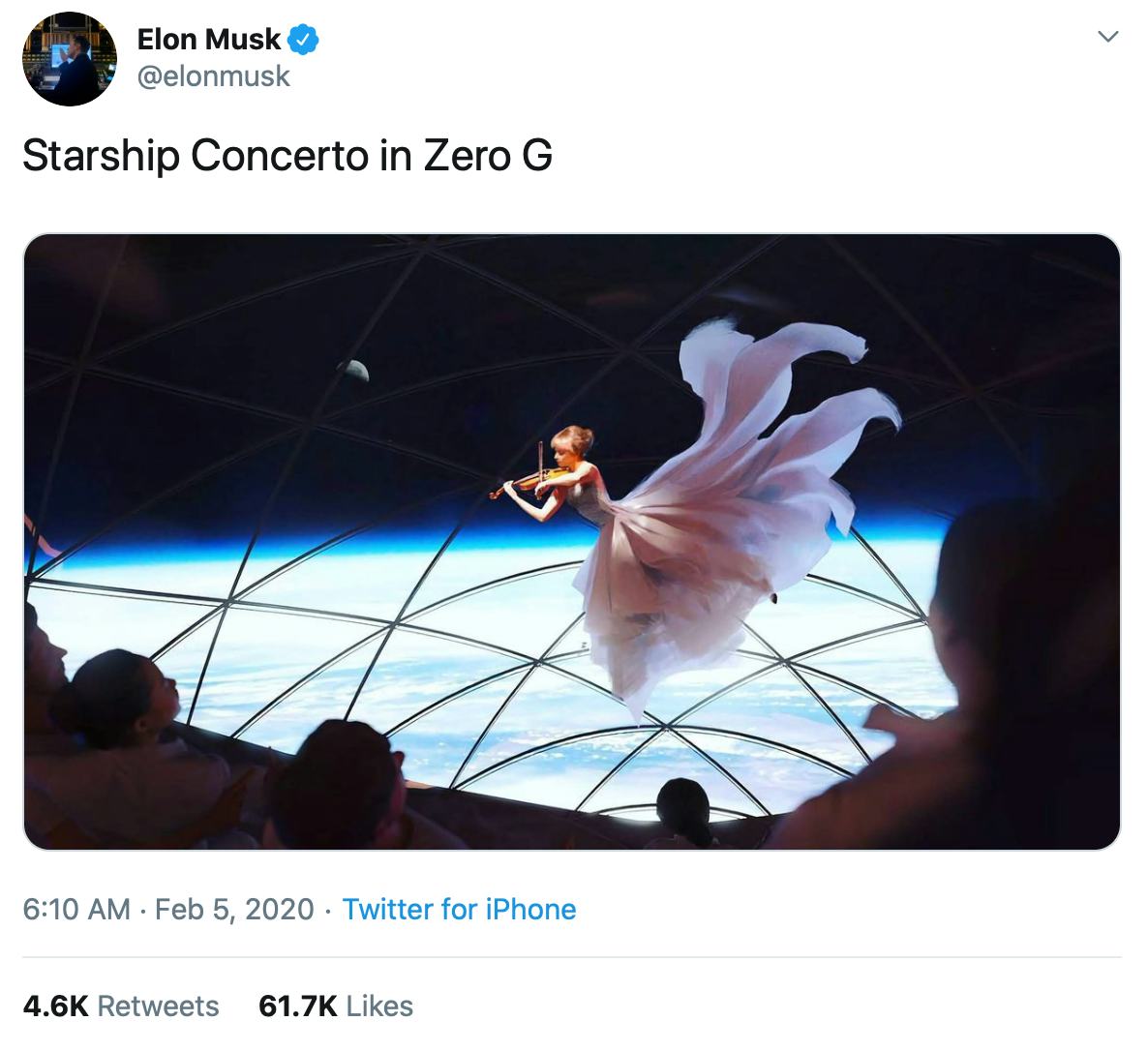
Elon Musk, whose firm SpaceX is building a rocket that could transport up to 100 people in space at once, has a vision for future space activities. On Wednesday, the CEO shared an image with his 31 million Twitter followers envisioning a musical performance in a ship above the Earth.

"Starship Concerto in Zero G," Musk wrote alongside the image, referring to the name of the stainless steel rocket currently in the prototype phase. It wouldn't be the first musical performance in space – Chris Hadfield famously covered David Bowie's "Space Oddity" on board the International Space Station – but the Starship could represent an opportunity for more artists than ever to be inspired by the amidst the stars.
...

Those passengers would have plenty of room to stretch out and get creative. The Starship is expected to offer 100 cubic meters of pressurized cabin space, similar to an Airbus A380 or the International Space Station. Musk noted at a September 2019 event that, thanks to zero gravity, space could be used much more efficiently as users would be able to take advantage of every corner of a room.


Thursday, August 5, 2021

Europe envy

This is Joseph

One thing that I always find intriguing is how much people seem to point to European countries as examples of better places to live as compared to North America. The envy of Scandinavia is long standing and people from the UK are seen as being classy but recently there seems to a new target: Hungary


As a person who has traveled to Europe a fair bit, I always find this attitude a bit odd. Now, this is not to say that I do not have interest in stealing good ideas from other places (wearing masks for people with active respiratory illness as a matter of social politeness is an idea I would love to steal from Japan). 

That said, there are always two points to keep in mind.

One, it depends a lot on who you are as to whether a specific system is better for you. If you are an immigrant you are better off seeking to live in Canada than Hungary, at least on average, in terms of acceptance. If you have no money and health issues, then maybe you want to live in a place like Canada or the UK which have decent free health care. But if you are sick and have money then I want to be in France -- even libertarians agree

Two, is that it depends a lot on social class. People who have the resources to visit Europe and who are able to move around the globe are likely upper middle class. I think it is obvious that the best place to be upper middle class, assuming you stay upper middle class, is probably the United States. Even the arguments about the poor climate seem to presume that people have yet to visit California.  

That said, I take Matt's point that which European country that people envy is a great way to get a sense of what is or is not valued. Not a universal point, preferences can be eccentric. But I always figured that the UK class system is what people in Canada envied -- liking the idea of social hierarchy that is a lot less present in Canada, despite the overall great standard of living in Canada. I would find envy of Russia concerning unless it was envy of something that was a very specific value (e.g., winter sports or cuisine). 

In any case, it has been fun to watch the defenses of Hungary, There are some really nice features about Hungary but I am still pretty convinced the best place in the world to be middle class is still the United States. Certainly, the pattern of immigration suggests the same. 

Wednesday, August 4, 2021

The good news is I can run it again since nothing has changed. The bad news is I can run it again since nothing has changed -- Mega-fire repost 3

 TUESDAY, SEPTEMBER 22, 2020

West Coast wildfires -- Marketplace gets it right

At first glance, this shouldn't be that difficult. You just have to hit the following points clearly and emphatically.

1. While climate change contributes to the wildfire crisis, the much larger and more immediate cause is the result of decades of excessive Western fire suppression.

2. We desperately need to address this crisis as soon as possible, primarily through controlled and managed burns.

3. The scientists studying forests are in absolute agreement on both these points and have been warning us about this crisis for years.

4. However, a combination of governmental inaction, perverse incentives and the short-sighted self-interest of various parties has kept us from avoiding catastrophe.

Not one in ten articles on the subject meets these standards, but perhaps we shouldn't be that surprised. Telling a story that grows out of the facts, fighting the urge to bend it to fit popular narratives, keeping the focus on the genuinely important. These are things that require journalists to have both skill and courage.

Which is part of the reason why Marketplace is the best daily news show on public radio.