Monday, July 20, 2020

The Wages of Strauss -- “I think I made a mistake. I thought this was a hoax.”


Monday, March 16, 2020

The wages of Strauss are death (as in this is literally about to kill people)

We've been arguing for about a decade now that the Straussian strategy and tactics has the dominant factor in American politics since the late 90s, both in the undermining of reliable and trusted information sources and the spread of disinformation.

This essential piece from our best press critic points out how costly this disinformation has become.

Rupert Murdoch could save lives by forcing Fox News to tell the truth about coronavirus — right now
By Margaret Sullivan


When Trump says “jump,” the network leaps into action. And what the president hears on Fox News often dictates his own pronouncements and policies — which, in turn, are glowingly represented in Fox News’s coverage and commentary.

That’s never been anything short of dangerous, since the effect has been to create a de facto state-run media monster more devoted to maintaining power than shedding light on the truth. But now the mind-meld of Fox News and Trump is potentially lethal as Trump plays down the seriousness of the coronavirus and, hearing nothing but applause from his favorite information source for doing so, sees little reason to change.

There’s one person who could transform all that in an instant: Fox founder Rupert Murdoch, the Australian-born media mogul who, at 89, still exerts his influence on the leading cable network — and thus on the president himself.

...
The network’s influence on Trump is clear from the presidential tweets that follow fast on the heels of a Fox News broadcast. He was always a fan of Fox News, but after entering the White House, he made it even more of an obsessive daily habit, Bloomberg News reported in 2017, to the extent of blotting out dissenting voices from other sources.

Trump made specific reference to his reliance on Fox News during his misleading press event Friday, when he offered unwarranted reassurance rather than urging extreme caution and decisive action: “As of the time I left the plane . . . we had 240 cases — that’s at least what was on a very fine network known as Fox News.”

The message: Go about your business, America, and it will all disappear soon.

Days later, 30 deaths and more than 1,000 cases have been reported in the United States, with those numbers expected to grow exponentially. (By contrast, German Chancellor Angela Merkel is telling hard truths: As much as 70 percent of that country could end up being infected.)

Matt Gertz, a Media Matters senior fellow and the foremost chronicler of the insidious Trump-Fox News feedback loop, connected the dots: “Roughly an hour before his comments, a Fox News medical correspondent argued on-air that coronavirus was no more dangerous than the flu; a few hours later, the same correspondent argued that coronavirus fears were being deliberately overblown in hopes of damaging Trump politically.”

He added: “The network's personalities have frequently claimed that the Trump administration has been doing a great job responding to coronavirus, that the fears of the disease are overblown, and that the real problem is Democrats and the media politicizing the epidemic to prevent Trump's reelection.”

On Fox Business Channel, host Trish Regan drew widespread condemnation for her over-the-top rant in Trump's defense: “The chorus of hate being leveled at the president is nearing a crescendo as Democrats blame him and only him for a virus that originated halfway around the world. This is yet another attempt to impeach the president.”

(By contrast, her Fox News colleague Tucker Carlson has taken the threat seriously, though using it as an excuse to stoke anti-China sentiment along the way.)

...

Even if all that changed today, great harm has already been done. As The Washington Post and others have documented, the administration has repeatedly squandered chances to prepare for and manage the global epidemic.

But every moment still counts. Lives can be saved by prudent practices and aggressive government action — and lost by their absence.

But it takes leadership from the top. And so, let’s acknowledge the obvious: There is no more important player in influencing Trump than Fox News. And no more powerful figure at Fox than its patriarch.

Murdoch might consider, too, that with the median age of Fox’s viewers around 65, they are among the most vulnerable to the virus’s threats.
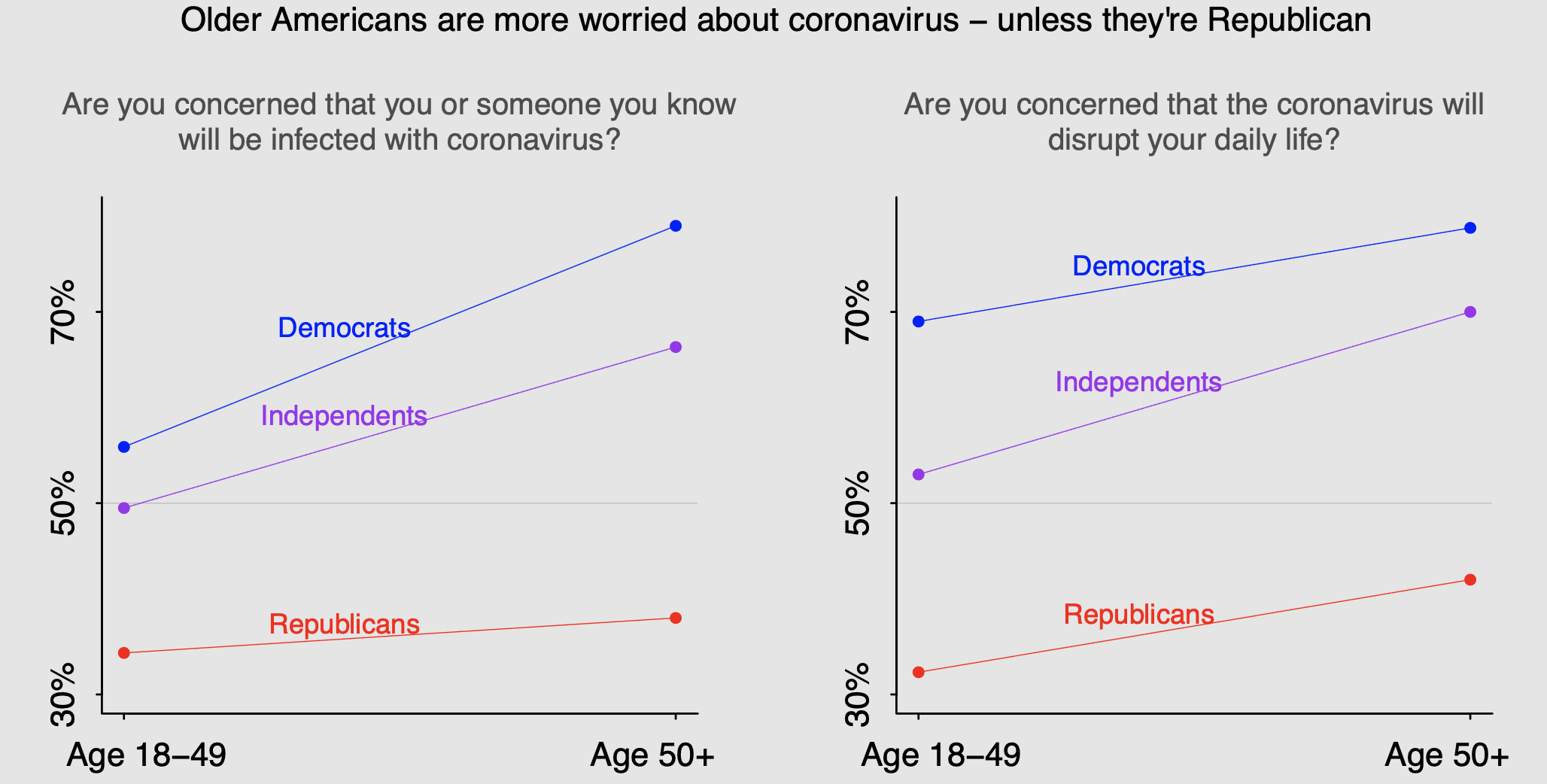
From Andrew Gelman


Friday, July 17, 2020

Lockdown Jukebox

Working from home I've been burning through a lot of instrumental music. (You come to miss the background noise.) I've been digging into Classical, Jazz and scores (mainly Goldsmith, Morricone, Thomas Newman), even some new stuff.

Around a hundred days, though, you start getting restless so I reached out to my friend Brian Phillips, a sometimes DJ whose knowledge of popular music is beyond encyclopedic, and asked for some recommendations that were eclectic and off the beaten path.

He delivered. Enjoy.

The Sons Of Moses - Soul Symphony


The T-Bones


Shocking Blue - Acka raga


The Black Exotics


The Tornados - Telstar


The Jumping Jewels Africa


Mr Bloe - Groovin` With Mr.Bloe


Santo & Johnny - Sleep walk


Thursday, July 16, 2020

It's a V-shaped recovery if you start with a V that's almost a right angle and you tilt it sharply to one side.


Bullet points from ApartmentList.com

    32 percent of Americans did not make a full on-time housing payment in July, up slightly from 30 percent in June.
    Missed payments continue to concentrate among renters, young and low-income households, and residents of dense urban areas.
    Compared to last month more Americans are concerned about evictions and foreclosures, even as federal and certain local displacement protections are extended.
    Coronavirus continues to simultaneously encourage and discourage moving. Many are likely to move because of declining affordability, while others are staying put because of the health risks associated with moving during a pandemic.
    Renters in large multifamily apartment buildings show higher payment rates than those living in smaller buildings and single-family homes.

Wednesday, July 15, 2020

There is no argument so dumb it cannot be recycled

This is Joseph

Really?
“There has never been a more critical time for Americans of all ages and backgrounds to be aware of the multiple pathways to career success and gain the vocational training and skills they need to fill jobs in a changing economy,” said Ivanka Trump, who graduated from the University of Pennsylvania’s Wharton School.
This led Daniel Drezner to opine "I think we need to consider the possibility that the Trump White House is populated by morons."

And it is not just the white house -- see the NYT! Adam Ozimek has the best take:
Look I am a fan of education and training, but the unemployment rate was 3.5% with the skills workers had five months ago
And this is not a misrepresentation of the campaign. See Ivanka Trump:


I mean this just beggars belief. First of all, we had a very low unemployment rate a few months ago and then a pandemic hit. That is a classic external shock, like the China shock was for trade. You know who isn't to blame for shocks -- the individual workers. Six months ago there were some happy entrepreneurs building restaurant businesses. There were cooks and steak house managers, who had a happy career doing something useful. The issue was not that they lacked skills, it was that their skills were about to rendered obsolete.

This is a very big deal to get wrong. Here is Megan McArdle talking about the China shock:


The reason that this matters is that it shifts blame to the workers (why don't you have skills?) instead of accepting that there is a shock going on and asking if some of the gains from that shock should be redistributed. Remember, a large external shock is not a source of moral hazard if it was reasonably unforeseeable and insuring against these shocks is a natural function of government. Now, it does mean that resources might go into workers instead of into Elon Musk's government subsidy plan. But that is a good outcome.

I think we need to start making fun of this whenever we see it. Yes, everyone could have more skills. But, as an aggregate, if people are unable to obtain the skills they need that is a structural problem and not a personal one. It is never more clear when the skills argument is being rolled out now!

Tuesday, July 14, 2020

We have a major stock bubble driven by hype, fraud, daytrading, and denial in the middle of an economic collapse in the middle of a pandemic. This would seem to be a bad thing.

Probably a good time to revisit this thread.

"A company for carrying on an undertaking of great advantage, but nobody to know what it is."

Another except from Charles Mackay's  Extraordinary Popular Delusions and the Madness of Crowds. I believe "a company for carrying on an undertaking of great advantage, but nobody to know what it is" was an initial business plan for Groupon.


Some of these schemes were plausible enough, and, had they been undertaken at a time when the public mind was unexcited, might have been pursued with advantage to all concerned. But they were established merely with the view of raising the shares in the market. The projectors took the first opportunity of a rise to sell out, and next morning the scheme was at an end. Maitland, in his History of London, gravely informs us, that one of the projects which received great encouragement, was for the establishment of a company "to make deal-boards out of saw-dust." This is, no doubt, intended as a joke; but there is abundance of evidence to show that dozens of schemes hardly a whir more reasonable, lived their little day, ruining hundreds ere they fell. One of them was for a wheel for perpetual motion—capital, one million; another was "for encouraging the breed of horses in England, and improving of glebe and church lands, and repairing and rebuilding parsonage and vicarage houses." Why the clergy, who were so mainly interested in the latter clause, should have taken so much interest in the first, is only to be explained on the supposition that the scheme was projected by a knot of the foxhunting parsons, once so common in England. The shares of this company were rapidly subscribed for. But the most absurd and preposterous of all, and which showed, more completely than any other, the utter madness of the people, was one, started by an unknown adventurer, entitled "company for carrying on an undertaking of great advantage, but nobody to know what it is." Were not the fact stated by scores of credible witnesses, it would be impossible to believe that any person could have been duped by such a project. The man of genius who essayed this bold and successful inroad upon public credulity, merely stated in his prospectus that the required capital was half a million, in five thousand shares of 100 pounds each, deposit 2 pounds per share. Each subscriber, paying his deposit, would be entitled to 100 pounds per annum per share. How this immense profit was to be obtained, he did not condescend to inform them at that time, but promised, that in a month full particulars should be duly announced, and a call made for the remaining 98 pounds of the subscription. Next morning, at nine o'clock, this great man opened an office in Cornhill. Crowds of people beset his door, and when he shut up at three o'clock, he found that no less than one thousand shares had been subscribed for, and the deposits paid. He was thus, in five hours, the winner of 2,000 pounds. He was philosopher enough to be contented with his venture, and set off the same evening for the Continent. He was never heard of again

Monday, July 13, 2020

And given that the world's most valuable car company currently sells less than one percent of the world's cars, competition might be something investors should be thinking about.

The arguments justifying impossibly overvalued stocks usually come down to the same basic narrative.

At some point in the near future, the company will achieve an effective monopoly despite currently having a relatively small and in some cases nonexistent share of the market. This will be followed by massive increases in profit margin‘s which will for some reason not attract competitors or bring in the unwanted attention of regulators.

With Tesla, the specific claim was that battery powered EVs are the future and that Musk's company had such a large technological lead and first mover advantage that no one would have any chance of catching up. The first part is probably true (though hydrogen fuel cell are looking like an increasingly viable alternative). The second almost certainly isn't.

Jeremy White writing for Wired.

The Polestar 2's mission is two-fold: to establish the brand as a major figure in the EV scene, and also to take on none other than Tesla and best its Model 3.

Well, considering the impact of the Polestar 1, the announcement of the coming Polestar 3 SUV and Precept as well as the fact that the company (along with Volvo) is owned by the Chinese Geely Auto Group, which also has Lotus and Lynk & Co in its roster of brands, you can cross "establish as a major player" off the list. As for beating the Tesla Model 3? Yes it does. Just.

With prices starting at £49,900, the Polestar 2 costs £7,400 more than the Model 3 at base level. But, as you know, how you choose to configure and spec these cars can quickly raise those figures. A 78kWh battery pack and electric motors on the front and rear axle give the car more than 400bhp split equally between front and rear. This means 0-62mph in 4.7 seconds and a top speed of 127mph (shunning Volvo’s 112mph limit).

So, yes it is fast, and we already expect formidable acceleration from EVs, but what sets the Polestar 2 apart is its sophistication. It is more pleasant to drive than the Model 3, less savage and simpler (in a good way), and so better for urban driving despite having the speed for motorway missions. The driving configuration options are thankfully limited, so no faffing there. And there’s no key or start button either. All you need is the digital key somewhere in the car and you can pull away. Those nagging doubts if you have set the car up right or are getting the most from it are absent. In Apple parlance, it just works.

...

Much like the fine Mini Electric, the best compliment that can be said of this car is that, if you ignore the regen braking, very quickly you forget you are driving an EV. This is an extremely well developed car that has the kind of quality of finish that Tesla has been aiming for but missing, and from the exterior design to the driving experience to the interior there is very little to disappoint.

...

This is what happens when those with expertise and a long history of car manufacture catch up with Elon. Tesla had better take note. It has been overtaken. And all the people who have been brave enough to buy the Polestar 2 without even having a test drive – and when I say "all" I mean it as there have been no public drives for customers who have parted with money – they will not be disappointed. This is what EVs should be like. Now we just need to fix the charging system.

And we haven't even gotten to Volkwagen.

Friday, July 10, 2020

Thursday, July 9, 2020

The superpower of 2020 is making parody normal

This is Joseph

You know that I have had strong opinions about childcare. But the current silly situation just keeps getting more and more absurd. Dean Dad is on the case with Florida State University's new policy (comments got disabled just before he started on controversial topics).

From Matt Reed:
One way to handle that dilemma, of course, is just to outlaw it. That was Florida State’s approach. It mandated that parents who are working from home, and whose children are young, provide proof of a nanny or other caregiver, or be fired. It’s a solution that makes sense if you assume that everybody (including the nanny) is independently wealthy and working just to have something to do. If you assume, though, that people need their salaries, then it’s sexist and barbaric. When I read it, I initially thought I had missed the attribution to The Onion. If we had an actual, functioning judicial branch, I’d expect that to get tossed on “differential impact” in a millisecond. Alas, no.
This is the logical endpoint of not wanting to grapple with the joint problems of liability (in a classroom, somebody will get infected with covid-19 -- the US is a large country) and social design. At the same time that people are becoming richer off of the pandemic.

I think I am not unique in noting that removing childcare services shifts the economics of working in ways that really undermine the whole way we organize the economy. It also has the potential to induce large losses in student outcomes; vulnerable groups show disparate losses over the SUMMER. What are 2 years going to do?

But the other is the question of distribution. This has come up with trade. It is axiomatic that trade between the US and China makes both groups better off in aggregate. But it doesn't mean that there will not be losers in this game. There is an allergy to removing some of the wealth from the "winners" to compensate the "losers" as if market outcomes were some sort of ethical or moral process.

In the case of war we totally have concerns about "war profiteers" -- people who get rich in a time of great suffering instead of investing the money back into the common good. How is the pandemic different? A disease is not a moral process and so perhaps we should be thinking about how to distribute wealth and how to cope the shock. Short term cash transfers help (and are a good) but if the job distribution is very different afterwards then that will be bad. How do you square "stay home with your kids for the common good" with "Julie was there during the pandemic and was thus the best person to get the new promotion because of the skills she developed".

Finally, in the United States we link health care to employment. Let that sink in as you think about the FSU policy. If you have kids and are not wealthy then we'll take away your ability to be insured in the midst of a dangerous pandemic that often requires hospital care, even among the young/healthy.

It is a hard problem and it needs an even more serious grappling.

Wednesday, July 8, 2020

Maybe I should just start calling them Wednesday tweets


Start with this exhaustive thread.


Tuesday, July 7, 2020

Another newly relevant old post


Wednesday, September 29, 2010

The heroin's still doing the heavy lifting -- why Ivy League legacies work

From Christopher Shea's Boston Globe column:
Richard D. Kahlenberg, editor of the forthcoming book "Affirmative Action for the Rich: Legacy Preferences in College Admissions," points out that universities in other countries don't give so-called legacy preferences to sons and daughters of their alumni. (Even Oxbridge colleges don't, despite the class-bound history of British education.) So, he asks, why on earth do we do it in America?
Broadly speaking, students go to college in search of four things: certification; instruction; reputation; and connections.

In terms of certification, any well-accredited school would do. In terms of undergraduate instruction, the best deal for the money (and perhaps the best deal period) is the small four-year school. (I'm leaving this as an assertion but I'm fairly confident I can argue the point if anyone wants to debate.)

In the next two categories, however, the Ivy League cannot be surpassed, in part because of the legacy system.

Without loss of generality, look at Harvard. The student population of the school consists entirely of two overlapping groups: people who can get into Harvard; people whose parents can get them into Harvard.

The first group is hard-working, ambitious and academically gifted. Assuming the number of need-based legacies is trivial, the second group comes from families that are wealthy (they're paying for a Harvard education) and well-connected (at least one parent went to Harvard).

Putting aside luck, you can put the drivers of success into three general categories: attitude, drive and work habits; talent, intelligence and creativity; reputation and connections. It is possible to succeed with just one of these (hell, I can think of people who made it with none), but there is a strong synergistic effect. A moderate talent who works hard and has connections will generally go farther than a spectacular talent who's lazy and isolated.

Connections are governed by the laws of graph theory. I'm not going to delve too deeply into the subject (since that would require research and possibly actual work on my part), but as anyone who has read even the cover blurbs on Linked or Small Worlds can tell you, adding a few highly connected nodes (let's call them senator's sons) can greatly increase the connectivity of a system.

It would be interesting to model the trade off between picking a well connected legacy over a smarter, harder-working applicant given the objective of producing the greatest aggregate success. Because of the network properties mentioned above, it wouldn't be surprising if the optimal number of legacies turned out to be the 10% to 15% we generally see.

Optimized or not, this mixture is almost guaranteed to churn out fantastically successful graduates regardless of what the schools do after the students are admitted. I'm certain the quality of instruction on the Ivy League schools is very good, but, like most education success stories, the secret here is mostly selection and peer effects.

Update: For a different interpretation (this time with actual data), check out this post at Gene Expression.


Monday, July 6, 2020

"The key to investing is not assessing how much an industry is going to affect society, or how much it will grow, but rather determining the competitive advantage of any given company and, above all, the durability of that advantage."

I have a feeling that I'm late to this party (around 21 years late), but I really like this essay by Warren Buffett, particularly his dismantling of one of the most overused and misleading cliches of investing, the buggy whip example.

 Well, I thought it would be instructive to go back and look at a couple of industries that transformed this country much earlier in this century: automobiles and aviation. Take automobiles first: I have here one page, out of 70 in total, of car and truck manufacturers that have operated in this country. At one time, there was a Berkshire car and an Omaha car. Naturally I noticed those. But there was also a telephone book of others.

All told, there appear to have been at least 2,000 car makes, in an industry that had an incredible impact on people's lives. If you had foreseen in the early days of cars how this industry would develop, you would have said, "Here is the road to riches." So what did we progress to by the 1990s? After corporate carnage that never let up, we came down to three U.S. car companies--themselves no lollapaloozas for investors. So here is an industry that had an enormous impact on America--and also an enormous impact, though not the anticipated one, on investors.

Sometimes, incidentally, it's much easier in these transforming events to figure out the losers. You could have grasped the importance of the auto when it came along but still found it hard to pick companies that would make you money. But there was one obvious decision you could have made back then--it's better sometimes to turn these things upside down--and that was to short horses. Frankly, I'm disappointed that the Buffett family was not short horses through this entire period. And we really had no excuse: Living in Nebraska, we would have found it super-easy to borrow horses and avoid a "short squeeze."

U.S. Horse Population 1900: 21 million 1998: 5 million

The other truly transforming business invention of the first quarter of the century, besides the car, was the airplane--another industry whose plainly brilliant future would have caused investors to salivate. So I went back to check out aircraft manufacturers and found that in the 1919-39 period, there were about 300 companies, only a handful still breathing today. Among the planes made then--we must have been the Silicon Valley of that age--were both the Nebraska and the Omaha, two aircraft that even the most loyal Nebraskan no longer relies upon.

Move on to failures of airlines. Here's a list of 129 airlines that in the past 20 years filed for bankruptcy. Continental was smart enough to make that list twice. As of 1992, in fact--though the picture would have improved since then--the money that had been made since the dawn of aviation by all of this country's airline companies was zero. Absolutely zero.

Sizing all this up, I like to think that if I'd been at Kitty Hawk in 1903 when Orville Wright took off, I would have been farsighted enough, and public-spirited enough--I owed this to future capitalists--to shoot him down. I mean, Karl Marx couldn't have done as much damage to capitalists as Orville did.

I won't dwell on other glamorous businesses that dramatically changed our lives but concurrently failed to deliver rewards to U.S. investors: the manufacture of radios and televisions, for example. But I will draw a lesson from these businesses: The key to investing is not assessing how much an industry is going to affect society, or how much it will grow, but rather determining the competitive advantage of any given company and, above all, the durability of that advantage. The products or services that have wide, sustainable moats around them are the ones that deliver rewards to investors.

Disinformation and dysfunction


Another strand in an old thread.

At this point, I suspect that most people in Trump's circle and possibly Trump himself realize that it is in his best interest and in that of the party to get everyone wearing masks and avoiding super spreader events .


With a few reasonable and inexpensive steps we could see the infection and hospitalization rates drop steadily between now and November with minimal impact on the economy outside of a couple of industries such as travel and dining.

Even with a country facing serious challenges, that’s not a bad place for an incumbent to be. So, if they realize this is overwhelmingly in their best interest, why aren’t they doing it? The answer is that they can’t. Once you’ve gotten your base invested in the belief that the pandemic is not a big deal, possibly even a hoax, and that the attempts of people like Bill Gates to contain it are part of a nefarious plot, it is all but impossible to pivot back to the direction you need to go.


Friday, July 3, 2020

What we were making fun of ten years ago


Saturday, July 3, 2010

Role models

While browsing the business section yesterday, the title and author of one of the books caught my eye so I picked it up and scanned the back cover:

Inspiration. Success. Confidence. Passion.

No one is born with these qualities, but they are the key ingredients for reaching goals, building careers or turning a blueprint into a breathtaking skyscraper.
I learned that the author would share "the life lessons and hard-won insights that made her a rising star in the business world" and that whether the reader was "landing that first job, navigating the workplace,or making a lasting impact," the author would show how to "Step up and get noticed at work -- focus and efficiency will open doors."

The author's name was Ivanka Trump.

The book is the Trump Card.

It's available in paperback.

Thursday, July 2, 2020

When a disinformation bubble designed to constantly ratcheting up fear and rage runs into the genuinely catastrophic...

In chaotic times, you are constantly running across data points that you know are important but because they come at you so fast it's difficult to keep track of them. I find blogs remarkably useful for taking these kinds of notes, particularly if you've been at it for a while and have old posts you can mine for relevant paragraphs.

For example, we've been talking about conservative movement disinformation for years.

The initial purpose of this "noble lie" approach was to use the propaganda to keep the base sending money and showing up for the polls through of a combination of rage and fear. As with all Straussian systems, it was assumed that those in power would be in on the joke while the people who believed the lies would simply serve as electoral cannon fodder.

At some point though (I suspect inevitably), a couple of things happen. First, the believers become leaders. This is become blindingly obvious with Trump, but the children of Fox News have been in control of the party since at least 2010 and the roots go back further. Remember how Dick Cheney insisted while traveling that all hotel televisions be tuned to Fox News?

The second, and possibly more dangerous problem is that a propaganda-fed base has no capacity to self correct, rather it continues follow unsustainable paths that only gain momentum, often exacerbated by ratcheting mechanisms. Soon you reach a point where, even if the leaders accurately perceive the situation and realized the best solution, they can no longer reconcile that reasonable course of action with what the vast majority of their supporters have been told to believe for decades.

In order to maintain these levels of anxiety and anger, the narratives employed increasingly apocalyptic language and imagery, a development we commented on four years ago.

Even in the small chunks of the Republican national convention that I listen to, there were numerous doomsday images and references to the "dark times" the country was facing. The people in the stadium found these statements credible because that's what they had been told on Fox and on the other right wing media sources they got their news from. Once you factor in the state of conservative media, the rise of Trump is neither that surprising nor that interesting.

Things have not gotten better


These are direct quotes from Adams


Wednesday, July 1, 2020

One of these days I'm going to have to write something about the consequences of years of playing along with myths of tech messiahs, unmooring "success" from viability, and generally letting rich people get away with anything-- but for now some totally unrelated deferred Tuesday tweets


Tesla is a company priced one, maybe two orders of magnitude above the fundamentals in the middle of a bubble in the middle of an economic collapse. Other high fliers are starting to implode, revealing fraud and massive regulatory failure.

But there's nothing to see here.


Musk, with the help of a... friendly board, has lined up an unprecedented compensation plan.

But there's nothing to see here.


Accompanied by lots of questionable accounting.

But there's nothing to see here.


The valuation assumes Tesla can achieve and maintain a near monopoly on EVs.

But there's nothing to see here.


Quality control seems to be having some issues. (Remember that question about goodwill?)

But there's nothing to see here.


    Model 3 totaled and the airbags didn't go off. Because the car was built in a tent. $TSLAQ https://t.co/hP6Lk9vO7V

    — TC (@TESLAcharts) June 30, 2020


And the stock keeps going up.


Tuesday, June 30, 2020

Our take from three years ago: "a propaganda-fed base has no capacity to self correct, rather it continues follow unsustainable paths that only gain momentum"

The next time someone asks why the GOP doesn't veer away from stands that look increasingly likely to end in electoral disaster, we have a post for that.

Thursday, November 2, 2017

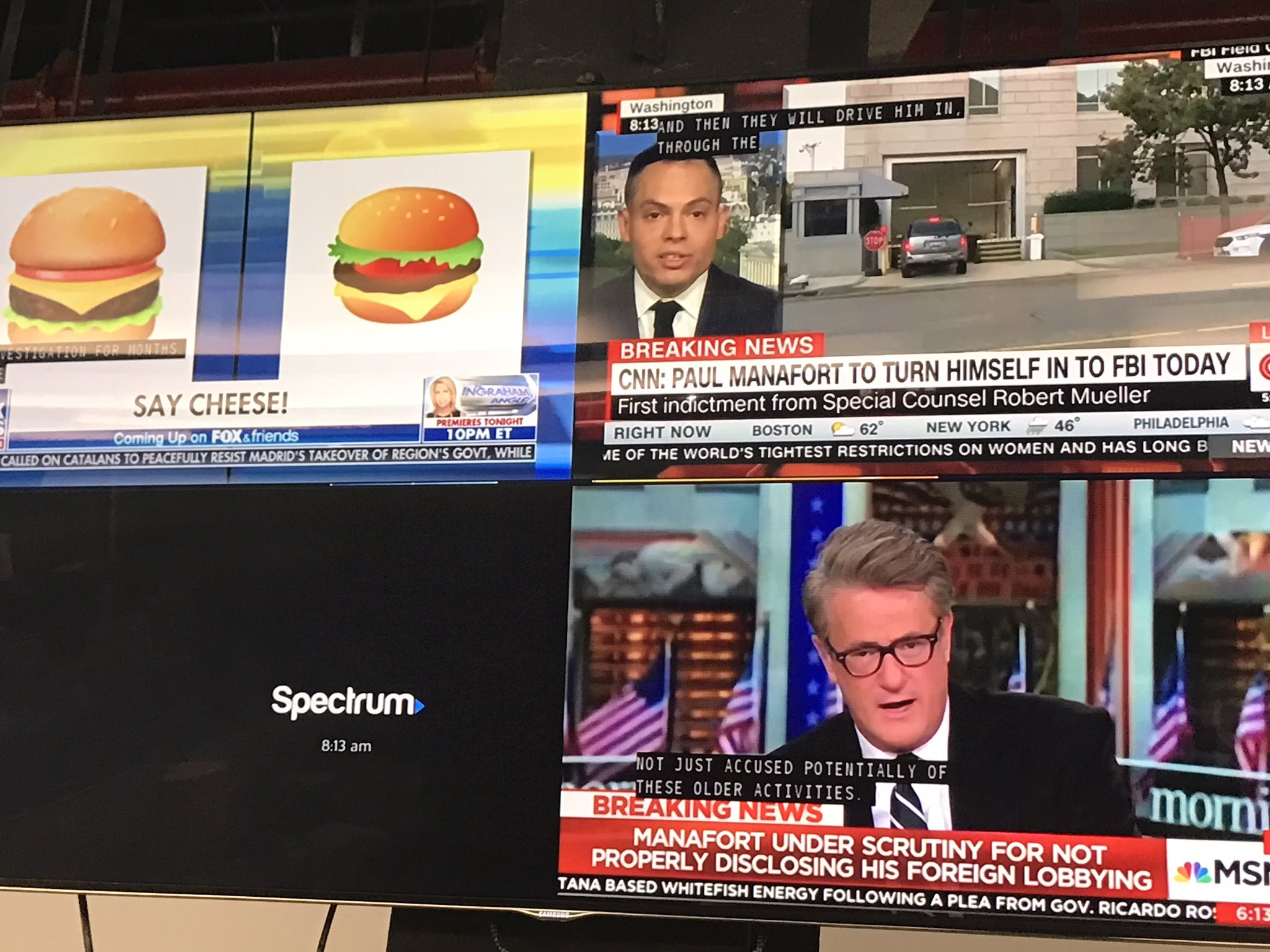
Russians, Straussians, soft landings, and hamburger emojis

Since February, we've been discussing the curiously stable dynamic that keeps the GOP aligned with Trump even as his poll numbers slip. We've also argued that, at this point in time, this alliance holds the danger of an extraordinarily hard landing for the party. At the risk of overextending the metaphor, the Republicans are desperately hoping for a soft landing but are, at the same time, doing everything they can to maintain altitude.
As many have observed, the GOP of the 70s was able to minimize the long-term damage of Watergate by distancing themselves from Nixon and very publicly refusing to impede the investigation. The response of the party now has been just the opposite. It is as if the Republicans had responded to Watergate by doubling down their defense of Nixon, insisting there was nothing to the accusations, and calling for hearings into the crimes of McGovern, Humphrey, and LBJ.

Obviously, the decision to go all in on Trump is partially motivated by a desire to achieve as many policy goals as possible while still firmly in control of all three branches of government, but there's another factor which might be as large and which is possibly doing even more to eliminate the possibility of a soft landing.


.

If some poli-sci PhD candidate out there is looking for a thesis topic, you could do worse than the breakdown of Straussian communication matrices, or as I've put it, "drinking from the wrong pipe." The conservative movement was essentially a three-legged stool built on money, prioritizing strategic offices and elections, and misinformation. This last one was arguably the most important; it is also the one that has proven the least stable.

The initial purpose of this "noble lie" approach was to use the propaganda to keep the base sending money and showing up for the polls through of a combination of rage and fear. As with all Straussian systems, it was assumed that those in power would be in on the joke while the people who believed the lies would simply serve as electoral cannon fodder.

At some point though (I suspect inevitably), a couple of things happen. First, the believers become leaders. This is become blindingly obvious with Trump, but the children of Fox News have been in control of the party since at least 2010 and the roots go back further. Remember how Dick Cheney insisted while traveling that all hotel televisions be tuned to Fox News?

The second, and possibly more dangerous problem is that a propaganda-fed base has no capacity to self correct, rather it continues follow unsustainable paths that only gain momentum, often exacerbated by ratcheting mechanisms. Soon you reach a point where, even if the leaders accurately perceive the situation and realized the best solution, they can no longer reconcile that reasonable course of action with what the vast majority of their supporters have been told to believe for decades.

One of the essential steps for achieving a soft landing is getting your core supporters to face just how dire the situation is. Fox News et al., however, has simply lost the capacity to do this.

Monday, June 29, 2020

I hate to spoil another blogger's joke...


So just click over to the Financial Times and read this cautionary list of red flags to watch out for when trying to avoid companies likely to leave a multi-billion dollar hole in the market. Make sure to read the last paragraph.

We’ll wait.

Who’s going to be the next Wirecard?


Friday, June 26, 2020

Tesla context -- Why the red flags matter


It may seem like we've been picking on Tesla quite a bit lately. Sure, Musk is annoying, but the SpaceX stuff is cool, and we can all get behind electric cars and solar cells. Aren't there things  more worth complaining about in 2020?

The trouble with that framing is that the things you hear about -- the often cool, sometimes just goofy technology, the outrageous claims, the nerd as rock star lifestyle --  are a small part of the story, while the big parts of the story are more than big enough to worry about. This is especially true when you're living in Jengaville where one of the biggest, most precarious towers is a stock market bubble in the middle of an economic collapse.

Both columns in the table below show reasons for concern (discussed further here). Tesla has grown since 2017, but its revenue is still a fraction of the others below. This is a seventeen year old company that has turned a profit only intermittently.

Think about that for a moment and remember...

... Tesla's market cap is around three times that of GM and Ford, combined.

The other column is a stark reminder of the issues with corporate governance. The board, of course, provides no oversight. Musk has flagrantly attempted to manipulate the stock price. Many of the accounting practices appear fishy. All of this may or may not be connected to a mysterious and conveniently timed spike in the stock price that earned Musk a bonus worth three quarters of a billion dollars.

In more normal times, I'd add something here about Tesla being a bad employer and bad corporate citizen, but at the moment, I'm mainly thinking about what a stock market collapse would do to a fragile economy, the pocketbooks of retail investors and the emotional well being of a country that's already under just a bit of stress.

Thursday, June 25, 2020

Some thoughts on recent reporting on Tesla

This is Joseph

One thing that I have not talked a lot about on the blog is Tesla (usually Mark's beat -- Mark is reporting on Tesla on Twitter). Tesla is becoming much bigger news now that a business insider story raises some safety concerns:
Leaked emails from 2012 reveal that Tesla knew its Model S battery had a design flaw that could lead to break downs and fires, but it sold the cars anyway. It's unclear when the design flaw was fixed.
Now, in one way this is quite normal -- cars have manufacturing issues all of the time. What makes this bad is that it is a mission critical component (the battery) and on a very high end vehicle. It's old, but it can be hard to report on a defect without a great inside source. I can think of no faster way to undermine a high end brand then to have failures on key components and the battery is heart of the electric vehicle. I think only the brakes being defective would worry me more, and even then the flammable piece is definitely not ideal.

You need to out-compete vehicles like the Volt, which itself is discontinued. While the Tesla generally scores better than the Volt did, it does so at almost twice the price point the Volt was offered at. The differences in overall size, features, and ratings are not large (and the back-up fuel tank on the Volt is maybe even a plus). So the prestige brand has to bring something to the table and an obvious choice would be reliability. It is not helpful, as Mark has tweeted, that JD Power found Tesla had the lowest quality score among 32 brands.

Here is hoping that more information comes out that makes this look like an outlier and not a common issue with Tesla vehicles.But the idea of Tesla, becoming a luxury electric vehicle car brand, really does depend on getting the key pieces of the top of the market right. At the moment the cars are hard to get (scarcity = good) but at some point you need to successfully scale up unless you plan to remain a niche player. It's an awfully expensive company for a niche . . .

There are some more things to consider about the corporate structure itself (accounting and governance) which may impede Tesla's ability to adapt tho these challenges, but this is probably a separate post topic.

Wednesday, June 24, 2020

The standard journalistic definition of bias is absurdly narrow but at least it’s self-serving.

Consider the following hypothetical.

 Upon reviewing the records of a male professor, we find a consistent pattern of his giving lower grades to female students based on comparable work. When accused of bias, he replies that he obviously can’t be since most women are Democrats and he’s a Democrat.

Or let’s say he has a record of giving high grades to children of people who can advance his career, department heads, committee members, editors of prestigious journals, etc.

Or what if the professor was known to give high marks to students who sucked up to him and grade more harshly when one challenged him?

In virtually every job you’ll find, discussions of bias will center around race and ethnicity, gender, sexual orientation, religion, conflicts of interest, and playing favorites. Outside of government, the only place I can think of where party affiliation and position on the ideological spectrum makes the list, let alone dominates it, is in journalism.

If you went back 100 years or so, this made a little more sense. All major cities and most medium, even small, towns had at least two papers, one Democrat and the other Republican. Giving the opposing party a chance to air its views actually was a good indicator of how seriously editors and publishers took fairness. Obviously this is no longer the case.

The nature of the messaging coming from the two parties has also changed (and more to the point diverged) even more sharply. Conservative movement Straussianism combined with the Nixon administration's young McLuhan-spouting media advisers (including Roger Ailes and, believe it or not, the head writer from Laugh-In). Republican messaging became more disciplined and planned out, always focused on partisan objectives with two tiers, one aimed at the base and the other explicitly designed to play on the weakness of the mainstream press.

The result of holding onto this now profoundly flawed definition of fairness and objectivity is a system where journalists are actually rewarded for engaging in bad behavior. They can indulge their worst biases and bigotry, stroke sources, back away from stories requiring genuine courage, and they will be praised for balance as long as these biases were nominally nonpartisan or the slant favored Republicans over Democrats. Add to that how adept conservatives became at employing both carrot and stick and you have a situation that makes terrible journalism all but inevitable.

Arguably the worst offender and certainly the one that did the most damage due to its reach and reputation is the New York Times.

I had a chance to see this up close in the 90s when I was living in and around Arkansas. I knew that critics had been accusing the New York Times of class bigotry pretty much constantly since the 19th century, but I was totally unprepared for the openness and the nastiness of the bias. The national press, very much led by the gray lady, was horribly offended by the thought of a piece of poor white trash getting this far above his place. The 90s was also when we learned that the mere mention of Hillary Clinton tapped into a stunning pool of misogyny in the national press corps.

(To get a small but telling glimpse at the underlying misogyny of the time, go google Spy magazine covers featuring Hillary Clinton. If you want to defend the magazine and the press at large from charges of sexism, make sure you have a defense ready for the one where they added the penis.)

Whitewater also demonstrated the distaste for and disinterest in the rest of the country displayed by the NYC/DC press. Reporters routinely confused the Fulbright and Faubus camps, and treated probably the state's worst segregationist of the civil rights era as a trusted source.

When looking for bias, you should also ask yourself who is in a position to do something for the reporter or the organization. While all journalists rely on access, no publication has as much or depends on it as heavily as does the New York Times.The desire to please or at least avoid angering sources explains a great deal about the career of Judith Miller, the uncritical acceptance of Paul Ryan as series policy wonk, and the embarrassing puff pieces on figures like Hope Hicks and Jared/Ivanka.

We also need to mention the paper‘s extraordinary willingness to carry a grudge. Along with the misogyny, this was a major factor in the coverage of the 2016 campaign. Hillary is not the only example.

Gawker had a long history of humiliating the New York Times by pointing out sycophantic coverage of Silicon Valley and other lapses. When Peter Thiel, a figure so far out of mainstream thought as to criticize women’s suffrage, engineered a lawsuit expressly to kill the publication, the NYT, rather than standing up for journalism and pushing back against a dangerous precedent, actually gave Thiel a spot on the op ed page to tell his side of the story.

Sometimes the press corps simply takes a dislike to someone, particularly if an influential peer like Maureen Dowd sets an example. As long as the subject is Democratic, the result can be unchecked viciousness. Given the closeness of 2000, it's reasonable to argue that the biased coverage of Gore decided the election. Add to that the work of Judith Miller and the New York Times bears a great deal of responsibility for the Iraq War.

Any definition of fairness that turns a blind eye to these things is so flawed as to be dangerous to democracy.

Tuesday, June 23, 2020

Tuesday Tweets


Monday, June 22, 2020

To misplace one billion dollars may be regarded as a misfortune; to lose two looks like carelessness.

Just to get everyone up to speed.
Wirecard shares plunged more than 60% on Thursday as the German payments giant postponed its annual results once again and said auditors could not confirm the existence of 1.9 billion euros ($2.1 billion) in cash on its balance sheet.

The Munich-headquartered company said in a statement Thursday morning that auditor EY couldn’t find the cash balances — which represent roughly a quarter of its balance sheet. There were indications that “spurious balance confirmations” had been made by a trustee to “deceive the auditor and create a wrong perception of the existence of such cash balances,” it added.

“The Wirecard management board is working intensively together with the auditor towards a clarification of the situation,” the firm said. It added that failure to provide its 2019 financial statements by Friday could result in loans of around 2 billion euros being “terminated.”

...

The Financial Times has published a series of reports on its investigation into Wirecard’s accounting practices. According to those reports, which began back in January 2019, Wirecard’s Singapore office tried to inflate revenue through forged and backdated contracts. Another story in October claimed that Wirecard’s staff appeared to conspire to inflate sales and profits at subsidiaries in Dubai and Dublin and mislead EY. 


Is the a SoftBank connection? Do you even have to ask? (From April of last year)

The investment by the world’s biggest private technology company is a vote of confidence in Wirecard’s business as it defends itself against allegations of fraud, and will allow the Munich-based firm to expand its operations in Asia.

Shares in Wirecard jumped 10 percent to the top of Germany’s blue-chip index by 1240 GMT.
Wirecard, founded in 1999, ousted Commerzbank from Germany’s leading share index last year as it benefited from an accelerating global trend towards digital payments driven by e-commerce.

The two companies also unveiled a strategic partnership in which Softbank will help Wirecard expand in Japan and South Korea, and provide opportunities to work with other companies in its portfolio in areas such as data analytics, AI and digital financial services.

Other Softbank investments in its Vision Fund range from ride-sharing giants including Uber, DiDi, Grab and Ola to new financial and business services such as WeWork. Analysts said the partnership could provide further growth opportunities for Wirecard.

“Wirecard has a strong track record in pioneering innovation in digital payments and has been at the forefront in reshaping modern consumer behaviors,” a spokesman for Softbank said.

“We are excited to partner with the company and see huge potential to deploy this technology at scale across new markets and sectors within SoftBank’s global technology portfolio.”

Sunday, June 21, 2020

Jengaville -- "The culture that produces $2B of fake revenue doesn’t produce ‘isolated’ frauds."


Long but exceptionally good interview with podcaster Tesla Charts. Worth the price of admission for the cash register analogy alone. What's perhaps most notable is that TC, whose whole shtick was built around pointing out Tesla red flags, spends most of his time here listing companies that are way worse than Tesla.


Saturday, June 20, 2020

Welcome to Jengaville


I've been following a lot of big stories that involve what would seem to be increasingly unstable dynamics like a market bubble in the middle of an economic collapse or a pandemic response based on trying to spin anything under a quarter million American deaths as a win. and I'm starting to imagine a city of closely packed and sometimes interconnected Jenga towers.

I read about Wirecard and I see one tower swaying. I read about Berman and I see another tower listing to one side. I look closer and I see blocks the towers have in common.

I'm not predicting when things will fall and how they'll land, but if I had to bet, my money would be on soon and hard.


Friday, June 19, 2020

Friday blogging -- lots of big posts coming next week, but for now I'm kicking back


I'm a sucker for this sort of thing.

(h/t to Adam Tooze)


This one's as remarkable for its cast as for its look at modern living circa 1933.


And when they turned on the radio, they might have heard something sophisticated, like...


Just Googled 1933 to see what else was going on and one of my favorites popped up.


Thursday, June 18, 2020

If only the government would get out of the way of these Silicon Valley visionaries.


From the Waco Tribune-Herald:
Fresh from making history by sending a manned craft to the International Space Station, SpaceX is asking Waco and McLennan County for money to grow.

The rocket company launched by billionaire Elon Musk will spend $10 million on infrastructure improvements at its rocket-testing facility in McGregor. The upgrades will include “noise suppressors,” which should prove welcome to those within earshot of SpaceX’s rumbling, window-rattling rehearsals.

Waco City Council and McLennan County Commissioners Court will vote Tuesday on sending SpaceX $2 million from the Waco-McLennan County Economic Development Corp. fund, with each entity allocating $1 million.

...

“It’s good that we continue to invest in this site,” said Melett Harrison, city of Waco economic development director. “We want SpaceX operations to come through McGregor and Central Texas.”

SpaceX leases 4,280 acres in McGregor’s industrial district, where it employs about 500 people, McGregor City Manager Kevin Evans said Monday.

Harrison said SpaceX will spend no less than $10 million in infrastructure improvements with an eye toward making water and electric service more reliable and upgrading 1 Rocket Road, which serves the test site.

“We don’t have specifics on which buildings would be affected,” Harrison said. “We received a general request and were told SpaceX proposes spending at least $10 million on these improvements, and wondered if the Waco-McLennan County Economic Development Corp. could help.”


[Important to note that "will" and "proposes" aren't quite the same thing -- MP]

Harrison said SpaceX previously received a $3 million allocation from the city-county fund. She said improvements included a new rocket test stand.


Tuesday, May 31, 2016

At least it's under $5 billion...

As mentioned before, I'm working on a longer piece on the journalistic failure around the “proposal” for a supersonic passenger train called the Hyperloop (sorry about the scare quotes, but they really can't be avoided). It's a story of hype overwhelming the good work of some serious journalists.

The hype around the Hyperloop grows directly out of the carefully cultivated persona of Elon Musk. Here's a representative sample from the credulous Kevin Roose writing for New York Magazine:
For years, government has been a nuisance to Elon Musk. It's slowed him down. It's required him to spend his valuable time lobbying his Twitter followers for support in the New York legislature instead of building rockets. It's required him to explain his mind-bending technical innovations to grayhairs in Congress as if he were speaking to schoolchildren. Over and over, the public sector has convinced Musk that it is hopelessly lost when it comes to matters of innovation, and that anything truly revolutionary must spring from the ambitions of the private sector.

At the risk of a bit of Gawkeresque snark, Roose apparently has a rather unusually definition of “nuisance.”

Here is the far less credulous Jerry Hirsch writing for the Los Angeles Times:

Los Angeles entrepreneur Elon Musk has built a multibillion-dollar fortune running companies that make electric cars, sell solar panels and launch rockets into space.

And he's built those companies with the help of billions in government subsidies.

Tesla Motors Inc., SolarCity Corp. and Space Exploration Technologies Corp., known as SpaceX, together have benefited from an estimated $4.9 billion in government support, according to data compiled by The Times. The figure underscores a common theme running through his emerging empire: a public-private financing model underpinning long-shot start-ups.

"He definitely goes where there is government money," said Dan Dolev, an analyst at Jefferies Equity Research. "That's a great strategy, but the government will cut you off one day."

The figure compiled by The Times comprises a variety of government incentives, including grants, tax breaks, factory construction, discounted loans and environmental credits that Tesla can sell. It also includes tax credits and rebates to buyers of solar panels and electric cars. [It does not, however, include the more than $5 billion in government contracts that keep SpaceX in business -- MP]

A looming question is whether the companies are moving toward self-sufficiency — as Dolev believes — and whether they can slash development costs before the public largesse ends.

Tesla and SolarCity continue to report net losses after a decade in business, but the stocks of both companies have soared on their potential; Musk's stake in the firms alone is worth about $10 billion. (SpaceX, a private company, does not publicly report financial performance.)

Musk and his companies' investors enjoy most of the financial upside of the government support, while taxpayers shoulder the cost.

The payoff for the public would come in the form of major pollution reductions, but only if solar panels and electric cars break through as viable mass-market products. For now, both remain niche products for mostly well-heeled customers.
...
Subsidies are handed out in all kinds of industries, with U.S. corporations collecting tens of billions of dollars each year, according to Good Jobs First, a nonprofit that tracks government subsidies. And the incentives for solar panels and electric cars are available to all companies that sell them.

Musk and his investors have also put large sums of private capital into the companies.

But public subsidies for Musk's companies stand out both for the amount, relative to the size of the companies, and for their dependence on them.

...

California legislators recently passed a law, which has not yet taken effect, calling for income limits on electric car buyers seeking the state's $2,500 subsidy. Tesla owners have an average household income of about $320,000, according to Strategic Visions, an auto industry research firm.

Competition could also eat into Tesla's public support. If major automakers build more zero-emission cars, they won't have to buy as many government-awarded environmental credits from Tesla.

In the big picture, the government supports electric cars and solar panels in the hope of promoting widespread adoption and, ultimately, slashing carbon emissions. In the early days at Tesla — when the company first produced an expensive electric sports car, which it no longer sells — Musk promised more rapid development of electric cars for the masses.

In a 2008 blog post, Musk laid out a plan: After the sports car, Tesla would produce a sedan costing "half the $89k price point of the Tesla Roadster and the third model will be even more affordable."

In fact, the second model now typically sells for $100,000, and the much-delayed third model, the Model X sport utility, is expected to sell for a similar price. Timing on a less expensive model — maybe $35,000 or $40,000, after subsidies — remains uncertain.