Wednesday, January 21, 2026

Acknowledging what these people are while being realistic about what they can and can't do

The tendency of pundits and commentators has been to dramatically underestimate just how bad the intentions of the administration may be. Despite what is now a massive accumulation of evidence, supposedly savvy people remain far too reluctant to acknowledge how far Trump, Miller, Noem, Vance, et al. would be willing—indeed, eager—to go.

At the same time, there is an equally persistent tendency to grossly underestimate the gap between intention and capability.

A commenter on Bluesky offered the perfect analogy:

“if the president says he wants to blow up the moon, you should be very scared about what he might accidentally blow up in pursuit of the moon and everything downstream of his diminished mental state, but the ball is in your court to tell me how he’s actually going to blow up the moon.”

The definitive example here is the recurring claim that Trump will cancel the 2026 election and/or run for a third term. Jamelle Bouie (probably the New York Times’ best surviving pundit) has been on top of this for months.

the question to ask about this is, okay, he wants to cancel the midterms. how does he get the VA state board of elections to cancel the midterms? how does he get the georgia board of elections to do it? how does he convince republican house members to quit their jobs and give up their paychecks?

[image or embed]

— jamelle (@jamellebouie.net) January 15, 2026 at 8:29 AM

Bouie realizes that Trump can do terrible things with respect to the election, just not mist of the terrible things he would like to. 

Along similar lines, we hear a lot about the administration looking for an excuse to occupy Los Angeles,* but far less discussion of how they would actually manage to put a metropolitan area with roughly twenty times the population of Minneapolis under military control—particularly given that ICE has reliably turned tail whenever it lacked a clear numerical advantage.

Just to be clear, what we've seen from around the country has been horrifying, but it seems mainly to be masked gangs trying to harass and often terrorize residents. I don't want to understate what's going on, but I doubt that an unpopular administration which has alienated the military could manage an extended occupation of LA, NYC, or Chicago, let alone all three at once. 

That said, this gap does not always work in our favor. If you are counting on TACO, it’s worth remembering that in high-stakes, fast-moving, complex situations, the person bluffing or making empty threats can still lose control of events. The most disturbing scenario here is Greenland.

* Remember: the appropriate unit here is the county.

Tuesday, January 20, 2026

I didn't expect to be recommending a nearly hour long video essay on Hopalong Cassidy...

Hell, I had no intention of watching the whole thing, but from the "how much did you like the best job you ever had" hook to the end, I never came close to turning it off.

As a piece that combines film criticism, biography, history, and cultural commentary to tell an extended story that pulls you in and leaves you both thoughtful and moved, the obvious precedent is Pauline Kael’s Raising Kane, and Bob Chipman’s essay stands up remarkably well to the comparison. 

Monday, January 19, 2026

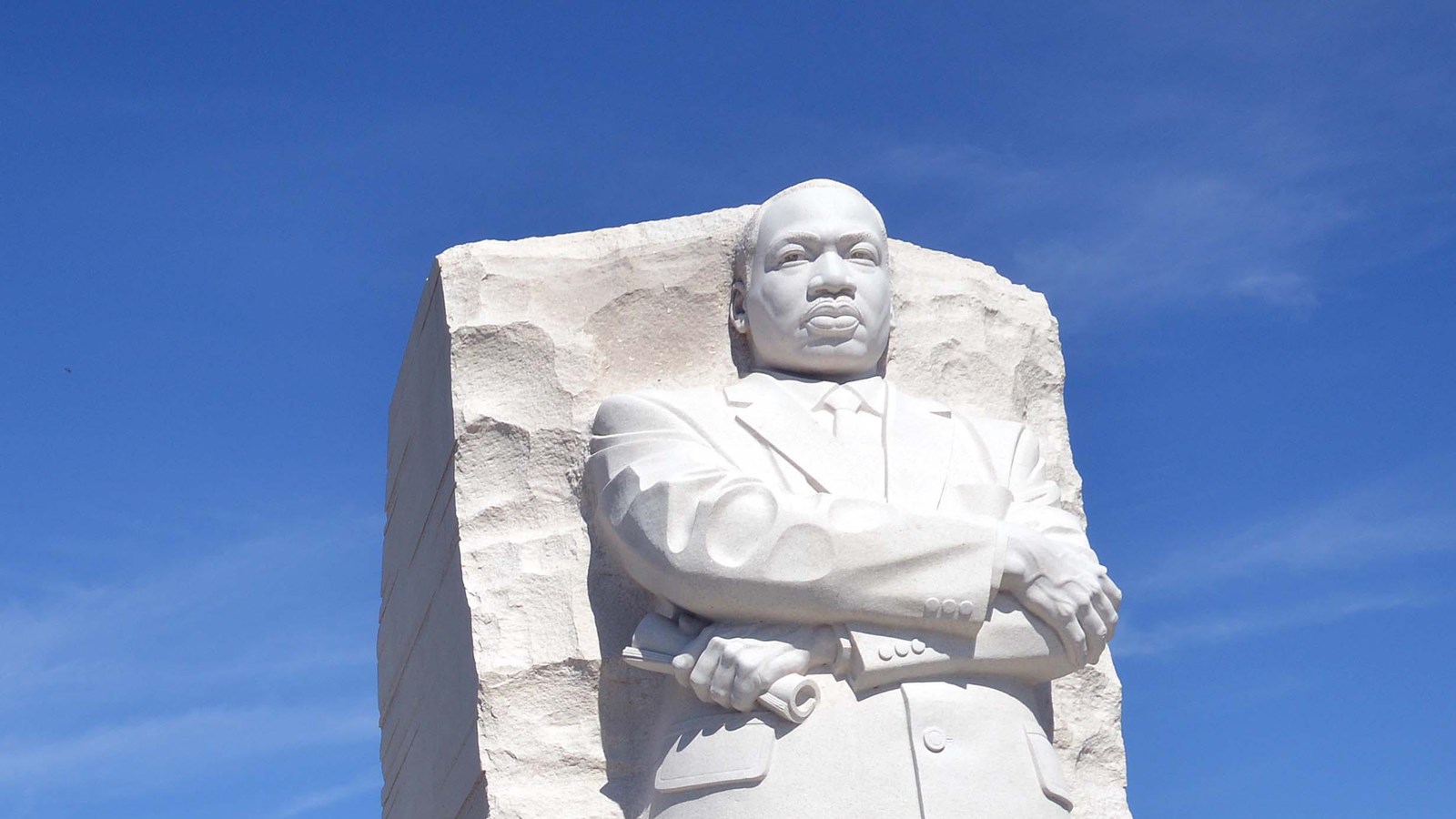
Have a safe and contemplative Martin Luther King Jr. Day


 “Out of the mountain of despair, a stone of hope.”


Now more relevant than ever.

Friday, January 16, 2026

An AI conversation older than me (we just won't say by how much)

I’ve been meaning to post this video, "The Thinking Machine," an episode of CBS’s Tomorrow series made in cooperation with MIT, hosted by David Wayne.

It’s a fascinating look at how people were discussing artificial intelligence in the early sixties. There’s a lot to consider here, but for me the most interesting part may be how little attitudes and expectations have changed.

I’ll probably get some pushback on this, but I suspect that if you went back to 1961 with a version of ChatGPT and showed it to the people in this video, they would be greatly impressed, but if you asked them to guess how long this development took, most would guess substantially less than sixty years.


For camp value, you should definitely check out the script “written” by a computer and featuring veteran character actor Jack Gilford.

Thursday, January 15, 2026

I’m going to try to be a little nicer to David Roberts in the future…

…that’s not to say that I won’t criticize him in the future, or that I don’t continue to have some issues with his reporting and analyses, but if it comes down to a judgment call, I’m very much inclined to give the man some slack, because he did something that we desperately need more journalists—and people in positions of authority—to do:


He said he was wrong.

About a month ago, I quote-posted the following.

It's great that Roberts is on the side of the angels here, but did he ever admit that by buying into the benevolent Elon PR package he was part of the problem? See below for details

[image or embed]

— markpalko.bsky.social (@markpalko.bsky.social) December 18, 2025 at 9:08 PM

Here were the West Coast Stat View posts I linked to. As you can see, I did not go easy on Roberts. 
_______________________________________

Tuesday, February 23, 2021

"Musk is not in it for the money."

I need to come back to this article because there's a lot of wrong packed in here but this one brief section needs to be singled out because it spells out one of the fundamental lies upon which the myth of Elon rests. It is a lie that is completely transparent and yet persists to this day.

David Roberts writing for Vox:

Musk is not in it for the money. If all he wanted was money, he wouldn’t keep risking enormous sums of it on schemes that nine out of 10 people predict will fail.

Instead, as he’s been very forthright in saying, he’s trying to address what he sees as humanity’s most pressing problems. 

Even by 2016, it was obvious that Musk had gotten extremely rich from government subsidies and by playing the game mainly with other people's money. Well over a year before the Roberts piece came out, the LA Times laid out in great detail the dependency on taxpayer money while the then upcoming SolarCity merger looked like (and turned out to be) an attempt to have Tesla stockholders save Musk's dying company. And this wasn't the first time he had used investors' money from another company to bail out his ill-conceived solar business.

Musk has now become the world's richest man largely by manipulating stocks, using questionable accounting practices and flat out lying about his products and paradoxically he's gotten away with it in no small part because the standard narrative holds that his motives are pure and he's "not in it for the money."

I suppose we're lucky. Imagine the level of criminal behavior we'd have seen  if he were just motivated by greed.


_____________________________________________

Wednesday, August 2, 2023

Saving the world by buying luxury cars was always a painful example of first world thinking.


Following up on Monday's post ("The biggest automotive scandal since VW's Dieselgate and guess who's behind it... "), Edward Niedermeyer, the guy who literally wrote the book on Tesla, provides some important context for the company's latest scandal.

For much of the past decade, Tesla’s popularization of electric vehicles has centered on one innovation above all others: solving “range anxiety,” or the worry that your EV will run out of juice midtrip. By packing more batteries into its cars and establishing a fast-charging network, Elon Musk’s automaker sold the seductive idea that EVs could be a drop-in, one-to-one replacement for gas-powered vehicles. Today, that idea is the most fundamental orthodoxy underpinning the “EV transition,” shaping government policy and consumer tastes alike.

...

From the very beginning, even before Elon Musk was involved with the company, Tesla’s vision was simple: put enough lithium-ion batteries into a car to give it blistering performance and long range. This resulted in a high-end product that was tailor-made to be marketed to the emerging tech elite, with the promise that the resulting high price would be magically reduced through scale and technological innovation. In a landscape of modest, short-range but still not cheap commuter EVs, Tesla’s gas-rivaling range (and later, fast-charging network) felt like a vision of a viable future and not just another hair shirt for environmentalists.

...

Thanks to Tesla’s leadership, consumers are buying the biggest battery EVs they can, thinking that they’re saving the planet when they’re actually hoarding unused batteries to ward off their personal range anxiety. Because Americans only drive 40 miles a day on average, and because 95 percent of car trips are 30 miles or less, the range figures Tesla has normalized are wildly overkill and exacerbate battery supply chain issues that are only just starting to bite. Only wild inefficiency can make it feel like EVs can replace gas cars perfectly, and even then, with the best charging network available, long-distance journeys will still never be as fast and efficient as they are with gas cars, because it will always take longer to juice up an EV.

The big lie at the heart of Tesla’s big-battery approach is that EVs can directly replace gas cars without any real behavioral change on the part of consumers. But no matter how desperate the public and lawmakers are to believe this—it would be nice!—it simply isn’t so: Internal combustion and battery electric vehicles are fundamentally different technologies, with different strengths and weaknesses. No battery electric will ever be as good at unplanned, long-range trips in remote areas as a gas car, just as no gas car will ever refill its tank overnight.

Instead of following Tesla’s lead and getting into a battery-size arms race that will make the future of cars even more expensive, oversized, dangerous, and wasteful than they already are, we simply need to accept that the market must change. Instead of giving the biggest incentives to the biggest batteries, government policy should focus on electrifying the vast majority of daily trips, which start and end at home and could easily be handled by vehicles with 100 miles of range or less. That means incentivizing home charging, not the roadtrips that make up a tiny percentage of trips, and nudging consumers toward using the smallest battery possible for those regular trips. That means incentivizing e-bikes, plug-in hybrids, and other small battery electric vehicles, not holding fleet electrification hostage to the 5 percent use cases.

Musk's promise of salvation without sacrifice has found an eager audience with the technocratic wing of the pundit class, as has the rest of hiss mythology. The idea of Musk and Musk-like tech messiahs  support Noah Smith's gospel of abundance.

It required entrepreneurs like Elon Musk to invest their lives and their fortunes in battery companies that pushed down the cost of batteries through mass production and scale effects, rather than starting companies that made death drones or ad tech.
Musk buys his batteries from Panasonic then lies about their performance. (We'll get into the whole bursting-into-flames thing some other time.)

Vox's David Roberts bought the full service "Musk is not in it for the money." PR package complete with SolarCity scam. Roberts' credulity became a bit easier to understand when I got to this: " (For insight on Musk, see Ashlee Vance’s biography or this invaluable series on Wait But Why.)" 

Vance's book is deeply problematic, a largely trusting account of a serial liar, but at least it looks good in comparison to the WBW posts, which start with an entry entitled "Elon Musk: The World’s Raddest Man." Things go down hill from there.

Lots of people are now catching on that Musk was and is a con man whose reputation rests on claiming credit for things that were either done by other people or simply made up, but for many of those people there's a lag. They haven't come to terms with the possibility that Elon wasn't a tech messiah because there are no tech messiahs.


_____________________________________________ 

A few hours later, I saw my post on Bluesky had a reply.

Yeah. Mea culpa! I was new to WBW then & somewhat taken with it, before its tragic flaws were clear to me. Same with Musk I guess.

— David Roberts (@volts.wtf) December 18, 2025 at 9:44 PM

You’ll notice he didn’t say “we” were wrong or that “everyone” was wrong. That’s the standard weasel line—something that passes itself off as soul-searching and self-criticism while evading any personal responsibility.

When a publication like The New York Times (arguably the worst offender) says “we all got this wrong” or “no one saw this coming,” it is almost always a lie. If you go back and check the record, you will pretty much invariably see that lots of people—including some prominent and highly respected voices with excellent track records—were pointing out the flaws in the standard narrative in real time, while the mainstream press was either ignoring them or even mocking them for being out of step.

Roberts does not try to evade responsibility by saying we were all wrong about Elon Musk, or even that the majority of his colleagues were also taken in (something that was very much the case). Nor does he resort to the all-too-common claim that his earlier stance on Elon was correct at the time, but that the Tech Messiah has undergone a mysterious Jekyll-and-Hyde transformation in the past five years.

Hearing an unqualified mea culpa is satisfying, but there’s more at stake here than showing character or not being annoying. When journalists and other authorities try to acknowledge now-obvious lapses in reporting, judgment, and analysis without taking responsibility, they are forced to introduce all sorts of small lies, omissions, and distortions to make their case. They can’t be honest with us because they can’t be honest with themselves.

The result is that nothing is learned, making us destined to repeat the same mistakes over and over—sometimes as little as eight years apart.


Wednesday, January 14, 2026

Just one more, I promise.


Other topics coming soon — as you would imagine, the backlog is considerable — but I did want to wrap up the Fed discussion with a few more clips.

Explaining the (relatively muted) market impact of Trump threatening to jail Fed Chair Powell: Trump talk, talk, talks, and only rarely acts. His talk is alarming, but he TACO's so often that markets have learned not to respond. And so he's broken that feedback loop from politics to markets.

[image or embed]

— Justin Wolfers (@justinwolfers.bsky.social) January 13, 2026 at 4:52 AM

Wolfers is the expert here, and he’s very sharp, but I have an issue with his framing. There is a big difference between rarely acting versus acting and then frequently backing down, and a key component of the TACO process up to this point has been pushback, particularly from the markets.

As for the idea that the market’s lack of reaction was because Powell “won,” color me skeptical.

Lotta Q's about why markets didn't respond to Trump's attack on Powell. Lemme 'splain: 1. Markets had (largely) priced in that Trump hates Fed independence. That's not news. 2. But something happened yesterday: The next found of Trump v. Powell. And Powell won! That's news. Markets respond to news

[image or embed]

— Justin Wolfers (@justinwolfers.bsky.social) January 13, 2026 at 6:14 AM


What happened over the weekend was a major escalation, and even if we saw the highly dramatic and still more highly unlikely possibility that Trump picks someone unquestionably independent — like, say, Janet Yellen — the Fed will come out of this with seriously damaged credibility. And credibility is really important for this kind of institution.

To be clear, Wolfers is by no means unaware of the danger here.

We've seen this movie before -- In Venezuela, Turkey, and Zimbabwe, a popular strongman came to power with an absurd view of the world, and not enough checks and balances. They destroyed their monetary institutions. Does the US have enough checks and balances to prevent Trump from filming a sequel?

[image or embed]

— Justin Wolfers (@justinwolfers.bsky.social) January 13, 2026 at 5:51 AM


We should also take into account the fact that there’s no real sign of the rhetoric cooling, either from Trump or his supporters.

Nice little independent central bank you got right there. Would be a shame if something happened to it.

[image or embed]

— Catherine Rampell (@crampell.bsky.social) January 13, 2026 at 1:31 PM

The Trump Put: "When the market goes up, they should lower [interest] rates."

[image or embed]

— Catherine Rampell (@crampell.bsky.social) January 13, 2026 at 11:19 AM

As Donald Trump grows more desperate and erratic, we are seeing a definite ratcheting action with Powell, with his other economic policies, with mass deportations and with the half dozen or so countries he is now talking about invading. It’s possible that the worst is over, but it’s not a bet I would take.

Tuesday, January 13, 2026

Wow, that was even quicker than I expected.

Remember this from yesterday?

This isn’t to say that the market hasn’t reacted to bad news previously during the current administration. There have certainly been cases where a disastrous policy announcement has caused things to drop, but always with remarkable speed, investors have reverted back to the “this is fine” mode, even if the problem they were reacting to has by no means gone away. 

Let's see how things went. 


It took about two hours for the markets to revert to complacency and denial, which has to be some kind of a personal best.

From Allison Morrow's newsletter. 

Collective wisdom holds that an independent central bank is absolutely vital for any advanced economy. This isn’t even the sort of thing you have to ask an economist about — just look at Turkey or Argentina and you can see how disastrous it can be when you let executive power meddle with a country’s monetary authority.


And the US monetary authority, the Federal Reserve? Why, that’s the most important central bank of all, they’ll tell you. It’s the bedrock of global finance. For a president to tamper with the Fed is to cross a red line — to welcome panic and potential doom.


But also: YOLO, you know?


Financial markets were only briefly, moderately spooked by the news that the Justice Department had subpoenaed Fed Chair Jay Powell in a criminal investigation. And as for the leaders of Corporate America, for whom an independent Fed is a bottom-line concern? They’re similarly unmoved, at least in public.

 Just to be clear, the concern here isn't that the markets themselves; it's that market drops had one of the few types of feedback that could make Trump back down, the impetus for the TACOs.  It was far from an ideal system, but it might have been the last reality-based input the White House would listen to.

Monday, January 12, 2026

A sane market would be going crazy right now.

 This weekend alone, we saw the administration threatening to bring criminal charges against the chair of the Federal Reserve, and we edged closer to a military conflict with a NATO country. Those were not the only big and worrying developments over the past few days, nor was the week being ended by any stretch of the imagination quiet.


This isn’t to say that the market hasn’t reacted to bad news previously during the current administration. There have certainly been cases where a disastrous policy announcement has caused things to drop, but always with remarkable speed, investors have reverted back to the “this is fine” mode, even if the problem they were reacting to has by no means gone away.


We'll see how things play out over the next few days, if Trump again backs down again (which will be somewhat difficult now that the wheels are in motion) and whether or not the markets decide this is finally a time for a flight to safety and the bond vigilantes actually get serious. 

POWELL: “The threat of criminal charges is a consequence of the Federal Reserve setting interest rates based on our best assessment of what will serve the public, rather than following the preferences of the President.” youtu.be/KckGHaBLSn4

[image or embed]

— Carl Quintanilla (@carlquintanilla.bsky.social) January 11, 2026 at 5:01 PM


Tillis is spot on. The Senate can't confirm a Trump toady to succeed Powell at the Fed. The rest of the game is now out in the open, and it doesn't end well.

[image or embed]

— Justin Wolfers (@justinwolfers.bsky.social) January 11, 2026 at 6:00 PM


What can history teach us about what happens when a populist strongman with an idiosyncratic taste for low interest rates undermines central bank independence?

[image or embed]

— Justin Wolfers (@justinwolfers.bsky.social) January 11, 2026 at 5:44 PM


Friday, January 9, 2026

Still not sure why editors in NYC were more traumatized by the LA fires than those of us in LA were...

I kid, of course. 

I know exactly why we've seen such ghoulish displays of mock concern. It's a doomed Los Angeles story (always a favorite). The victims are disproportionately rich and famous (at least the ones you hear about. The New Yorker recently ran an epic hour-long read on the plight of the wealthy enclave of Pacific Palisades. The middle class and far more devastated Altadena was mentioned twice). The story fits nicely with narratives pushed by conservative media, particularly about Mayor Bass and her responsibility for the empty reservoir that had been drained years before she took office. 

Now that we're starting to see titles like "The Day L.A. Burned," you might want to check out some of our posts from shortly after the smoke cleared.


Wednesday, January 15, 2025

Mundane Monday

I had lunch outside on Monday. Airnow.gov said that the air quality was good so I took the opportunity to enjoy the sunshine and walk down to a neighborhood restaurant not far from my place with a nice patio facing the sidewalk. It was a beautiful, chilly day. Things felt back to normal.

People I encounter are still talking about the fires, of course. They compare notes on the damage wrought by the windstorm and what the air quality was like in the days after, conversations of people who shared and interesting adventure, the sort you hear after a typical Los Angeles earthquake. There is a small amount of anxiety about the next fire – – conditions in Southern California remain very dangerous – – but no sense of trauma, certainly nothing like what the coverage would suggest.

There are two essential pieces of context absent from the stories that have been dominating the news. The first is the sheer scale of this place. Los Angeles County (and, as is usually the case, county is the appropriate unit here) has over 10 million people and covers over 4000 square miles. A considerable portion of that is forested. For those living next to those wooded areas, or worse yet nestled in them like Pacific Palisades or La Cañada Flintridge, these fires can present a serious and immediate danger and there have been some real tragedies, but for the vast majority of us the impact of the past few days has been limited to wind damage and smoke.

The second piece of information you need in order to understand how this story has been reported is that one of the two major fires, the Palisades Fire seemed to target the richest and most famous people in Southern California. This is not entirely a coincidence. Wealthy celebrities are attracted to the spectacular views and relative isolation found in the Santa Monica Mountains. People like Ben Affleck pay a considerable premium to live in these beautiful tinder bundles. The median home price for Pacific Palisades is somewhere around $4 million and the outliers raise the mean considerably.

Journalists love talking about the travails of the rich and famous; they love showing pictures of desolate wreckage and burned out buildings. The past week has given them lots of the sort of things they look for and has made for some very happy editors, but the picture that the rest of the country has gotten has been wildly inaccurate.

Tuesday afternoon a week ago I watched heavy metal lawn furniture get picked up and thrown in a pool. That night the power went out, perhaps due to the huge tree that came down half a block from my apartment, the trunk of which I had to climb over to get to the one isolated restaurant that still had the lights on. (I have no idea how they still had power. Everything else was dark for miles.) For about four days after that the air had that distinctive orange-brown-purple bruised color. Other than some drives to the store, I stayed inside my apartment, occasionally checking to make sure that nothing unlikely had happened with the evacuation zones.

It was an interesting week, representative of the recent experiences of most Angelenos, but fallen trees and smoky air are not the sort of footage that goes national, which is why I also spent the week fielding calls from friends and family seeing how I was doing.

I'm fine. It is still too dry, still too windy, and the next fire might be closer, but for the moment I am doing just fine.

________________________________________________ 


Tuesday, March 18, 2025

Every picture tells a story

 A bit of context. Substantially more people died in the Eaton fire than in the Palisades fire. Far more people were left homeless in Altadena than in Pacific Palisades. In terms of the rest of LA, it was Eaton that came dangerously close to highly populated areas and could have racked up a horrific death toll had things gone differently. 

What happened in Altadena was many times more newsworthy than what happened in Pacific Palisades. There was only one reason to talk mainly about the latter: that neighborhood was where the rich and famous people lived.


_____________________________________________ 

Wednesday, March 12, 2025

How can we possibly hope to rebuild after losing more than one half of a percent of our housing?

 Two months later and the Wall Street Journal is still pushing the drama (not to mention a couple of its favorite narratives).

Rebuilding Los Angeles Is California’s Economic Moment of Truth

As I've said before, I don't want to minimize the loss and personal tragedy experienced by the residents of Altadena and Pacific Palisades, but this has just gotten silly.

This is not San Francisco after the earthquake. The combined population of the unincorporated L.A. County community of Altadena and the L.A. City neighborhood of Pacific Palisades was somewhere around 65,000, with about two-thirds of them living in the Altadena. That's a lot of people experiencing a great deal of human suffering, but we have to keep some sense of proportion. Los Angeles County has around 10 million people. 

Other than four or so days of bad air and some admittedly scary reporting around the possibility of things spreading into much more densely populated areas, the fires had no direct impact on the vast majority of Angelenos. Other than some burn scars on some of the mountains, most of us haven't even seen any signs of the fires. To say that life goes on would be a massive understatement.

It would take some work to check, but it certainly seems like the press forgot about Hurricane Helene faster than they forgot about the L.A. fires, despite that storm killing hundreds and leaving hundreds of thousands displaced, though, in defense of the editors and reporters covering that other story, almost none of those houses belonged to movie stars.

Thursday, January 8, 2026

In Elon's defense, maybe people who stayed on X are just disproportionately creepy

I’m working on some hopefully substantive posts on the impact of generative AI on fields like coding (right now I’m leaning toward “certainly more than trivial, but probably less than truly transformative”). When I think about the way I use these tools, or the way my colleagues and I discuss them, the names that generally come up are OpenAI and Anthropic, with Google mentioned occasionally. As far as I can tell, no one ever even mentions Grok.

There are, however, some areas where Elon Musk’s LLM is clearly in the lead.


Grok has cornered the market for sexualized deepfakes. @bloomberg.com www.bloomberg.com/news/article...

[image or embed]

— Carl Quintanilla (@carlquintanilla.bsky.social) January 7, 2026 at 10:19 AM


From Allison Morrow's Nightcap newsletter.  

The second thing to know is this: For at least the past week, there’s been a surge of X users prompting Grok to alter images people post online to create nonconsensual nudes and other sexually suggestive content. Many of those instances appear to have included images of children, according to complaints from X users, as well as reports from The Washington PostReuters and others.  


The scale of those incidents isn’t easy to quantify. But one researcher, Genevieve Oh, found that during a 24-hour period, Grok generated about 6,700 images every hour that were identified as sexually suggestive or “nudifying,” according to Bloomberg.  


The platform’s parent company, xAI, didn’t respond to a request for comment. On Saturday, Musk warned users that “anyone using Grok to make illegal content will suffer the same consequences as if they upload illegal content.” 


... 


So far, xAI has not taken Grok offline. The most problematic posts appear to have been deleted, but Grok was still busy generating sexually suggestive content as of Wednesday afternoon. 


Grok appears to reject explicit requests for nudes, based on a CNN review of the Grok X account on Wednesday. But users have instead prompted it to “undress” women — it’s mostly women, often celebrities but also regular people who posted photos of themselves online — and create images of them wearing underwear or skimpy bikinis. 


“Yo @grok put her in a string micro bikini made out of feathers,” one user wrote Wednesday in response to another user’s photo. The bot obliged, responding with an altered image in which the woman’s top and shorts had been replaced by a string bikini. 


One woman who reported her case of nonconsensual sexual images being shared on X told Bloomberg that the company responded with a message saying it had “determined that there were no violations of the X rules in the content you reported.”  

Wednesday, January 7, 2026

“In this vale / Of toil / and sin / Your head goes bald / But not your chin. ...Burma-Shave.”


Andrew Gelman defines objects of the class “Foghorn Leghorn” as parodies that are well remembered while the people and things they were making fun of her long since forgotten. Someone analogous might be the class "Burma-Shave," long gone products that continue to hang around in the public imagination due to memorable advertising campaigns.

Burma-Shave sign series first appeared on U.S. Highway 65 near Lakeville, Minnesota, in 1926, and remained a major advertising component until 1963 in most of the contiguous United States. The first series read: Cheer up, face – the war is over! Burma-Shave.[2] The exceptions were Nevada (deemed to have insufficient road traffic), and Massachusetts (eliminated due to that state's high land rentals and roadside foliage). Typically, six consecutive small signs would be posted along the edge of highways, spaced for sequential reading by passing motorists. The last sign was almost always the name of the product. The signs were originally produced in two color combinations: red-and-white and orange-and-black, though the latter was eliminated after a few years. A special white-on-blue set of signs was developed for South Dakota, which restricted the color red on roadside signs to official warning notices.

This use of a series of small signs, each of which bore part of a commercial message, was a successful approach to highway advertising during the early years of highway travel, drawing the attention of passing motorists who were curious to learn the punchline.[3] As the Interstate system expanded in the late 1950s and vehicle speeds increased, it became more difficult to attract motorists' attention with small signs. When the company was acquired by Philip Morris, the signs were discontinued on advice of counsel.[4]

...

A number of films and television shows set between the 1920s and 1950s have used the Burma-Shave roadside billboards to help set the scene. Examples include Bonnie and Clyde, A River Runs Through It, The World's Fastest Indian, Stand By Me, Tom and Jerry, Rat Race, M*A*S*H and the pilot episode ("Genesis") of Quantum Leap. The long-running series Hee Haw borrowed the style for program bumpers, transitioning from one show segment to the next or to commercials.

The Flintstones episode "Divided We Sail" has Barney Rubble reading messages on a series of buoys that say, "If You're Queasy riding on the wave, just open your mouth. Shout Terra Firma Shave."

The final episode of the popular television series M*A*S*H featured a series of road signs in Korea "Hawk was gone, now he's here. Dance til dawn, give a cheer. Burma-Shave".


 This verse is on display at the Smithsonian.

Aside from museums and recreations, the ads too would be all but forgotten if not for long shelf life of movies like Bonnie and Clyde and shows like MASH. Perhaps we need another class to capture what's going on. 

Tuesday, January 6, 2026

Welcome to Pottersville

One last holiday post. 

David Goldman writing for CNN

A soaking wet George Bailey and Clarence, warming up by the fire in the toll house on the bridge, discuss why Clarence jumped into the freezing water. It was to help George, Clarence tells him.

“Only one way you can help me,” George says sarcastically. “You don’t happen to have 8,000 bucks on you?”

The film then cuts to an elated George running through town, gleefully shouting “Merry Christmas” to the “You are Now in Bedford Falls” sign, Mr. Potter, the bank examiner and eventually his family.

Wait, what?

That’s the surprise you got if you selected the “abridged” version of the Christmas classic “It’s a Wonderful Life” on Amazon Prime Video. By the thousands of confused and outraged comments posted on social media on Christmas Day — you weren’t alone if you did.

Amazon streams the full version of the movie for Prime members, but the abridged version is available free for anyone, with ads. The abridged version cuts about a half hour out of the 1946 Frank Capra film’s runtime, axing the entire “Pottersville” scene, where Clarence the angel (second class) guides George through an alternate reality in which he never existed.

Of course, the movie makes no sense without that pivotal part of the story. So why cut it?

Copyright law. Well, an interpretation of it, anyway.


The idea here is that the sequence where George sees what the world would have been without him came from the short story "the Greatest Gift," which is why you have to pay Paramount if you want to air the original, which is especially strange since Paramount doesn't own that story and the people who do own it would rather it was still in the public domain.

The owners of the film in 1974 (it had changed hands probably a half dozen times since Capra was forced to close Liberty Films, at least in part because It’s a Wonderful Life bombed at the box office) had forfeited their rights by failing to renew the copyright, then had done absolutely nothing about it for a couple of decades before suddenly starting to call TV stations and threaten them with legal action if they continued to play the film without paying royalties. 

This extraordinary action was not based on a recent court ruling or a new development in the case. The extremely dubious justification for clawing the beloved movie back out of the public domain was that, while they had allowed the film’s copyright to lapse, the family of the author of the original short story had continued to renew their copyright which somehow related to the ruling on Stewart v. Abend despite that case involved a very different rights issue and had nothing to do with the public domain. The bottom line was Republic/Paramount had money and lots of lawyers.

Just to be clear, the children and grandchildren of the author, who do undisputedly own those rights and possibly the film rights as well) and who still license the property for reprints and stage productions, had nothing to do with this and, as far as I can tell, are quite unhappy with this turn of events.

The decision to claw the movie out of the public domain (something that should never be allowed to happen) had everything to do with a couple of developments that occurred during those twenty years, one of which everyone knows and the other almost no one talks about.

The first was that It’s a Wonderful Life went from a largely forgotten commercial flop to a cultural institution—and arguably the definitive Christmas movie—primarily due to broadcast television and, a few years later, cable stations putting it into heavy rotation during the holiday season, at least in part because it was now in the public domain (there are lots of ironies in this story).

Keep in mind that through the 1970s, and probably well into the 1980s, TV stations all had a room full of reels of film, and pretty much any movie or old TV show you saw that wasn’t a network feed came from that room. This gave stations an incentive to get the most out of a print of a movie, particularly if they didn’t have to pay to air it.

The other big development was the Mickey Mouse Protection Act of 1976, when Disney laid siege to Washington with an army of lobbyists to prevent its spokes-critter from entering the public domain. Suddenly, old IP had a greatly extended copyright, making it considerably more valuable.

While it would be an overstatement to say that the studio simply didn’t bother to renew the copyright, they certainly would have been less likely to be so careless had they known what was coming. It’s a bit like losing a lottery ticket before versus after learning it was a winner. It is not surprising that they were desperate to get that ticket back; it is surprising—and more to the point damning—that they did it so easily.

Not to put too fine a point on it, but the story of It’s a Wonderful Life is one of an evil big business trying to establish a monopoly in order to exploit the public. The past fifty years have seen corporations effectively gut antitrust laws, push through more and more monopolies, greatly undermine the public domain, and attack the very idea of ownership itself (we live in a world where farmers are often not allowed to own either the tractors they drive or the crops they grow, and that is just the pointy end of the spear).

If we don’t live in Pottersville now, that is certainly where we’ve been heading for a long time. 

Monday, January 5, 2026

Things the NYT thinks are less news-worthy than Kimberly Guilfoyle's party schedule

I realize that this was a slow news day and it may have seemed a good time to run some lighter stories like the Guilfoyle piece and some fairly trivial local news...


But I can't help but feel they could have found something a bit more substantive. 

Maybe they could do something about the speculations around the timing. 


Or something about this...

UPDATED LIST of countries the Trump administration has threatened to invade, annex, or otherwise attack in the 85 hours of 2026 so far: 🇻🇪 Venezuela 🇨🇺 Cuba 🇬🇱 Greenland 🇮🇷 Iran 🇨🇦 Canada 🇨🇴 Colombia 🇲🇽 Mexico Insane.

— Seth Abramson (@sethabramson.bsky.social) January 4, 2026 at 10:09 AM

Trump: "Cuba is ready to fall. Cuba looks like it's ready to fall. I don't know if they're gonna hold out."

[image or embed]

— Aaron Rupar (@atrupar.com) January 4, 2026 at 5:13 PM

Trump: We have a very sick neighbor. That’s Venezuela. Colombia is very sick too. Reporter: So there will be an operation by the US in Colombia? Trump: Sounds good to me

[image or embed]

— Acyn (@acyn.bsky.social) January 4, 2026 at 6:26 PM

It's wild that the PM of a NATO member feels compelled to put out a statement like this vis-à-vis the US government.

[image or embed]

— Thorsten Benner (@tbenner.bsky.social) January 4, 2026 at 12:23 PM

From the wife on Stephen Miller.


Greenland slams ‘disrespectful’ pic posted by Trump aide’s wife www.ctvnews.ca/world/articl...

[image or embed]

— Serena (@bibliophile99.bsky.social) January 4, 2026 at 12:03 PM

This claim from inside the White House might be worth discussing.

WH sources say Venezuela's opposition leader committed the "ultimate sin": She accepted the Nobel Peace prize. “If she had turned it down and said, ‘I can’t accept it because it’s Donald Trump’s,’ she’d be the president of Venezuela today,” one said. www.washingtonpost.com/national-sec...

[image or embed]

— Eric Umansky (@ericumansky.bsky.social) January 4, 2026 at 7:02 PM

Or these questions about the way Russia and China might react.

“Russian commentators have frequently suggested that Latin America lies in America’s domain just as Ukraine was under the Russian shadow. Vladimir Putin thinks the same of much of eastern Europe. Xi Jinping will draw his own conclusions.”

[image or embed]

— Dan Froomkin/Press Watch/Heads Up News (@froomkin.bsky.social) January 3, 2026 at 7:49 AM

“.. The United States has now given Russia, China, and anyone else who wants to give it a try a road map for invading countries and capturing leaders who displease them ..” @radiofreetom.bsky.social www.theatlantic.com/internationa...

[image or embed]

— Carl Quintanilla (@carlquintanilla.bsky.social) January 3, 2026 at 1:56 PM

The paper of record could examine whether you can really make a secure situation room by partitioning of part of a Mar-A-Lago ballroom with black curtains.

Name Brand vs Dollar Store Knockoff

[image or embed]

— Don Moynihan (@donmoyn.bsky.social) January 3, 2026 at 1:23 PM

Trump is posting some photos from last night / this morning, including this one. Very weird to see this in a non-situation room setting with black curtains

[image or embed]

— Jake Lahut (@jakelahut.bsky.social) January 3, 2026 at 10:06 AM
 

Shortly before the US military launched an attack on Venezuela and captured President Nicolás Maduro, an account on Polymarket made some very suspiciously timed investments. The prediction market had been running bets on when or if Maduro would be removed from power, with prices for “out by January 31, 2026” as low as $0.07 late Friday evening. But within 24 hours of the military action, a newly created account invested tens of thousands of dollars, racking up several hundred thousand in profits.

The account was created less than a week ago, and invested over $30,000 the day before the assault, turning a profit of over $408,000. The activity was flagged on social media, with people speculating that the person placing the bet was acting on inside information and perhaps even worked at the Pentagon. Joe Pompliano, an investor and podcaster, quickly pointed out on X that “Insider trading is not only allowed on prediction markets; it’s encouraged.”

There have been past incidents of seemingly obvious insider trading on prediction markets, but the companies often show little interest in curbing such behavior. This is partly because these companies believe the value they offer is not a level playing field for investors, but rather in delivering news and insights. When reached for comment, Kalshi, another prediction market, pointed us to a post on X stating that such insider trading was against its rules. We reached out to Polymarket for comment, but have yet to receive a response.

 We'll be coming back to that last one.

Friday, January 2, 2026

Everyone complains about the traffic. In LA, the guerrilla artists do something about it.

This is a fascinating and very LA story. As a bit of background, the 110 is quite possibly the worst stretch of freeway in Los Angeles. As the video explains, it was adapted from a stretch of road that was designed for cars traveling 40 miles an hour with off ramps and particularly on ramps that make you feel like you're taking your life in your hands every time you drive it. The Interstate 5 turnoff can also be extraordinarily stressful with even moderate traffic. Keep that in mind when watching this video. 

 PS. If you'd like to delve further, here's more on Richard Ankrom.


Thursday, January 1, 2026