Friday, August 21, 2020

Thursday, August 20, 2020
Franchises for Netflix are like full self driving for Tesla. Big, companies-saving breakthroughs that are always around the corner. The key difference is, with Netflix when a car crashes and burst into flames, it’s all CGI.
We’ve already covered the discussion of reality television in Julia Alexander’s article for the Verge. Here’s another section that jumped out at me.
Netflix has been producing big budget scripted original content for more than seven years now and for most of that time they’ve been promising that big movie franchises were just around the corner. They actually seemed to clear the hurdle in 2017 when they announced a sequel to the Will Smith vehicle Bright. It seemed perfect. Huge numbers. Big star. The kind of concept that could support endless sequels, prequels, and spinoffs. The announcement of the sequel came within days of the debut.
Then came the slow walk. Despite being exactly what the company desperately needed, no one seemed all that eager to actually make the next installment. Long development schedules were proposed then followed up by silence until the deadlines were missed. The process was repeated until the pandemic finally gave everyone an excuse to drop the pretense.
How about since then? Consider the three films that Alexander holds up as examples of potential franchises. Two of them already appear to be dead in the water. Only Hemsworth‘s Extraction is moving ahead, and even then in a slow and tentative way.
It’s worth stopping to note here that when a studio really has faith in a franchise, they will often greenlight more than one film at a time. The cost savings from combining production can be enormous and it is the safest way to lock in talent. The technique has been successfully applied to huge budgeted blockbusters and shoestring exploitation films. It is no coincidence that the cheapest man in Hollywood, Roger Corman, successfully used the approach for decades.
No one has ever accused the executives at Netflix of being stupid or of being timid when it came to committing to projects. All of this makes it very difficult to reconcile the claims the company has made about its focus on franchises and its excitement over current projects with its apparent reluctance to actually move ahead with any of them.
The stock price of Netflix depends on convincing investors that it's pursuing a long game.Somewhat perversely, creating that impression is often easier if you focus on the short term at the expense of the long, doing things like spending hundreds of millions producing and promoting shows when other companies hold the rights or setting aside large chunks of your resources for shows of little lasting IP value. If you're going to judge a company's management solely by the stock price, it's not even clear if this is wrong.
But if you're a reporter covering a story stock, you have an obligation to point out the plot holes.
Netflix is also betting big on franchises, which may help its library compete with Disney, NBCUniversal, WarnerMedia, and ViacomCBS’s incredible well of IP. Four of Netflix’s most popular movies are either actively developing sequels or end with enough room for a sequel: Chris Hemsworth’s Extraction, Mark Wahlberg’s Spenser Confidential, Sandra Bullock’s Bird Box, and Ryan Reynolds’ 6 Underground. Today, Netflix announced a new $200 million spy movie from Avengers: Endgame directors Joe and Anthony Russo that is designed as a franchise builder.
Blockbuster movies and franchise plays, which also include shows like Stranger Things, Money Heist, and The Witcher, not only bring in subscribers, but they keep people engaged. Extraction and Spenser Confidential were watched by 99 million and 85 million accounts, respectively, within their first four weeks of release, according to Bloomberg. Having access to big IP and building franchises is key to Netflix’s future, and even though some may flop, Hastings said he’s “excited that we’re taking those risks.”
“Ted has big plans to spend future billions on movies and [TV] series and animation,” Hastings said. “We got lots of places to put the money. We’re definitely focused on creating franchises.”
Netflix has been producing big budget scripted original content for more than seven years now and for most of that time they’ve been promising that big movie franchises were just around the corner. They actually seemed to clear the hurdle in 2017 when they announced a sequel to the Will Smith vehicle Bright. It seemed perfect. Huge numbers. Big star. The kind of concept that could support endless sequels, prequels, and spinoffs. The announcement of the sequel came within days of the debut.
Then came the slow walk. Despite being exactly what the company desperately needed, no one seemed all that eager to actually make the next installment. Long development schedules were proposed then followed up by silence until the deadlines were missed. The process was repeated until the pandemic finally gave everyone an excuse to drop the pretense.
How about since then? Consider the three films that Alexander holds up as examples of potential franchises. Two of them already appear to be dead in the water. Only Hemsworth‘s Extraction is moving ahead, and even then in a slow and tentative way.
It’s worth stopping to note here that when a studio really has faith in a franchise, they will often greenlight more than one film at a time. The cost savings from combining production can be enormous and it is the safest way to lock in talent. The technique has been successfully applied to huge budgeted blockbusters and shoestring exploitation films. It is no coincidence that the cheapest man in Hollywood, Roger Corman, successfully used the approach for decades.
No one has ever accused the executives at Netflix of being stupid or of being timid when it came to committing to projects. All of this makes it very difficult to reconcile the claims the company has made about its focus on franchises and its excitement over current projects with its apparent reluctance to actually move ahead with any of them.
The stock price of Netflix depends on convincing investors that it's pursuing a long game.Somewhat perversely, creating that impression is often easier if you focus on the short term at the expense of the long, doing things like spending hundreds of millions producing and promoting shows when other companies hold the rights or setting aside large chunks of your resources for shows of little lasting IP value. If you're going to judge a company's management solely by the stock price, it's not even clear if this is wrong.
But if you're a reporter covering a story stock, you have an obligation to point out the plot holes.
Wednesday, August 19, 2020
Getting into Match King territory
At least we still have a little ways to go.
Ivan Kreuger
Elon Musk
It's trading at P/E of 971.
As we've said before...
A bubble in the middle of an economic collapse in the middle of a pandemic.

Ivan Kreuger
In 1929, at the peak of his career, the Kreuger fortune was thought to be worth 30 billion Swedish kronor, equivalent to approximately US$100 billion in 2000, and consisting of more than 200 companies
Elon Musk
The outspoken entrepreneur is now the world’s fourth-richest person after Tesla Inc. shares surged 11% on Monday, closing at a record high and boosting Musk’s net worth by $7.8 billion.Absolutely insane. This is a scandal-ridden company known for terrible quality control that's about to enter the competitive landscape equivalent of a wood chipper.
The rise vaulted the Tesla co-founder past French luxury tycoon Bernard Arnault, the wealthiest non-American on the Bloomberg Billionaires Index. Musk’s $84.8 billion fortune puts him within $15 billion of Mark Zuckerberg, No. 3 on the ranking of the world’s 500 richest people.
It's trading at P/E of 971.
As we've said before...
A bubble in the middle of an economic collapse in the middle of a pandemic.

Tuesday, August 18, 2020
Tuesday Tweets
Not the greatest, but top five.
God help, I'm running out of sarcatic things to say about Silicon Valley.
V-shaped.
Like a lot of people, I originally saw Elon Musk as a snake oil salesman, but one who had his heart in the right place. I've been revising this opinion.
As with reproductive rights, the GOP has been quietly undermining USPS for decades but has shied away from unpopular direct assaults. Things have changed.
Chait nails it.
"It's a wonder I can think at all"
Wages of Strauss.
Is there a sadder case of intellectual corruption than Dr. Carson?
Or as Krugman would put it, likely boaters
In 2020, when brain surgeons are punchlines; we turn to pop stars for thoughtful commentary.
"Inland hurricane" is another phrase I'd rather never hear again.
Misc.
And on a more hopeful note.
A Godzilla museum just opened in Japan. Very soon they will open phase two that includes a ZIP LINE that lets you fly INTO Godzilla's GOD DAMNED mouth.— David Scott Jaffe (@davidscottjaffe) August 13, 2020
This is now the greatest thing in the world. pic.twitter.com/0BjOsdylcX
God help, I'm running out of sarcatic things to say about Silicon Valley.
It’s tough because a culture of “move fast and break things” is how you drive rapid iteration and innovation in many settings, but it just clashes in industries where the acceptable level of mistakes is zero. “Move slowly with the appropriate risk analyses” isn’t as catchy.— Tim Latimer (@TimMLatimer) August 13, 2020
V-shaped.
It was shocking in 2008-10, it's mind-boggling now. https://t.co/3wIBOp7ACt— Kai Ryssdal (@kairyssdal) August 12, 2020
Like a lot of people, I originally saw Elon Musk as a snake oil salesman, but one who had his heart in the right place. I've been revising this opinion.
This is messed up. Is this true @elonmusk?pic.twitter.com/JrORRxCtUn— Jabroni Capital (@TheBenSchmark) August 16, 2020
1/ What’s it like starting an anonymous Twitter account in an effort to expose a powerful billionaire of malfeasance? The simple answer is this: Don’t do it. On the occasion of today’s new all-time high in Tesla stock, I felt it might be instructive to share my story. $TSLAQ— TC (@TESLAcharts) August 17, 2020
Not The Onion$TSLAQhttps://t.co/H3NFbIMXhA— Shill LeBeau (@Lebeaucarnew) August 12, 2020
As with reproductive rights, the GOP has been quietly undermining USPS for decades but has shied away from unpopular direct assaults. Things have changed.
The @USPS is very popular, per new @MorningConsult weekly tracking.— Eli Yokley (@eyokley) August 17, 2020
ALL ADULTS --
80% favorable
10% unfavorable
DEMOCRATS --
86% favorable
7% unfavorable
REPUBLICANS --
83% favorable
10% unfavorablehttps://t.co/cHS266cdlD pic.twitter.com/S5PUtiZeqy
Agree w every detail @billmckibben mentions in piece on *indispensable* role of USPS in rural Americahttps://t.co/TSvEhDZQsj— James Fallows (@JamesFallows) August 13, 2020
That GOP Sens and Reps are rolling over for USPS-gutting is hugely dangerous for country as a whole + *especially* for places many of them represent pic.twitter.com/NzH0x57Eqm
Man, did Carnegie Mellon soil its reputation!— Norman Ornstein (@NormOrnstein) August 16, 2020
exactly. most Dem issues, he just rides as cautiously and tepidly as possible. He's jumping in here with no life preserver.— Josh Marshall (@joshtpm) August 15, 2020
"Her 73-year-old husband, Bill, went three days without medication to treat his diabetes as the couple waited nearly two weeks for it to arrive in the mail from the Department of Veterans Affairs." https://t.co/EAFD2V7qqJ— Brian Beutler (@brianbeutler) August 16, 2020
It should have been but on NPR it wasn't. https://t.co/E8IETQ2EUg— Mark Palko (@MarkPalko1) August 14, 2020
Chait nails it.
Trump's process of escalating "jokes" about staying in office beyond his term is basically analogous to "grooming" by pedophiles and other predators. Only he does it with a country. https://t.co/LM6TKfUDr7— Josh Marshall (@joshtpm) August 18, 2020
"It's a wonder I can think at all"
The level of corruption that surrounds every element of the Trump administration knows no depths. The Kodak scandal is another element of this. Read this Mother Jones piece. Who knows how many insider trading examples there are. https://t.co/yMycz6oYMX— Norman Ornstein (@NormOrnstein) August 15, 2020
Wages of Strauss.
GOP lawmaker @RepKinzinger has a message about QAnon: It is a fabrication that must be denounced by leaders in his party.— Brian Stelter (@brianstelter) August 16, 2020
He's pairing that message with one that's equally important: "If you know someone who buys into these theories, don't hate them." https://t.co/tYGzOTYwZg
Is there a sadder case of intellectual corruption than Dr. Carson?
President Trump eyes new unproven virus "cure" promoted by Ben Carson and the CEO of MyPillow https://t.co/As17B1EaKd— Jonathan Swan (@jonathanvswan) August 17, 2020
Or as Krugman would put it, likely boaters
lovely and remarkable that he remains seriously amped about this boat thing https://t.co/KhCzlwK3dp— Josh Marshall (@joshtpm) August 15, 2020
A really incompetent Ministry of Truth.https://t.co/2btoKJHb22— Mark Palko (@MarkPalko1) August 16, 2020
In 2020, when brain surgeons are punchlines; we turn to pop stars for thoughtful commentary.
i have to say this is a pretty decent summation. https://t.co/NwKv9l09S3— Josh Marshall (@joshtpm) August 15, 2020
"Inland hurricane" is another phrase I'd rather never hear again.
— Mark Palko (@MarkPalko1) August 15, 2020
Misc.
The most important step for making elite college admissions fairer is to abolish legacy admissions.— Noah Smith 🐇 (@Noahpinion) August 14, 2020
But because these universities rely so heavily on alumni dollars, doing this would impact their revenue. https://t.co/C5yYuuneZE
Voting is a liberal thing. Authoritarianism is a GOP thing— Jennifer Rubin (@JRubinBlogger) August 13, 2020
And on a more hopeful note.
Anthony fell on hard times — and became homeless, but he always had his good boy “Bobo” by his side. When Bobo disappeared, Anthony searched for him to no avail for weeks. But eventually found him at the local shelter. Here’s the reunion.— Rex Chapman🏇🏼 (@RexChapman) August 15, 2020
Dogs, bruh...pic.twitter.com/f1uMpSss9H
Monday, August 17, 2020
He basically came out and admitted they're playing a short term game and no one noticed (Damn, Netflix is good at this)
This is another master class in controlling the narrative from Netflix's Ted Sarandos.
For those coming late to the party...
Shows with legs are programs that retain their value as IP for decades, in some many cases more than a half century. Here are a few of the over 50 crowd that can still attract an audience: I Love Lucy, Perry Mason, The Twilight Zone, The Andy Griffith Show, The Adams Family/the Munsters, Mission Impossible, Star Trek. You can find similar examples with movies, but with a cable channel or a streaming service where you want to provide as many hours of diversion as possible, quantity has a quality all its own.
The ROI on the almost 700 episodes of the Simpsons is stunning but, in a sense, shows like Leave It to Beaver and the Brady Bunch are even more impressive, non-hits that actually grew in popularity after going off the air. At the other end of the spectrum are reality and talk, which pull in big numbers on first run (and are incredibly cheap to produce) but generate almost no interest after aging a year or two.
Keep all of this in mind while reading this except from Julia Alexander's article in the Verge. [emphasis added]
For those coming late to the party...
The standard case for Netflix is a long game of dominance through content. It is an argument that has launched countless business articles but when it comes to what are effectively the three questions journalists and investors need answered, there has been relatively little attention paid to the first and vanishingly little to the other two.
1. How many people are watching the service’s original content?
2. Who owns that content?
3. Does it have legs and broad, preferably international appeal?
Shows with legs are programs that retain their value as IP for decades, in some many cases more than a half century. Here are a few of the over 50 crowd that can still attract an audience: I Love Lucy, Perry Mason, The Twilight Zone, The Andy Griffith Show, The Adams Family/the Munsters, Mission Impossible, Star Trek. You can find similar examples with movies, but with a cable channel or a streaming service where you want to provide as many hours of diversion as possible, quantity has a quality all its own.
The ROI on the almost 700 episodes of the Simpsons is stunning but, in a sense, shows like Leave It to Beaver and the Brady Bunch are even more impressive, non-hits that actually grew in popularity after going off the air. At the other end of the spectrum are reality and talk, which pull in big numbers on first run (and are incredibly cheap to produce) but generate almost no interest after aging a year or two.
Keep all of this in mind while reading this except from Julia Alexander's article in the Verge. [emphasis added]
That includes content that executives like Sarandos weren’t interested in developing even five years ago. In 2015, Sarandos spoke about “the kind of disposable nature of reality” programming at an investor conference, as reported by Bloomberg. He added at the time that it “basically doesn’t have much of a long shelf life,” noting “it hasn’t been a great category for us.” Now, Sarandos has changed his tune. Netflix is all in on unscripted programming and reality television — and numbers cited by Sarandos seem to back it up. (Netflix doesn’t release public numbers for all of its programming, so it’s hard to say for certain.)But two of Netflix’s most recent reality TV shows, Floor is Lava and Too Hot to Handle are some of its “biggest hits ever,” Sarandos said on the call. Prior to Floor is Lava and Too Hot to Handle, shows like Love is Blind and The Circle dominated pop culture conversation; Netflix renewed both for two more seasons right out the gate. Sarandos added that Too Hot to Handle was just as popular in Japan as it was in the United States, and as Netflix tries to find content that’s received well around the world, it’s a good sign of what to expect. Sarandos said as much on the call, arguing that “the biggest motivation to invest in reality and unscripted is not that it’s a cost saving production,” but rather “how important it becomes in people’s lives.”
You'll notice the subtle shift from shelf life to popularity. The piece is presented as a learning from data story, but there's nothing here to suggest that recent experience in any way contradicts the belief that reality shows are disposable. Instead what the article seems to say is that Netflix is going to spend more money and resources on shows that don't add any lasting value to the content library but which do produce good numbers and lots of hype.
But that's not the story Netflix wants told.
But that's not the story Netflix wants told.
Friday, August 14, 2020
Analog recording without analogs
[slightly edited repost]
Two examples of artists who manually created their works on media normally used for analog recording.
Conlon Nancarrow
Norman McLaren
That included painting on the optical sound track.
Two examples of artists who manually created their works on media normally used for analog recording.
Conlon Nancarrow
Nevertheless, it was in Mexico that Nancarrow did the work he is best known for today. He had already written some music in the United States, but the extreme technical demands his compositions required meant that satisfactory performances were very rare. That situation did not improve in Mexico's musical environment, also with few musicians available who could perform his works, so the need to find an alternative way of having his pieces performed became even more pressing. Taking a suggestion from Henry Cowell's book New Musical Resources, which he bought in New York in 1939, Nancarrow found the answer in the player piano, with its ability to produce extremely complex rhythmic patterns at a speed far beyond the abilities of humans.
Cowell had suggested that just as there is a scale of pitch frequencies, there might also be a scale of tempi. Nancarrow undertook to create music which would superimpose tempi in cogent pieces and, by his twenty-first composition for player piano, had begun "sliding" (increasing and decreasing) tempi within strata. (See William Duckworth, Talking Music.) Nancarrow later said he had been interested in exploring electronic resources but that the piano rolls ultimately gave him more temporal control over his music.[6]
Temporarily buoyed by an inheritance, Nancarrow traveled to New York City in 1947 and bought a custom-built manual punching machine to enable him to punch the piano rolls. The machine was an adaptation of one used in the commercial production of rolls, and using it was very hard work and very slow. He also adapted the player pianos, increasing their dynamic range by tinkering with their mechanism and covering the hammers with leather (in one player piano) and metal (in the other) so as to produce a more percussive sound. On this trip to New York, he met Cowell and heard a performance of John Cage's Sonatas and Interludes for prepared piano (also influenced by Cowell's aesthetics), which would later lead to Nancarrow modestly experimenting with prepared piano in his Study No. 30.
Nancarrow's first pieces combined the harmonic language and melodic motifs of early jazz pianists like Art Tatum with extraordinarily complicated metrical schemes. The first five rolls he made are called the Boogie-Woogie Suite (later assigned the name Study No. 3 a-e). His later works were abstract, with no obvious references to any music apart from his own.
Many of these later pieces (which he generally called studies) are canons in augmentation or diminution (i.e. prolation canons). While most canons using this device, such as those by Johann Sebastian Bach, have the tempos of the various parts in quite simple ratios, such as 2:1, Nancarrow's canons are in far more complicated ratios. The Study No. 40, for example, has its parts in the ratio e:pi, while the Study No. 37 has twelve individual melodic lines, each one moving at a different tempo.
Norman McLaren
McLaren was born in Stirling, Scotland and studied set design at the Glasgow School of Art.[1] His early experiments with film and animation included actually scratching and painting the film stock itself, as he did not have ready access to a camera. His earliest extant film, Seven Till Five (1933), a "day in the life of an art school" was influenced by Eisenstein and displays a strongly formalist attitude.
That included painting on the optical sound track.
In the 1950s, National Film Board of Canada animators Norman McLaren and Evelyn Lambart, and film composer Maurice Blackburn, began their own experiments with graphical sound, adapting the techniques of Pfenninger and Russian artist Nikolai Voinov.[2] McLaren created a short 1951 film Pen Point Percussion, demonstrating his work.[3] The next year, McLaren completed his most acclaimed work, his Academy Award-winning anti-war film Neighbours, which combined stop-motion pixilation with a graphical soundtrack. Blinkity Blank is a 1955 animated short film by Norman McLaren, engraved directly onto black film leader, combining improvisational jazz along with graphical sounds. In 1971, McLaren created his final graphical sound film Synchromy.[4]
Thursday, August 13, 2020
Yes, more on Netflix, Avatar and the New Yorker.-- controlling the narrative


A big part of that manipulation is controlling the framing. In this case making the story about Avatar and Netflix rather than Avatar and ViacomCBS.
Avatar was part of a spectacularly successful and profitable run of original animated shows produced by Viacom's Nickelodeon including Blues Clues, Dora the Explorer, Doug, Rugrats, The Ren & Stimpy Show, Rocko's Modern Life, Hey Arnold!, The Angry Beavers, Invader Zim, The Fairly OddParents, The Adventures of Jimmy Neutron, Boy Genius, Danny Phantom, and the wonderfully strange SpongeBob (which has brought in over $13 billion in merchandising revenue alone).
Avatar remains an active part of ViacomCBS with graphic novels, Blu-Rays, video games, merchandising, even streaming. Netflix shares rights with CBS All Access, but in the article by the New Yorker's Alex Barasch, the focus is elsewhere.
"And yet when “Avatar: The Last Airbender” arrived on Netflix, in May, it rose through the ranks to become the platform’s No. 1 offering" [As mentioned before, "rose through the ranks" completely misrepresents what happened. -- MP]
"The show is beloved by political commentators ranging from the Times’ Jamelle Bouie to The Atlantic’s Adam Serwer, who pledged, following its arrival on Netflix, to “just do tweets about Avatar until November.""
"Last year, Netflix announced a new live-action adaptation."
"This year, as a showrunner in her own right, she succeeded in advocating for a more demonstrative queer relationship in “She-Ra and the Princesses of Power,” which now sits alongside “Avatar” on Netflix."
"The series first ran from 2005 to 2008 on Nickelodeon"
"When Korra and Asami officially became a couple, in the series finale, Nickelodeon ruled that the two were allowed only to hold hands—but the hard-fought moment made bigger strides seem possible to those watching"
For those keeping count:
Netflix references: 4
Nickelodeon references: 2
Viacom and CBS All Access references 0
Remember, Netflix has spends a tremendous amount of money on marketing and PR,
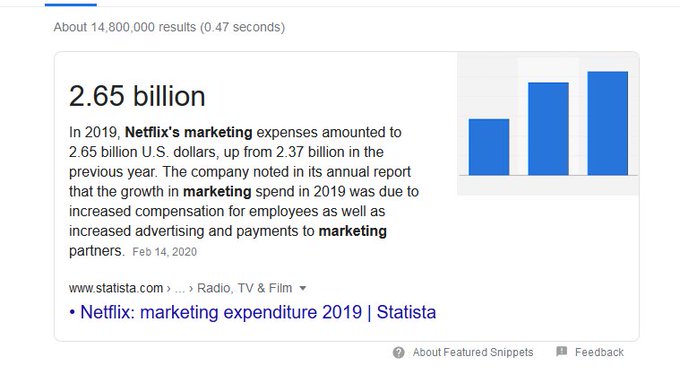
For the rest of us, it's a useful reminder of how much of the news we read is both initiated and shaped by the people being covered.
Wednesday, August 12, 2020
Whatever-day-of-the-week-it-is Tweets
A day at the beach in 1896 #FrèresLumière pic.twitter.com/SHzZGS6Wdg— Giles Paley-Phillips (@eliistender10) August 8, 2020
So maybe
disrupting an existing industry by ignoring all precedent, repeatedly
breaking the law and losing billions to gain market share is somewhat
more problematic than we've been led to believe. $uber
 $lyft
 https://t.co/i24GmiNqH5
— Machine Planet (@Paul91701736) August 11, 2020
Interesting what strikes a nerve.
Lawyer up, Sluggo. https://t.co/Na36v4jqnq— Charles P. Pierce (@CharlesPPierce) August 9, 2020
Ben Garrison’s brain will be studied by scientists after he passes on. pic.twitter.com/CDftjSSth6— Maggie Serota (@maggieserota) August 10, 2020
This can't be healthy for a society.
Can a Mark Hamill action-figure with a mini action-figure of Luke Skywalker in his pocket (surrounded by still more Luke Skywalker action-figures of various sizes) get any more meta than it already is? I'm gonna go out on a limb here & say... not much. #SoManyMultiMiniMes pic.twitter.com/TCy510C9WI— Mark Hamill (@HamillHimself) August 9, 2020
Everyone does get what's going on, right? One political party has decided the only way to hold power and avoid responsibility is to openly and aggressively sabotage democracy.
They want each county to be limited to a single dropbox, at the county board of elections. One dropbox for all ~1.1M voters in Philadelphia, one for all 900K voters in Allegheny. https://t.co/yRufITmxCt— Adam Bonin (@adambonin) August 9, 2020
Trump is already suing to prevent the expanded use of drop boxes in PA-which makes the goal of voter suppression that much more overt-but they would seem to be the best solution to concerns about the Post Office returning ballots in time. https://t.co/R8BMJdJLNN— Ronald Brownstein (@RonBrownstein) August 9, 2020
I’ve been trying to make people care about the privatization/destruction of the USPS for a decade now. Never occurred to me to use the argument that it’s one of the last defenses against American fascism, but here we are.— Sam Sacks (@SamSacks) August 8, 2020
Trump’s Postmaster General Louis DeJoy and his wife, Aldona Wos, nominated to become our ambassador to Canada, own between $30 million and $75 million of assets in competitors to the US Postal Service. No problem there, right?— Laurence Tribe (@tribelaw) August 8, 2020
Tesla, of course.
This is at least the third incident I’ve seen on Twitter about a seatbelt not being bolted into the car with a Tesla. Shameful and pathetic. https://t.co/Vz6XQVA1Yt https://t.co/BvzgXWQuSx— ben k (@Benshooter) August 9, 2020
It's easy to get a really big sample size if you're flexible on other things.
I want to comment briefly on why I find this particular website so infuriating and why I am confident in calling it disinformation.— Carl T. Bergstrom (@CT_Bergstrom) August 8, 2020
Dr. Fauci and many other health officials have stressed the importance of randomized controlled trials as the gold standard. https://t.co/ivpXFpwinM
One of these days, I'm going to start a long thread on the infantilization of the far right
This anti-masker in Ohio refuses to leave the DMV despite having no reason for going inside.— Rex Chapman🏇🏼 (@RexChapman) August 6, 2020
Bless all of the people in this building for attempting to reason with this unreasonable woman.
Wear a mask. Don’t be a bad teammate... pic.twitter.com/h1Uv6qW0Uc
There is something wrong with Twitter when this joke doesn't go viral.
Maybe just do the opposite of what this guy says? https://t.co/oC3aM0nxzu pic.twitter.com/QFUDeJYSJC— Jonathan Chait (@jonathanchait) August 3, 2020
And finally.
Nothing to see
here, just walk in and nothing to see here... just walking in, nothing
to see here... chips chips chips chips chips chips chips chips pic.twitter.com/ur7YIVB6bz
— Evac (@evacuationboy) August 9, 2020
Tuesday, August 11, 2020
Andrew Gelman is worth reading
This is Joseph
Andrew Gelman has an important reminder:
Andrew Gelman has an important reminder:
Lots of doctors can do this sort of thing—lots of them are indeed excellent at evaluating research claims—but if so, I don’t think it’s the medical training that’s doing it. The medical training, and their practice of medicine, gives them lots of relevant subject-matter knowledge—I’m not saying this is irrelevant—but subject-matter knowledge isn’t enough, and I think it’s a big mistake when media organizations act as if an M.D. is a necessary or a sufficient condition for evaluating research claims.This is so true in my experience; there are medical doctors who are preternaturally good at research, I work with some, but their high level of research is rarely correlated with their medical training, per se. It is usually a result of either extensive self-education as a life-long learner or having snuck in some research training along the way. I think Andrew is correct here and it would be a benefit to everyone if we recognized this fact and did not level unfair expectations on M.D.'s.
I just remembered, we've picked on the New Yorker's Culture Desk before

Thursday, June 18, 2015
The New Yorker's culture desk could use a fact checker
I recently came across an uncredited piece that drove my inner film geek crazy. About halfway into the review of Ace Records’s new compilation, “Come Spy With Us: The Secret Agent Songbook,” I came across this.[emphasis added]
The world of spy themes doesn’t stop at Bond (or at Bond offshoots or Bond antidotes), and neither does Ace’s set. Lalo Schifrin’s immortal “Mission: Impossible” theme is here, along with the Challengers’ version of Hugo Montenegro’s “Theme from the Man From U.N.C.L.E.” Both of those illustrate the relationship not only between spy music and surf music—similar in instrumentation, similar in insistence—but also between spy music and the music of spaghetti Westerns.Billy Strange was an arranger and session musician now best remembered as a member of the legendary Wrecking Crew. Hugo Montenegro was a minor film and TV composer (other than I Dream of Jeannie, I doubt any of his compositions would register if you heard them) who was best known for cheesy but popular cover arrangements.
...
There are far too many good selections here to list them all: Billy Strange’s “Our Man Flint,” Nancy Sinatra’s “The Last of the Secret Agent” (Flint and Sinatra would collaborate on the theme song for the Bond film “You Only Live Twice,” which isn’t on the set) [That should be "Strange and Sinatra," Derek Flint being fictional and all. It should also be noted that the version of “You Only Live Twice” that most of us are familiar with is by Barry and Sinatra. Billy Strange had nothing to do with it -- MP], and Matt Monro’s “Wednesday’s Child.”
[The original link for this blog is dead now so I made the obvious substitution.]
Both released albums of covers of soundtracks of popular movies and TV shows. As far as I can tell, neither had anything to do with the original scores. Those came from composers such as Ennio Morricone, John Barry and, in this case, the man who wrote the theme for the Man from UNCLE and composed most of the music for the show's first season and who scored both Flint films, Jerry Goldsmith.
For movie people, Goldsmith is kind of a big deal:
Jerry Goldsmith has often been considered one of film music history's most innovative and influential composers.[8] While presenting Goldsmith with a Career Achievement Award from the Society for the Preservation of Film Music in 1993, fellow composer Henry Mancini (Breakfast at Tiffany's, The Pink Panther) said of Goldsmith, "... he has instilled two things in his colleagues in this town. One thing he does, he keeps us honest. And the second one is he scares the hell out of us."[65] ... In a 2001 interview, film composer Marco Beltrami (3:10 to Yuma, The Hurt Locker) stated, "Without Jerry, film music would probably be in a different place than it is now. I think he, more than any other composer bridged the gap between the old Hollywood scoring style and the the [sic] modern film composer."[67]
For someone writing about film music, crediting Montenegro or Strange
with a Goldsmith composition is the kind of mistake that makes you
wonder how much of the writer's expertise came from the liner notes.
Perhaps worse, it is such an easily avoidable error. Thanks to
Wikipedia, it takes so little time to get the facts right.
In fairness to the author, some of the critical points are valid (such as the relationship between spy films and surf music. For example, check out the arrangement from this sequence from Our Man Flint,
But even good arguments are difficult to take seriously when they come with careless mistakes.
p.s. I didn't want to go full nerd in the middle of a post, but if you feel like releasing your inner spy geek, I recommend checking out these discussions of the various arrangements of Man from UNCLE themes (including the revelation that Goldsmith hated Lalo Schifrin's new arrangement).
p.p.s. I ran this past an actual authority, Brian Phillips. He pointed out another one I should have caught: "Though Bill Cosby starred in “I Spy” as early as 1965 (the brassy Roland Shaw theme is included)..." The I Spy theme was, of course, by Earl Hagen who was, in Sixties television, also kind of a big deal [Andy Griffith Show, Dick Van Dyke Show, etc.].
Brian also questions whether the bassline to "Come Spy With Me" is really James Jamerson.
In fairness to the author, some of the critical points are valid (such as the relationship between spy films and surf music. For example, check out the arrangement from this sequence from Our Man Flint,
But even good arguments are difficult to take seriously when they come with careless mistakes.
p.s. I didn't want to go full nerd in the middle of a post, but if you feel like releasing your inner spy geek, I recommend checking out these discussions of the various arrangements of Man from UNCLE themes (including the revelation that Goldsmith hated Lalo Schifrin's new arrangement).
p.p.s. I ran this past an actual authority, Brian Phillips. He pointed out another one I should have caught: "Though Bill Cosby starred in “I Spy” as early as 1965 (the brassy Roland Shaw theme is included)..." The I Spy theme was, of course, by Earl Hagen who was, in Sixties television, also kind of a big deal [Andy Griffith Show, Dick Van Dyke Show, etc.].
Brian also questions whether the bassline to "Come Spy With Me" is really James Jamerson.
Monday, August 10, 2020
More on that New Yorker Avatar piece -- timelines
Caveat1 : No disrespect intended for Avatar, a fine show well deserving of all of the accolades.
Caveat2 : As previously mentioned, the obfuscations and press manipulations of Netflix seem a bit quaint in this age of fraud and pump-and-dump schemes.
I hadn't meant to spend so much on Netflix's PR campaign for Avatar, but the company is such a wonderful fount of examples of the hype economy. It is not an entirely left-handed compliment when I say that no one works the press better, which makes reverse engineering their strategies and tactics so interesting.
First a bit of context:
The extended Avatar franchise includes an ongoing comics series, an animated sequel series, a prequel novel series, and a live-action film, as well as an upcoming live-action remake of the show by its original creators to be produced for Netflix. The complete series was released on Blu-ray in June 2018 in honor of the 10th anniversary of its finale, and was made available to stream on Netflix in the United States in May 2020, and on CBS All Access in June 2020.Now check out this July 5th New Yorker article by Alex Barasch.(emphasis added):
A fifteen-year-old cartoon is an unlikely contender for most-watched show in America. And yet when “Avatar: The Last Airbender” arrived on Netflix, in May, it rose through the ranks to become the platform’s No. 1 offering, and even now it remains a fixture in the Top Ten for the U.S. The series first ran from 2005 to 2008 on Nickelodeon, and swiftly made a name for itself as a politically resonant, emotionally sophisticated work—one with a sprawling but meticulously plotted mythos that destined the show for cult-classic status. Last summer, after “Game of Thrones” flubbed its finale, fans and critics held up “Avatar” as a counterexample: a fantasy series that knew what it wanted to be from the beginning.
As best I can place it, the show started streaming around mid-May. That means less than two months, perhaps more like one month, elapsed between Netflix adding Avatar to its lineup and the writing of this story.
That is remarkably little time given everything that had to occur. The audience would need time to discover the show. A suitable interval would have to pass in order to have an accurate read on viewership.
Once a network or streaming service knows it has a hit, it takes a while to decide on how best to exploit it. PR firms move rapidly under great pressure, but we’re talking about multi million dollar campaigns of immense complexity. This sort of thing takes time. Strategy has to be decided on. Press releases written. approved, and circulated. Subtle pressure has to be applied to friendly journalists. And, yes, even in 2020 multiple news cycles have to pass.
All of which has to happen before a reporter for the New Yorker can comment on the latest cultural hot thing.
Unless...
The order of events was different. It is far more probable that Netflix decided they wanted a hit or at least the perception of a hit with Avatar as a way of promoting their live-action reboot. It wouldn’t be that hard of a sell. The show had a large and loyal following and was a long time critics’ favorite.Under these conditions if you push the hell out of the show and keep a heavy thumb on the recommendation engines, something that can be spun as a hit is a pretty good bet.
The rising through the ranks Barasch describes appears to have taken around 48 hours since it took less than a week from the time the show dropped for a wave of Avatar-is-#1 stories to hit.

The response of search and social media was even more rapid, which actually started trending upward two weeks before the show became available (coincidentally the same pattern you'd see with a big PR and marketing build-up).
The bottom line here is that journalists are far too credulous about the narratives they are given and far too ready to accept astroturf passing for grassroots. This is fairly harmless when covering beloved old cartoons, not so harmless when reporting on politics.
Friday, August 7, 2020
I am contractually obligated to mention that it snows every year in the city of Los Angeles
NWS: Heat wave to bring possible record-breaking, triple-digit temps to SoCal through weekend
Posted: Jul 29, 2020
The National Weather Service warned of hot, dry conditions and elevated fire danger as a heat wave is expected to send temperatures soaring throughout Southern California beginning Thursday.
Highs into the triple digits are forecast in valley and foothill areas through Saturday, while the Antelope Valley could reach 106 degrees.
Coastal and mountain areas will be slightly cooler, ranging from 85 to 95 degrees across the region, forecasters said.
San Bernardino and Riverside are expected to hit 105 and 104 degrees respectively on Thursday, and 106 degrees Friday, while sizzling temperatures of around 120 degrees are anticipated in Palm Springs on both days.
The good news is the heat wave has broken (according to the morning forecast, we didn't break eighty in North Hollywood yesterday), but it was still too damned hot.for a while there. One days like that (or more accurately, the nights between them), I find there's something relaxing about watching Les Stroud shivering through a Northern Canadian winter.
Thursday, August 6, 2020
"Everything looks worse in black and white"
And this looks really bad.
Eastman Kodak's top executive reportedly got Trump deal windfall on an 'understanding' https://t.co/SRiDg4RPUL— FXHedge (@Fxhedgers) August 1, 2020
Column: Trump taps Kodak (yes, that Kodak) to bring stability to the drug market https://t.co/TZ2sLZjOFx— Mark Palko (@MarkPalko1) August 1, 2020
The Kodak story gets smellier and smellier https://t.co/pzhDaJGIV1— David Frum (@davidfrum) August 1, 2020
Subprime auto lender Credit Acceptance Corp. isn't using unemployment rates to model loan loss reserves, and its execs don't like too many questions about it. $CACC pic.twitter.com/5TKzm8UERE— Zach Fox (@zachffox) July 31, 2020
If this is as bad as it sounds...https://t.co/koI0OCzRYW— Mark Palko (@MarkPalko1) July 31, 2020
Wednesday, August 5, 2020
"And he mortgaged the house..."
When you get to the part about the technology being proven, remember that the testing is entirely focused on the aspects of the technology that we know will work. The main part that has experts skeptical is the ability to make a hyperloop financially viable, and the only way to prove that is to give these companies billions of dollars and see what happens.
U.S. Department of Transportation releases framework for hyperloop development
Jul 26, 2020
Proposed hyperloop transportation systems, which developers say can move pods with passengers or freight through low-pressure tubes at more than 500 miles an hour, have received a key endorsement: validation by the U.S. Department of Transportation.
Transportation Secretary Elaine Chao released a 22-page document Thursday called Pathways to the Future of Transportation that’s designed to encourage innovation and place new transportation concepts under a specific regulatory agency. The document was developed by the Non-Traditional and Emerging Transportation Technology Council that Ms. Chao appointed about 18 months ago.
For hyperloop advocates, the important step was placing hyperloop proposals under the Federal Railroad Administration and making hyperloop projects eligible for federal grants to help fund projects.
“This is a turning point for the industry,” said Ryan Kelly, vice president of Virgin Hyperloop One, one of two developers proposing systems to link Pittsburgh with Chicago.
“It gives confidence to stakeholders that this is a priority. This is not a pipe dream.”
Virgin is working with the Mid-Ohio Regional Planning Commission on a system that would connect Pittsburgh to Chicago via Columbus in about 56 minutes at a cost of about $93. The agency has completed environmental and feasibility studies for the system, which likely would be built in sections from west to east and take about 30 years to complete.
“Just the Federal Railroad Administration alignment for hyperloop is a big announcement,” said Thea Ewing, director of transportation for the Mid-Ohio group. “That alone is a pretty significant message from the U.S. Department of Transportation.
“Once you get to this point and you don’t have an answer for who regulates you, you don’t know what to do. [The proposal] becomes a non-starter for whoever you’re talking to.”
Mr. Kelly said the other important component to Thursday’s announcement is making hyperloop projects eligible for federal funding. The Pittsburgh-to-Chicago proposal always has been pitched as a public-private partnership, but at a cost of more than $20 billion it would be difficult for local agencies to pay for the public share by themselves.
The report said that once the technology is proven, hyperloop projects could be eligible under four different funding categories that have a combined $2 billion available in the current fiscal year.
Monday, March 5, 2018
Hyperloop watch -- We are now reaching that part of the movie where the wife goes to the bank and realizes that her husband has given their life savings to the con man.
I know I've been harping on this for years now and I'd imagine regular readers are growing a bit tired of the ranting, but the standard tech narrative, the one that is still more or less the default for even sober news organizations like the BBC and NPR, is deeply flawed and genuinely dangerous.
The hype and bullshit and magical heuristics that dominate our discussion of technology and innovation aren't just annoying; they have a real cost. They distort markets, spread misinformation, lead to bad public policy, and starve worthwhile initiatives of both funding and attention.
No figure brings out the worst of these tendencies in journalists more than does Elon Musk. Musk, it should be noted, does have some major accomplishments under his belt as an administrator, promoter, and finance guy. With SpaceX and, to a lesser degree, Tesla, he deserves considerable credit for significant innovations, but even with his most serious projects, there is always a bit of the Flimflam Man present.
The Hyperloop has always been Elon Musk at his most substance-free. A 70s era B- senior engineering project dressed up with 3-D graphics and a cool name. Despite being thoroughly demolished by virtually every independent expert in the field, the "proposal" has generated endless and endlessly credulous press coverage. Hundreds of millions of dollars in financing have been lined up by Hyperloop companies with dubious business plans. And now you can add millions in tax dollars to that.
From an excellent Slate article by Henry Grabar.
For American lawmakers, funding public transit often feels like small ball. Politicians prefer to dream bigger. Earlier this month, transportation agencies in the Cleveland region and in Illinois announced they would co-sponsor a $1.2 million study of a “hyperloop” connecting Cleveland to Chicago, cutting a 350-mile journey to just half an hour. It’s the fourth public study of the nonexistent transportation mode to be undertaken in the past three months.
“Ohio is defined by its history of innovation and adventure,” said Ohio Gov. John Kasich, who once canceled a $400 million Obama-era grant for high-speed rail in the state. “A hyperloop in Ohio would build upon that heritage.” In January, a bipartisan group of Rust Belt representatives wrote to President Trump to ask for $20 million in federal funding for a Hyperloop Transportation Initiative, a Department of Transportation division that would regulate and fund a travel mode with no proof of concept.
It’s hard to keep up: Last week, the Mid-Ohio Regional Planning Commission announced feasibility and environmental-impact studies for a different hyperloop route, connecting Pittsburgh and Chicago through Columbus, Ohio, to be run by a different company, Virgin Hyperloop One. The company—which fired a pod through a tube at 240 mph in December—is also studying routes in Missouri and Colorado.* Meanwhile, Elon Musk—who has obtained (contested) tunneling permission from Maryland Gov. Larry Hogan—pulled a permit from the District of Columbia for a future hyperloop station.
But let’s first look at the hyperloop [from our old friends, the incredibly flaky, Hyperloop Transportation Technologies -- MP] that Grace Gallucci, the head of the Cleveland regional planning association the Northeast Ohio Areawide Coordinating Agency (NOACA), told local radio could be running to Chicago in three to five years, and to the study of which the NOACA contributed $600,000.
Tuesday, August 4, 2020
Tuesday Tweets
We've seen a number of costly failures in the coverage of the pandemic, but the failure to convey the difference in risk between indoor and outdoor interactions has been one of the worst.
Our weekly reminder that the economy did better in places that didn't prioritize the economy over containing the virus.
This is as bad as it looks.
Good Krugman thread
Our neighbor to the east.
“If you don’t have an underlying health condition, it’s safe out there,” Gov. Doug Ducey told Arizonans in late May, hoping to stimulate the economy. Those words were also a death sentence for Dad, a healthy and exuberant 65-year-young man ...” https://t.co/7RCkM8LL9J
Fallows lays it out.
There is no way to reconcile Tesla's valuation with a competitive EV market, particularly in Europe, but somehow news like this never seems to hurt the stock.
Brutal Tesla thread
Wages of Strauss, again
There is something tiring about this kind of layered stupidity.
The dominance of the NYT is not good for journalism or democracy. (and yes, I'm an LA Times subscriber)
When a party internalizes the lies it's been telling.
I've long harbored the suspicion that Marc Andreessen isn't actually that bright.
Yeah...
The bizarre logic of owning the libs.
I started to make a joke about this about this but decided it would gilding the lily.
Cool
And while we're on the subject...Sigh. *Indoor* transmission is driving this epidemic. Harder to get nice pictures (especially safely), but that's what we need people to imagine when they think of COVID risk https://t.co/wC0eUJ09Mj— Brendan Nyhan (@BrendanNyhan) August 2, 2020
Ventilation in
July is like masks in March. There's accumulating evidence AND
many practical steps to take. Some are within our reach for free or
cheap, and we should prioritize the expensive ones. Instead,
we're stuck, without guidance. Let's change this. https://t.co/1j4KnrCugU
— zeynep tufekci (@zeynep) July 30, 2020
Our weekly reminder that the economy did better in places that didn't prioritize the economy over containing the virus.
A failure to beat the coronavirus has a chilling effect on economic activity.— Bloomberg Opinion (@bopinion) August 2, 2020
Just look at the extraordinary difference in the return to restaurants in Germany and the U.S. https://t.co/8OMCTwLsok pic.twitter.com/NigrpXSxmt
This is as bad as it looks.
Having spent most of 2013-2017 in states that voted Red, I can tell you:— James Fallows (@JamesFallows) August 2, 2020
Literally no one there was thinking, “Yeah, what I’d really like is to destroy the US postal system.”
In important ways, the Post Office is America. (Just ask Ben Franklin.)
I am a USPS fan, and live in an upscale part of DC. But we, too, are getting mail only every-so-often. The slow-but-accelerating squeeze being put on USPS really has to be reversed. https://t.co/rIoqtSswz3— James Fallows (@JamesFallows) August 2, 2020
None of it is
hyperbole folks. Trump and the toady he installed are literally trying
to sabotage the us postal service, an almost 250 year old institution.
https://t.co/GkHZRrbUTu
— Josh Marshall (@joshtpm) August 3, 2020
Good Krugman thread
30 million workers have had their financial lifeline cut off, and talks are stalled. But this isn't because "Congress" is dysfunctional; it's because *Republicans* are wedded to nonsense economics 1/ pic.twitter.com/C6Lu334G4U— Paul Krugman (@paulkrugman) August 2, 2020
But even if it
were happening, we have 30 million workers receiving benefits and only 5
 million job vacancies. What jobs would workers take if they wanted to
work? 4/
— Paul Krugman (@paulkrugman) August 2, 2020
Our neighbor to the east.
“If you don’t have an underlying health condition, it’s safe out there,” Gov. Doug Ducey told Arizonans in late May, hoping to stimulate the economy. Those words were also a death sentence for Dad, a healthy and exuberant 65-year-young man ...” https://t.co/7RCkM8LL9J
— Ronald Brownstein (@RonBrownstein) August 2, 2020
Arizona schools must re-open for in-person learning on August 17 or they lose 5% of their funding. What that looks like in a rural AZ district where 1 teacher has died & 4 others are infected https://t.co/yBUAkkqwr4— Jennifer Berkshire (@BisforBerkshire) August 2, 2020
Fallows lays it out.
To put this in context, for people who have not worked in presidential campaigns:— James Fallows (@JamesFallows) August 2, 2020
Chris Wallace’s (good) question is the equivalent of, “would you rob a bank” or “would you lie to cover up a felony.”
The *only* appropriate answer is flat and immediate “No.”
Until now. https://t.co/djwieab5QA
There is no way to reconcile Tesla's valuation with a competitive EV market, particularly in Europe, but somehow news like this never seems to hurt the stock.
"The sedan will have a more than 700km range and is expected to "set the benchmark" in terms of luxury."$TSLA $TSLAQ— Wolfgang Pipperger (@WPipperger) August 2, 2020
Mercedes EQS to have more than 700km range - Autocar India https://t.co/YVOUB608B8
Brutal Tesla thread
1/ Tell me, why would anyone pay $57,190 for a $tsla Model Y? Here's the review; let's summarize:https://t.co/j4mWdVvcOt— Montana Skeptic (@montana_skeptic) August 1, 2020
Wages of Strauss, again
— Mark Palko (@MarkPalko1) August 2, 2020
There is something tiring about this kind of layered stupidity.
the Evolution Understander™ has logged on https://t.co/Jp9Q39yJha— uphold shi zhiyong thought 🇨🇳 (@koaleszenz) August 1, 2020
The dominance of the NYT is not good for journalism or democracy. (and yes, I'm an LA Times subscriber)
Fascinating fact: "The New York Times has more digital subscribers in Dallas–Fort Worth than the Dallas Morning News, more digital subscribers in Seattle than the Seattle Times, more digital subscribers in California than the LA Times or the Chronicle." https://t.co/3suqwB8i8I— Mathew Ingram (@mathewi) July 31, 2020
When a party internalizes the lies it's been telling.
as virus resurgence stalls recovery, GOP largely believes there isn’t much for govt to do:— John Harwood (@JohnJHarwood) July 31, 2020
“A strategy for the economy?” asked IN Sen Young. “That’s not how economies work. Growth is created by innovators/entrepreneurs/workers based on supply and demand” https://t.co/HPzraU0cC2
I've long harbored the suspicion that Marc Andreessen isn't actually that bright.
God help us all - Jared kushner, his college roommate and marc andreessen have been managing covid response https://t.co/qGvyVsS6r8— Kombiz Lavasany (@kombiz) July 30, 2020
Yeah...
This didn’t age well. Of course, it didn’t start well, either. https://t.co/FuG6KSvkd3— Paul Farhi (@farhip) August 1, 2020
The bizarre logic of owning the libs.
“Clever” https://t.co/PAoR7l3QWi— Rick Wilson (@TheRickWilson) July 30, 2020
I started to make a joke about this about this but decided it would gilding the lily.
Maybe just do the
 opposite of what this guy says? https://t.co/oC3aM0nxzu
pic.twitter.com/QFUDeJYSJC
— Jonathan Chait (@jonathanchait) August 3, 2020
Cool
Cities of the world at the beginning of the 20th century (and end of 19th century) Thread/Fil/Hilo #DeOldify Thank you @citnaj— Joaquim Campa (@JoaquimCampa) April 17, 2020
1. New York City 1911 part. 1 pic.twitter.com/lq75O8r8mu
Subscribe to:
Posts (Atom)